

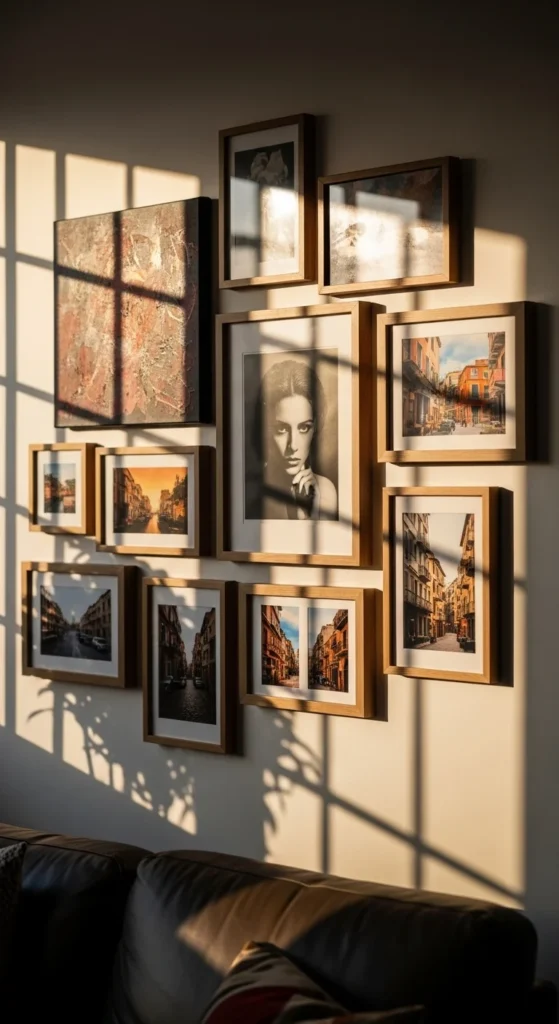
Creating a gallery wall is one of the easiest ways to add personality, warmth, and meaning to a space. The right mix of photos, art, textures, and objects turns a blank area into something that tells your story. Whether you live in a small apartment or a large home, these ideas help you create displays that feel personal, intentional, and full of character without spending much.
1. Mix Family Photos with Travel Snaps
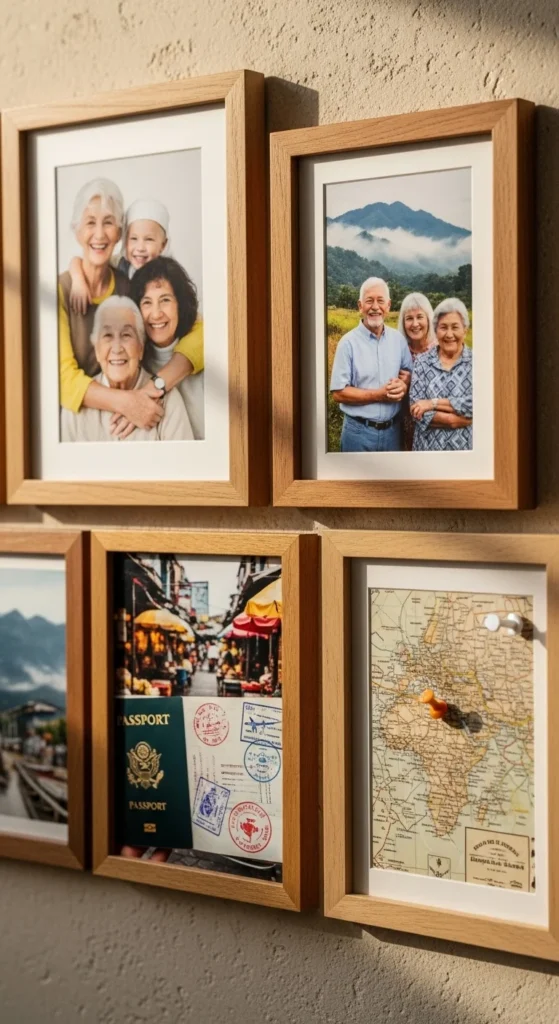
Create a wall that reflects moments that matter to you. Pair family photos with your favorite travel scenes. Keep the layout simple so every piece stands out. Try mixing black-and-white prints with colored ones for contrast. You can even print small images at home to save money. Use lightweight frames from thrift stores or discount shops. A simple wipe with wood polish makes older frames look new. Start with a center image and build outward. Keep gaps even, but don’t aim for perfect alignment. Let the wall feel relaxed and personal. Add handwritten dates on the back of each frame so you remember where they came from. This setup turns any hallway or living room into a small story corner.
2. Create a Wall of Black-and-White Portraits
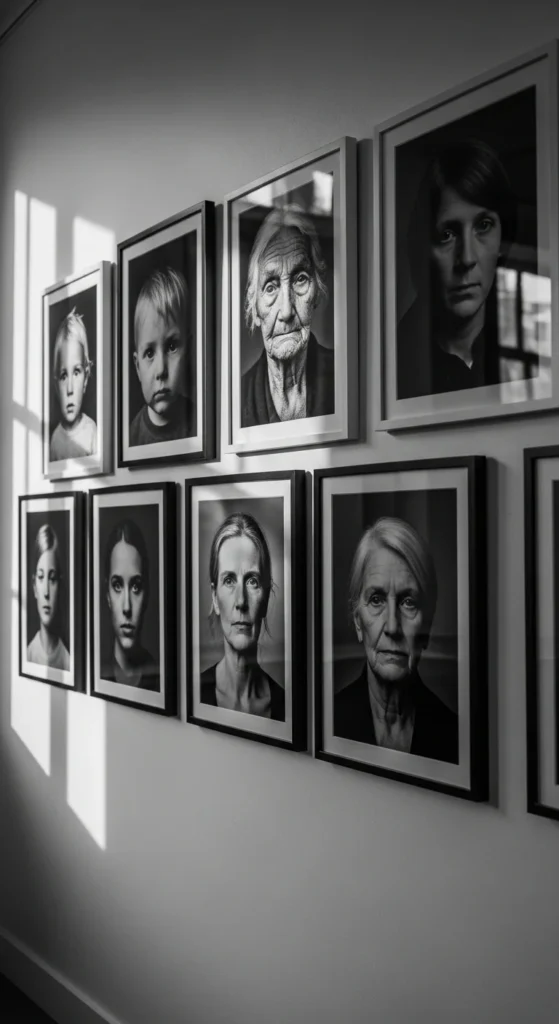
Black-and-white portraits bring a calm and timeless mood to any room. Print photos in matte finish for a softer look. Choose simple frames so the focus stays on the expressions. Keep the arrangement tight and symmetrical if you want a clean feel. Or hang the frames loosely for something more relaxed. If you’re on a budget, print your photos at a local shop in bulk to save money. Add one oversized piece to anchor the wall. You can also include photos of hands, silhouettes, or small close-ups to add variety. This style fits bedrooms, studios, or hallways and instantly adds personality.
3. Add Small Shelves for 3D Elements
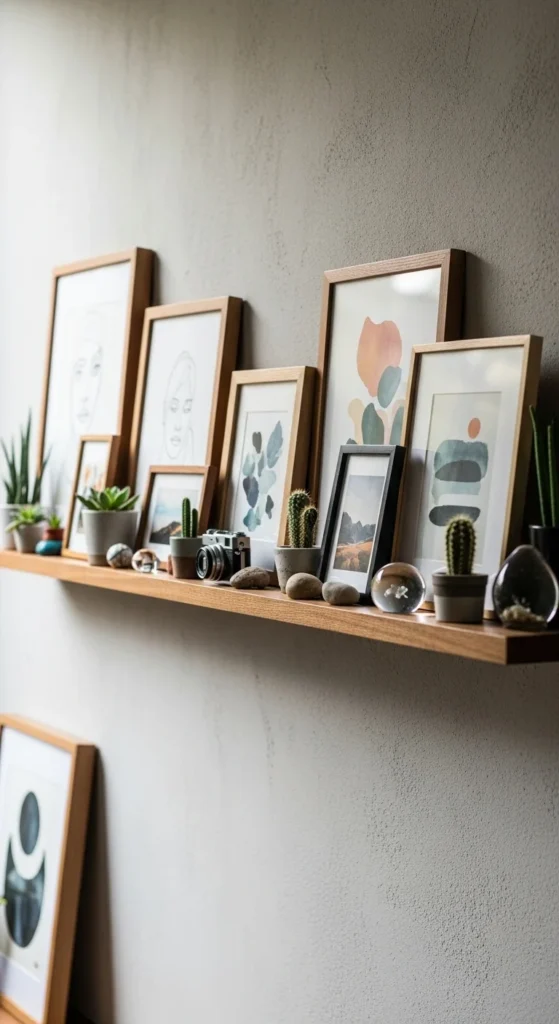
Picture ledges make your gallery wall more interesting. They let you layer objects without drilling too many holes. Add tiny potted plants, mini sculptures, or postcards. Mix frame heights for a casual look. This works well above a sofa or desk. You can find affordable shelves online or build your own using scrap wood. Paint them to match your wall so the art stands out. Try rotating pieces seasonally to keep the display fresh. This setup works great in rented spaces because you only put a few screws in the wall.
4. Build a Color-Themed Gallery
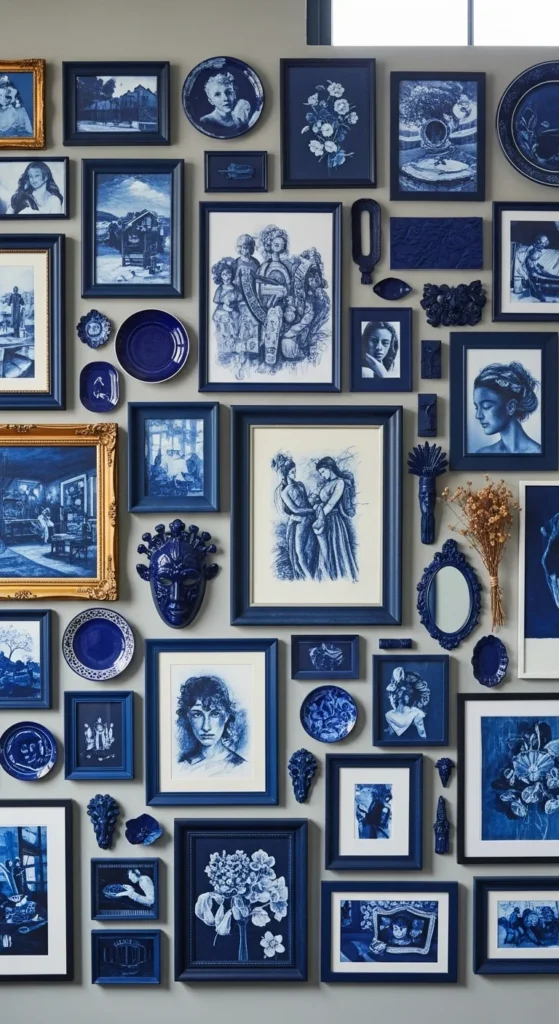
Choose one color and stick to it. This trick instantly ties your whole display together. Pick tones like warm browns, soft blues, or earthy greens. Mix artwork, fabric swatches, and simple geometric prints. You can even paint old frames to match. This style works beautifully in living rooms and entryways. It adds harmony without feeling forced. Print small patterns or abstract shapes at home to save money. Try adding one textured piece, like woven fabric or pressed leaves, to give the wall more depth.
5. Use Oversized Frames as Anchors
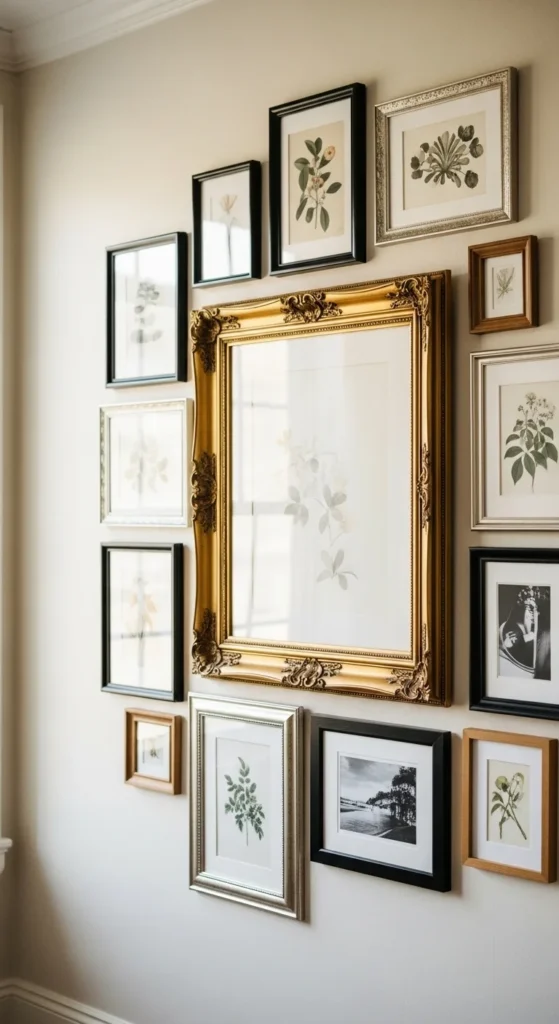
Start your gallery wall with one big frame in the middle. It acts as the main focus. Then place smaller frames around it. Choose simple prints or photos that support the large piece. This design works well above a console table or couch. Oversized frames don’t have to be expensive—check thrift shops or use poster frames from budget stores. Keep the spacing wide so the wall feels balanced. This layout helps keep things organized without feeling stiff.
6. Combine Art Prints with Quotes or Notes
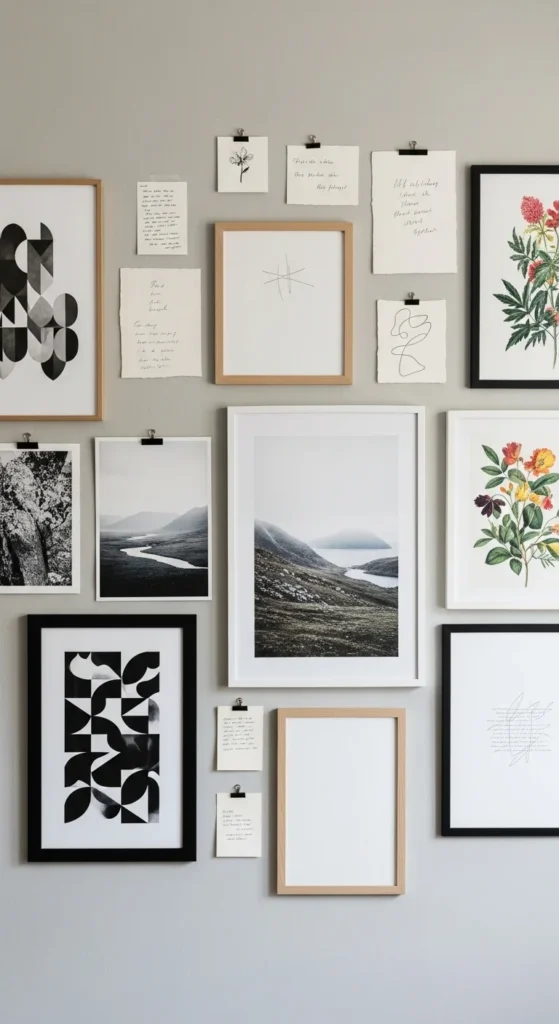
Mixing personal notes with prints helps your wall feel more meaningful. Use handwritten letters, ticket stubs, or postcards. Place them in small frames for a cleaner look. Add simple art prints in between to fill space. This combination works well in bedrooms or study corners. It also makes a great low-budget project because you can use items you already have. Keep the colors simple—black, beige, or soft pastel backgrounds help everything fit together. Rotate items whenever you want a subtle change.
7. Try a Floor-to-Ceiling Display
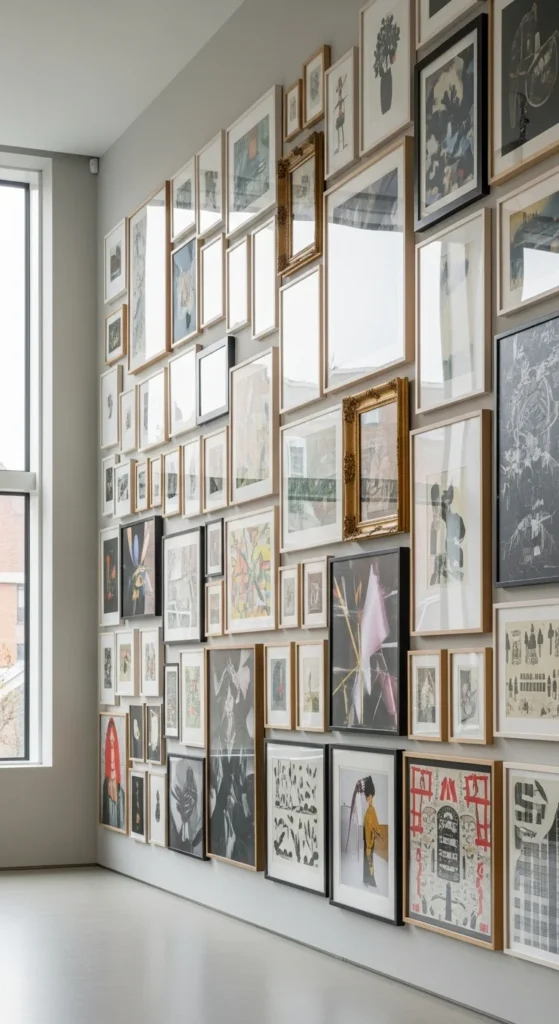
If you want something dramatic, fill the entire wall. Start at eye level and work upward and downward. Combine different sizes and materials. Add mirrors or small objects for texture. This layout works especially well in staircases or tall living rooms. Use lightweight frames to avoid stressing the wall. You can also trace each frame on paper and tape the outlines first to test the arrangement. This method keeps mistakes low and makes hanging easier.
8. Add Vintage Frames
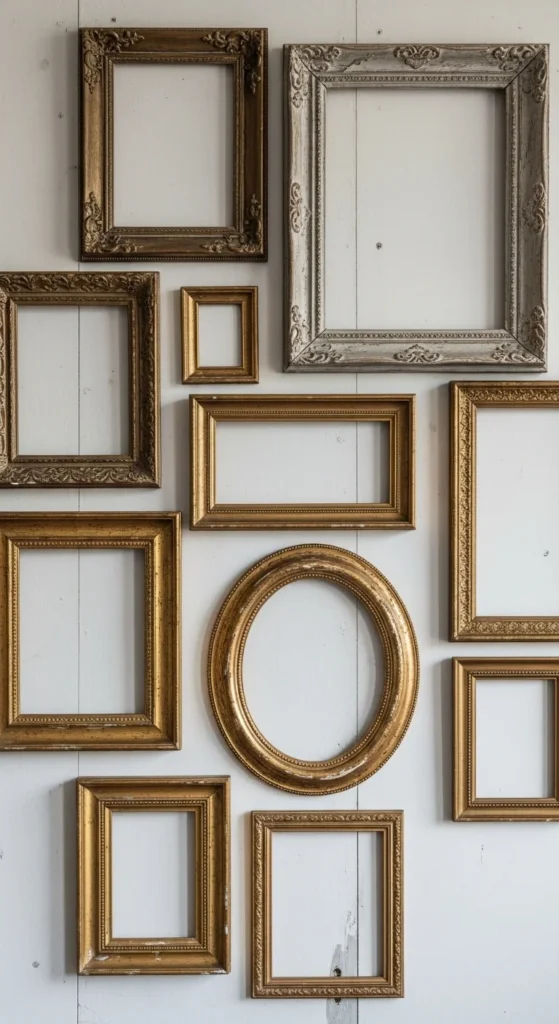
Vintage frames add charm. Look for old wooden or gold-tone frames at flea markets or thrift stores. Mix them with modern pieces for contrast. You don’t need perfect sets—mismatched frames add personality. Place them around neutral artwork or your own sketches. If the colors feel too loud, lightly sand or spray them. This keeps the look soft and cohesive. Hanging them in clusters makes even small walls feel interesting.
9. Showcase Kids’ Artwork
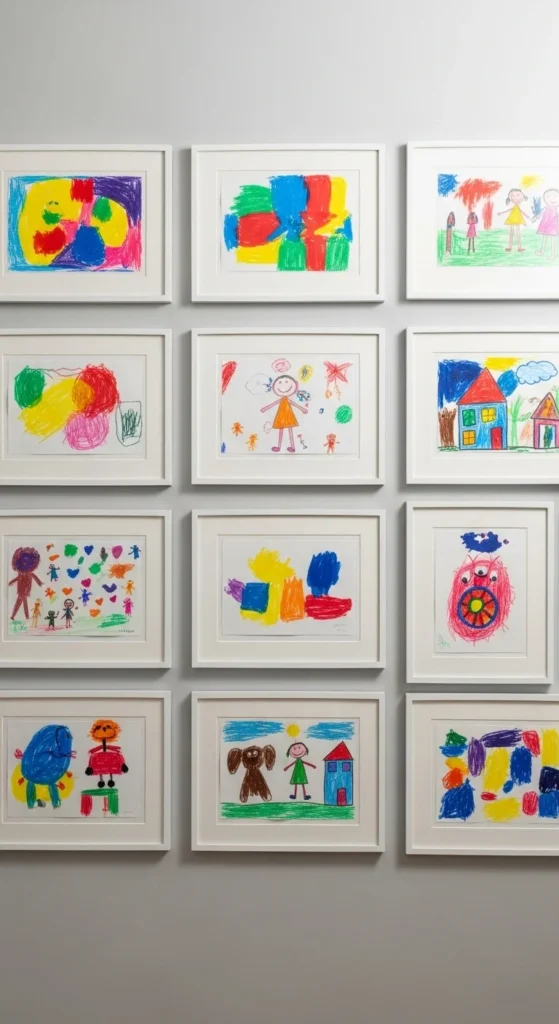
Kids’ drawings add life and joy to a space. Frame their best pieces in simple white or wooden frames. Arrange them in a grid for a tidy look. This idea works well in playrooms, hallways, or kitchens. Swap out the artwork as they create new pieces. Use affordable clip frames so switching is quick. This gallery wall doubles as décor and a memory board—something your kids will love to see every day.
10. Use Botanical Prints for a Calm Look
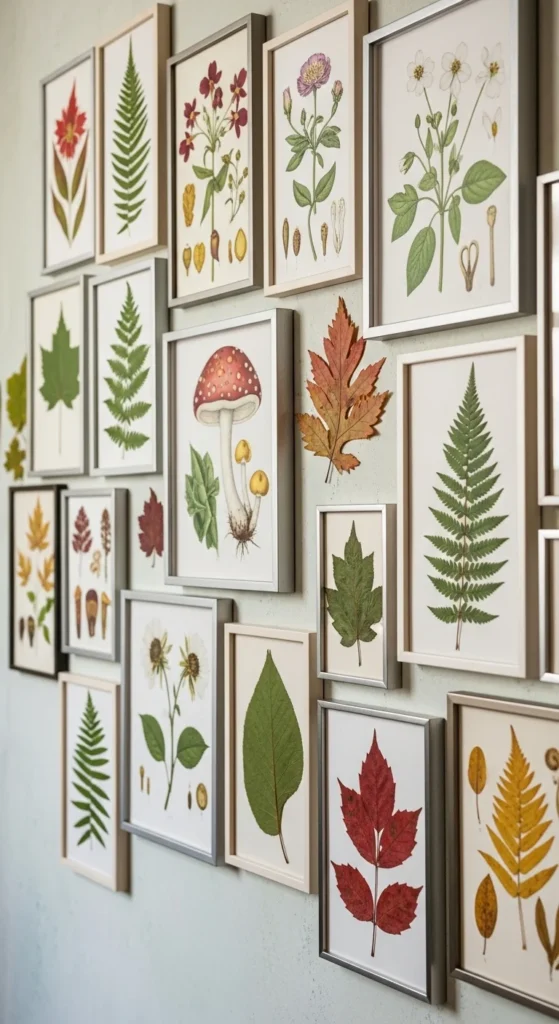
Botanical art brings a peaceful, nature-inspired feel. You can print free botanical designs from public-domain archives. Press your own leaves or flowers and frame them. Mix shapes and frame styles for variety. Use thin black frames for a modern look or wooden ones for something warmer. This setup works well in bedrooms and reading corners. Add a small plant near the wall to tie the theme together.
11. Mix Canvas Art with Photos
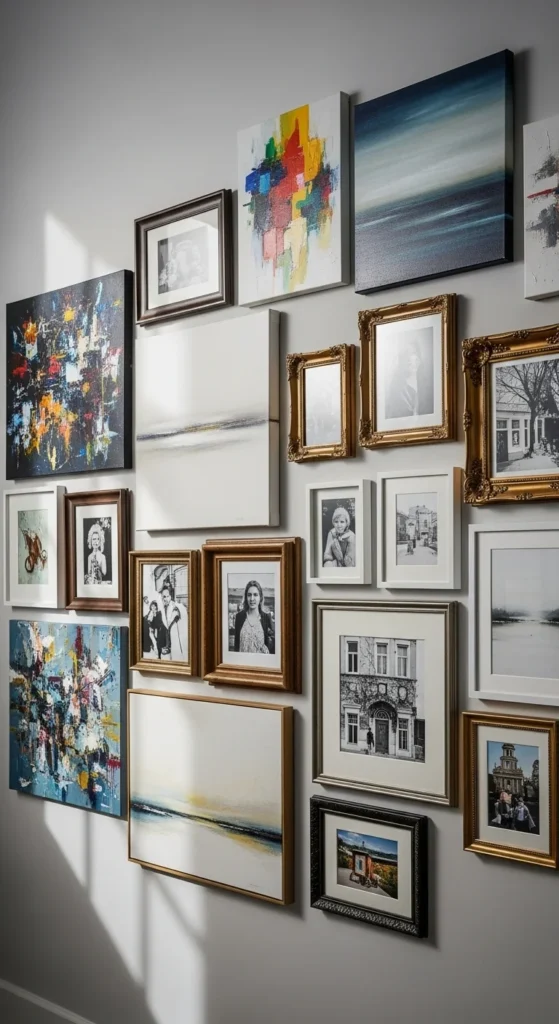
Combining canvas art with framed photos adds depth. Vary thicknesses so the wall doesn’t look flat. You can paint your own simple abstracts using leftover craft paint. Keep the color palette soft so nothing clashes. Use smaller canvases around larger frames to help anchor the layout. This setup works great above a dining table or sofa. It gives your wall a gentle layered effect without extra effort.
12. Add a Large Mirror to Break Up Frames
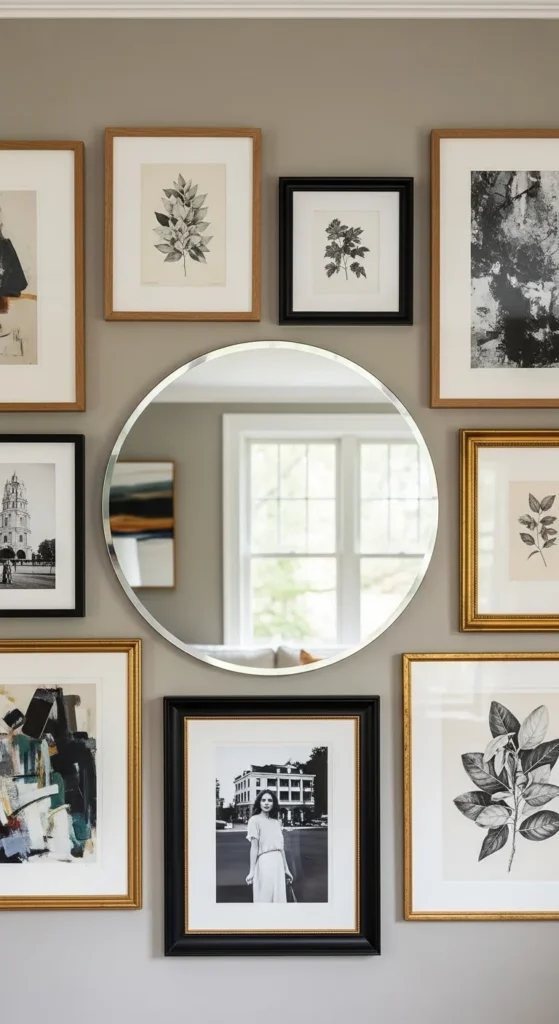
Mirrors help lighten a gallery wall. Place one in the center or off to the side. It reflects light and opens up the room. Pair it with small prints so the wall doesn’t feel crowded. Choose a mirror with a thin frame to keep things simple. This idea works well in entryways or darker rooms. To save money, look for mirrors at thrift shops or reuse ones from other rooms.
13. Create a Minimal Neutral Gallery
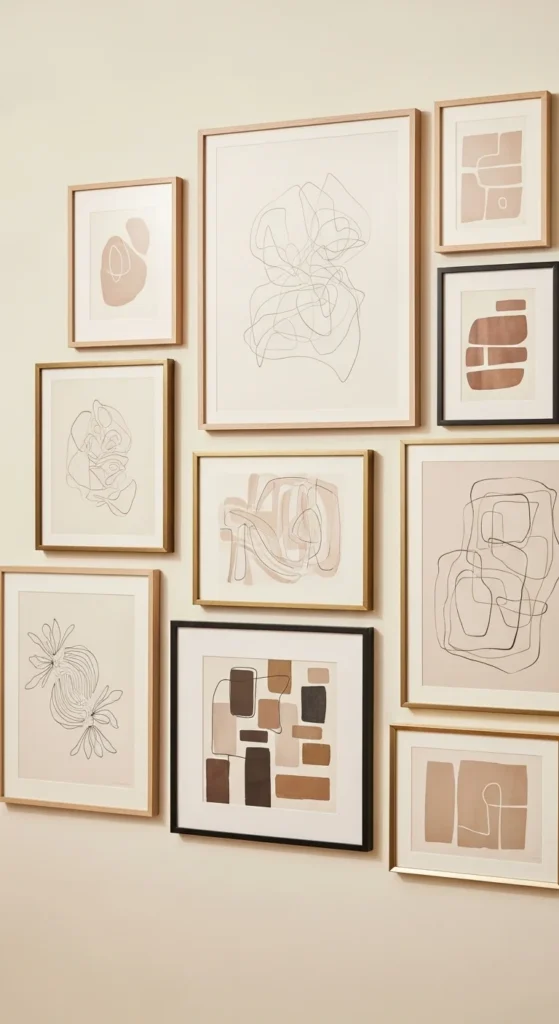
If you prefer calm spaces, go neutral. Choose soft-tone prints and simple line drawings. Keep frames thin and matching. This style works well in Scandinavian-style rooms or minimalist homes. Print your own line art or use textured fabric pieces for variety. Keep spacing wide so the display feels airy. Add one or two wooden elements for warmth.
14. Build a Theme Wall (Maps, Music, Movies)
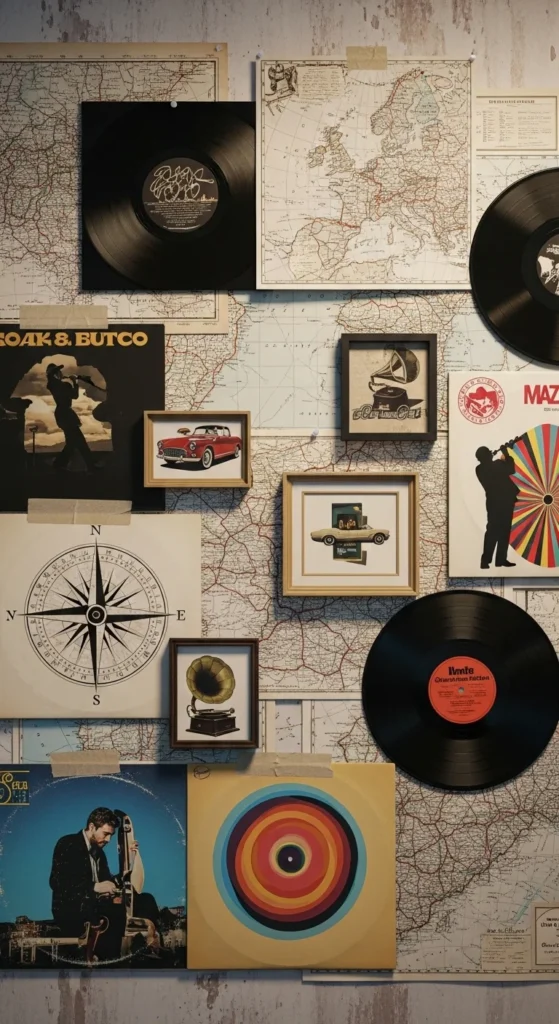
Choose a theme you love. Maps, film posters, or music sheets make great focal points. Mix small and large pieces to keep the wall interesting. Use floating shelves if you want to include objects like mini instruments or small globes. Print maps at home or download free vintage versions online. This creates a wall that reflects your hobbies without spending much.
15. Create a Nature-Texture Wall
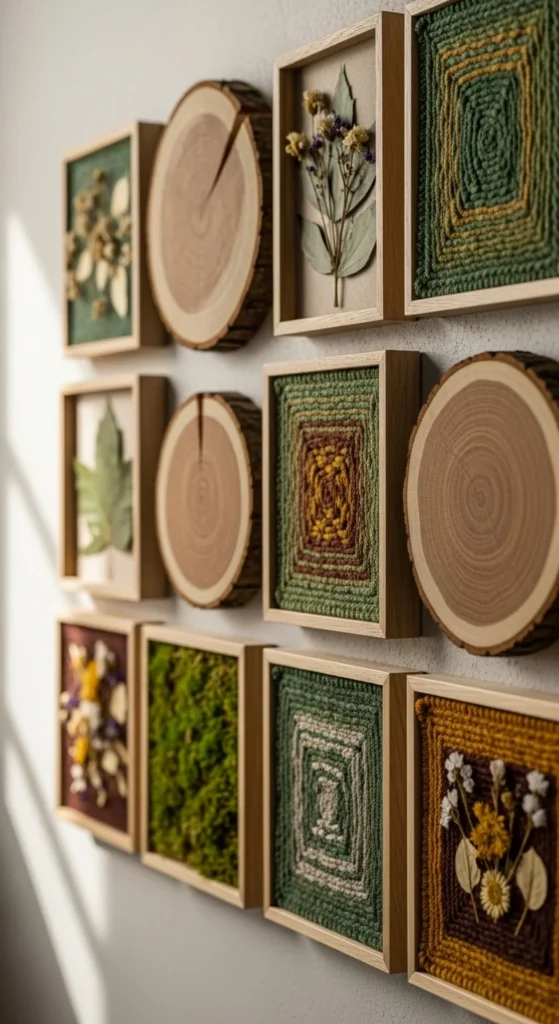
Bring the outdoors in with textures. Frame bark pieces, pressed leaves, or small woven items. Mix natural colors like tan, cream, and brown. This layout works beautifully in warm, earthy homes. Try making your own woven piece using cheap cotton rope. Add at least one soft pattern, such as linen or burlap, to break up the textures.
16. Use Clipboards Instead of Frames
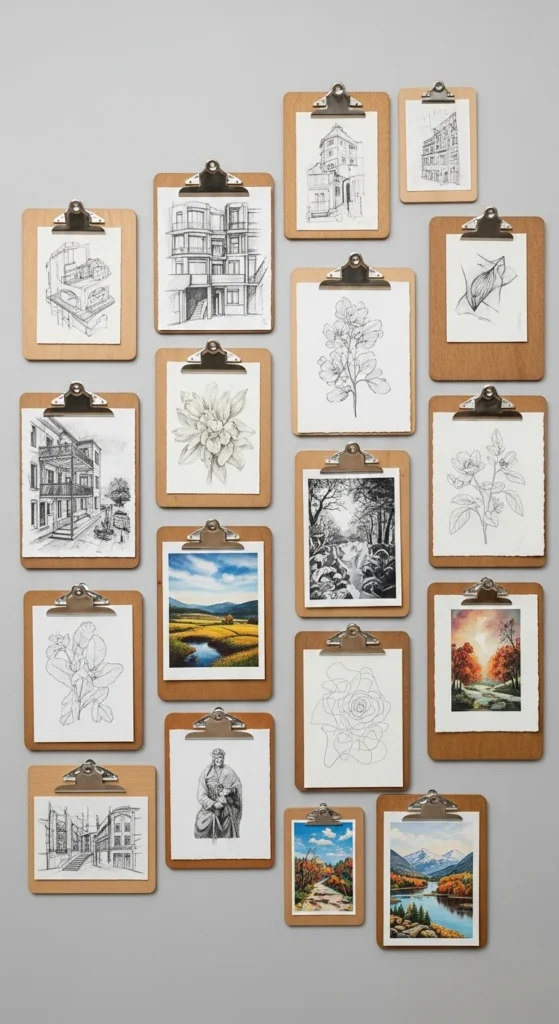
Clipboards make it easy to switch art anytime. Hang them in rows or clusters. Choose wooden ones for a warm look or black ones for something modern. This is a smart budget idea because you only buy clipboards and printed sheets. Change the art weekly without hassle. This works well for home offices or creative studios.
17. Go for a Monochrome Look
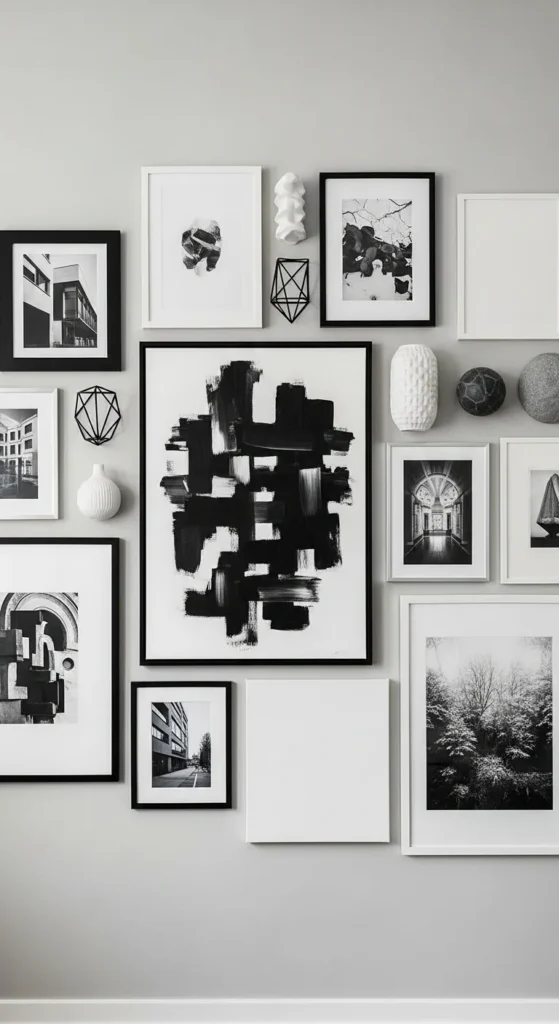
Stick to shades of one color. Black and gray work great if you want a strong visual effect. Mix line drawings, close-up photos, and geometric shapes. Keep frames matching for consistency. This style makes any room feel organized and stylish. Print your own shapes at home for a low-cost setup.
18. Use Floating Frames for a Light, Airy Feel
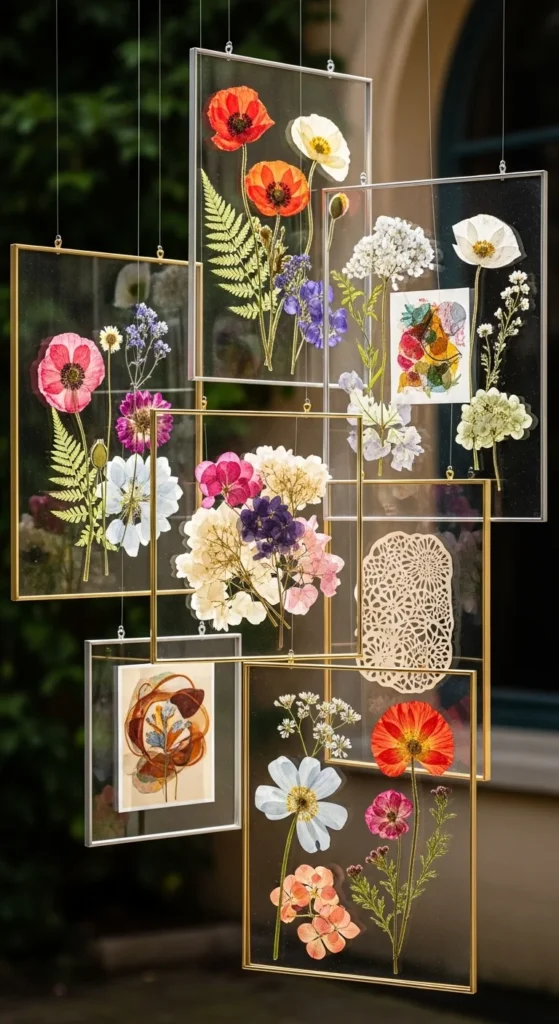
Floating frames add a light, airy touch. Insert pressed leaves, thin fabrics, or delicate drawings. The clear borders keep the wall from feeling heavy. Use them in kitchens, bedrooms, or hallways. You can make DIY floating frames using old glass from thrift shops. Secure the art between two glass pieces and glue the edges. This creates a soft, elegant gallery look.
19. Mix Shapes — Circles, Ovals, and Rectangles
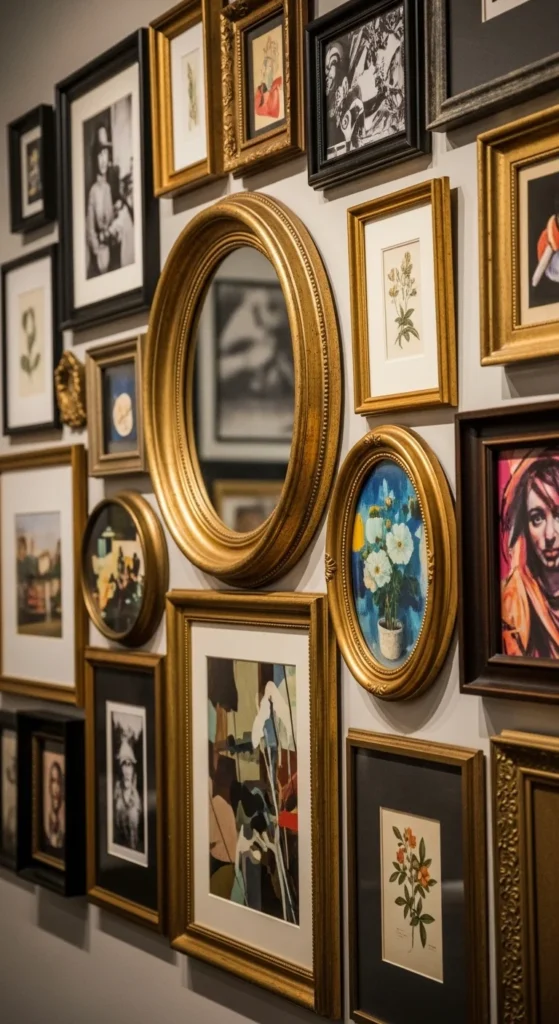
Most gallery walls use only rectangles. Adding circles or ovals creates a more interesting look. Choose one or two round frames to break repetition. Combine them with medium-sized rectangles for balance. This idea works well above a sofa or in a reading nook. Use thrift-store frames and spray-paint them to match.
20. Use Fabric Panels as Wall Art
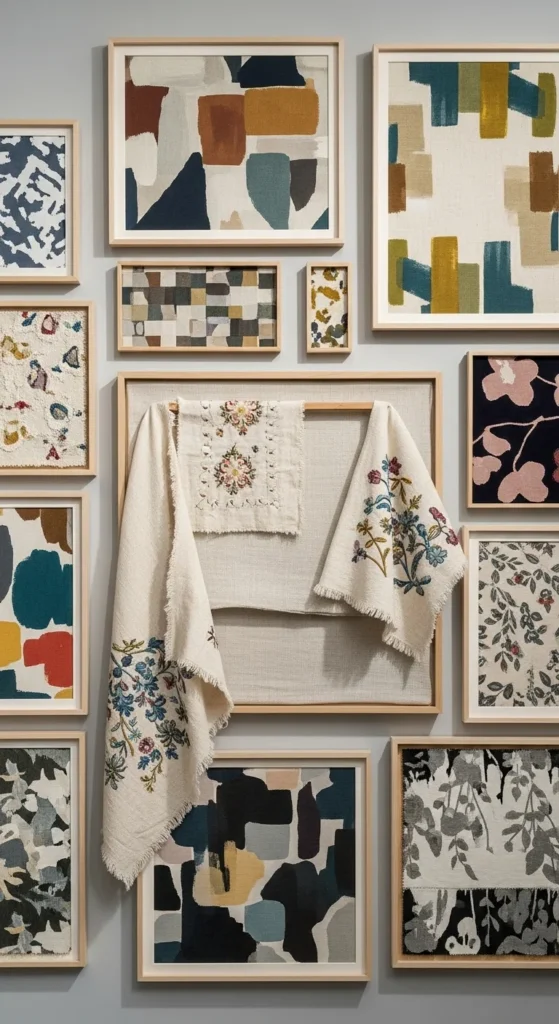
Fabric adds warmth and texture. Stretch patterned fabric over canvas frames or place it inside picture frames. Use scraps or leftover pieces from old clothes. Choose patterns that fit your home’s colors. This is a cheap way to fill large spaces because fabric covers a lot. Mix small and large panels to keep things balanced.
21. Create a Memory Timeline Wall
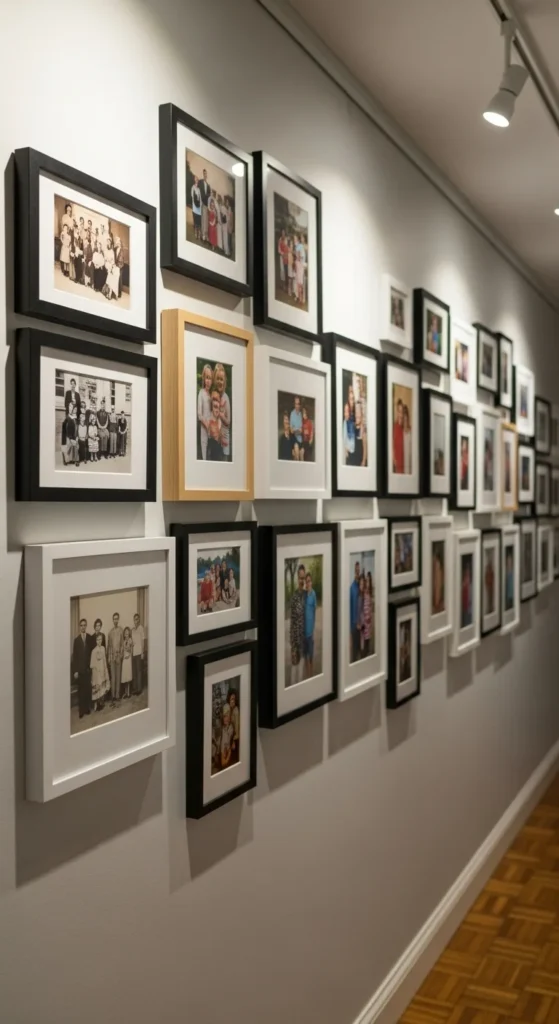
A timeline wall turns memories into a visual path. Start with your oldest photo at one end and move toward newer moments. This works beautifully in long hallways. Use matching frames for a tidy look. Print small labels and tape them behind the frames so you remember each date. Rotate photos over time as you create new memories. It’s a simple, personal project that costs very little but carries meaning.
22. Add Lighting Above or Below the Frames
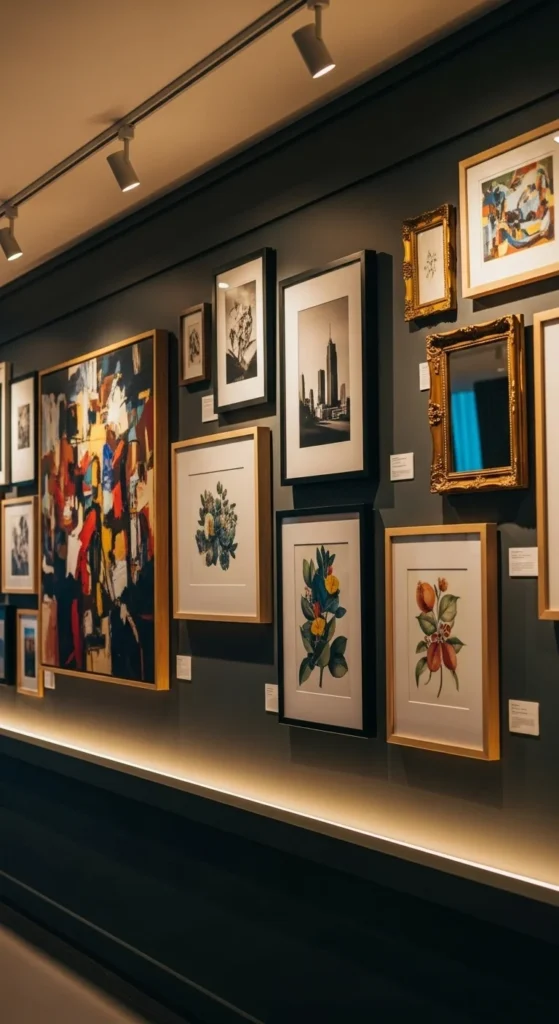
Lighting changes everything. Place LED strips behind frames or use small battery-powered spotlights. The glow highlights textures and makes even simple prints stand out. This idea works well for dark corners or entryways. Use adhesive lights to avoid drilling. Choose warm light for a cozy feel. You can also add a dimmer to control the mood.
23. Create a Rustic Wood Gallery
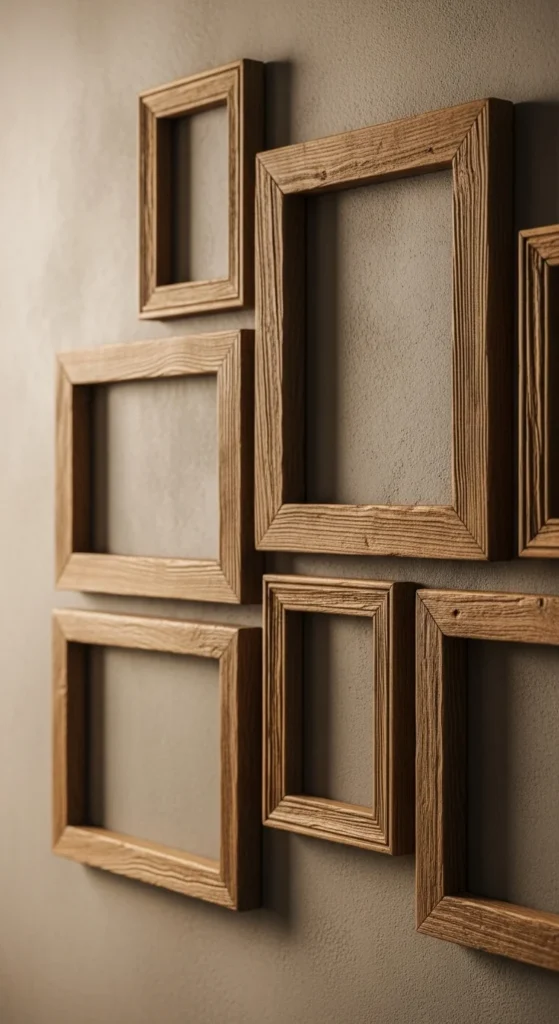
Rustic frames add warmth instantly. Look for distressed wood or make your own by lightly sanding and staining cheap frames. Pair them with landscapes, nature drawings, or family photos. Keep the layout loose for a relaxed feel. Add a hanging plant nearby to tie in the natural tones.
24. Use Postcards and Mini Prints
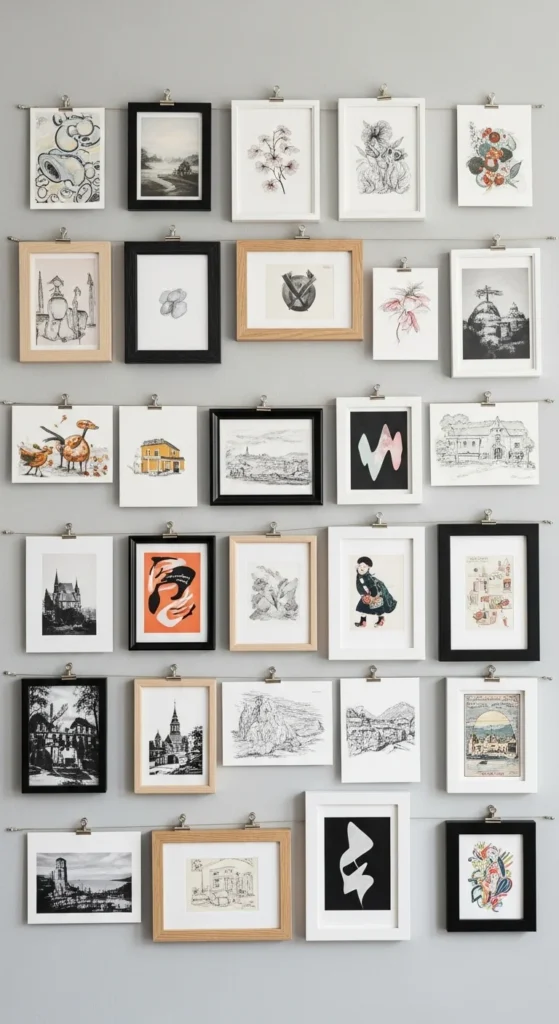
Postcards make great wall art. They’re cheap, easy to collect, and full of charm. Use small frames or wire grids to display them. Mix travel cards, art cards, or vintage ones. This idea works nicely in small spaces like apartments, dorms, or office corners. You can switch them anytime without spending extra.
25. Try a Mixed-Material Wall
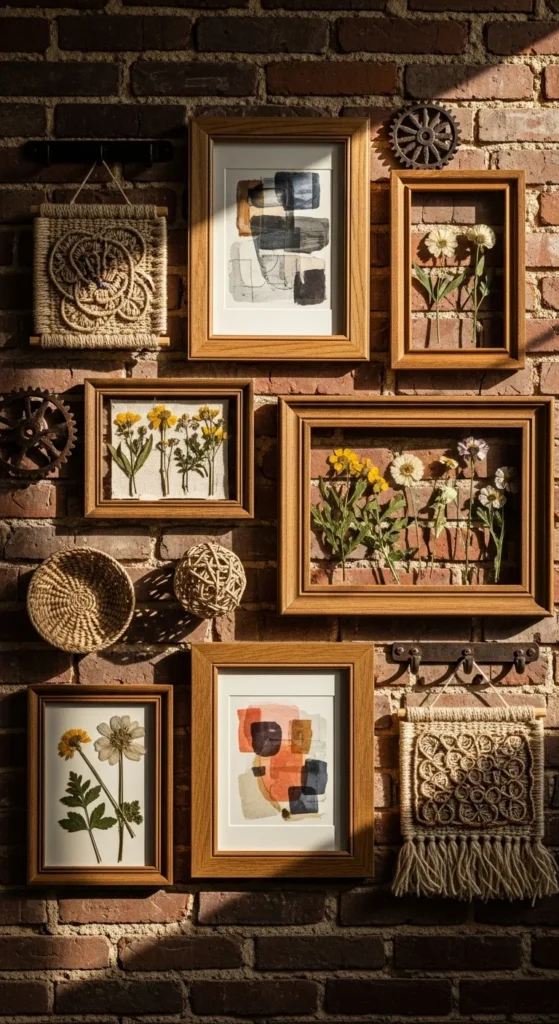
Mix different textures—metal, wood, fabric, paper, and canvas. This gives your wall movement and character. Keep the color palette simple so the materials stand out without clashing. Add one bold piece like a round basket or metal plate. Arrange smaller pieces around it. This is a good way to use leftover décor items you already have at home.
Conclusion
Gallery walls bring personality and meaning into any space. They help you tell a story through objects, photos, textures, and art you already love. You don’t need expensive pieces—small prints, thrift-store frames, and simple layouts are enough to build something beautiful. Start with one idea from this list, take your time arranging it, and enjoy watching your wall reflect your life in a way that feels warm and personal.
Leave a Reply