

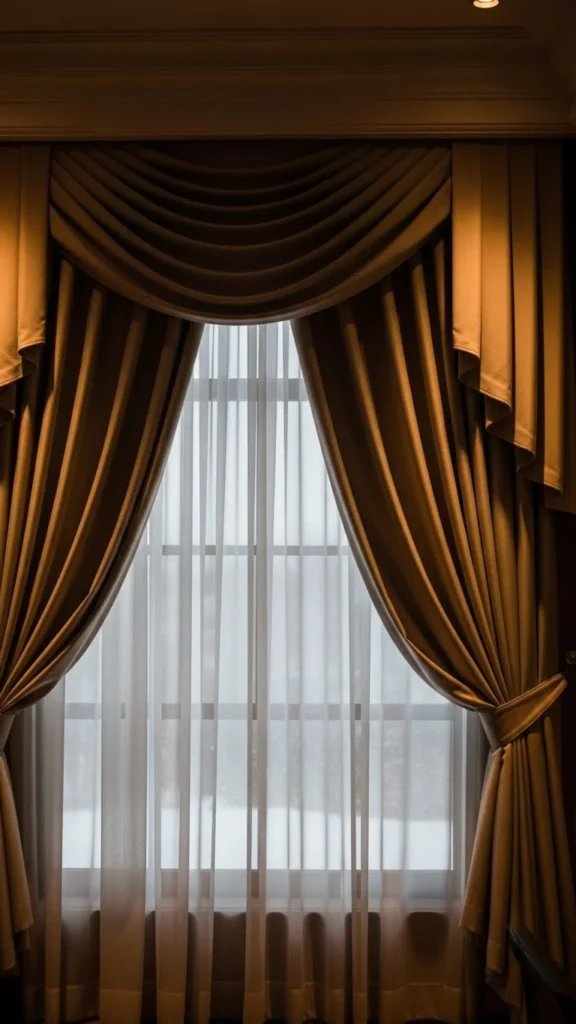
Layered curtains transform a room during winter. They soften harsh light, block drafts, and bring structure to your windows while adding a stylish finishing touch. With thoughtful combinations—sheers, blackout panels, linen layers, textured fabrics, thermal liners—you can mix depth, warmth, and height in ways that feel inviting. This list offers 23 practical ideas that help you style winter curtains with a focus on insulation, texture, and achievable styling. Each section gives simple, budget-friendly steps to create warmth and visual interest without complex tools or expensive installations.
1. Sheer Panels Paired With Heavy Velvet Drapes
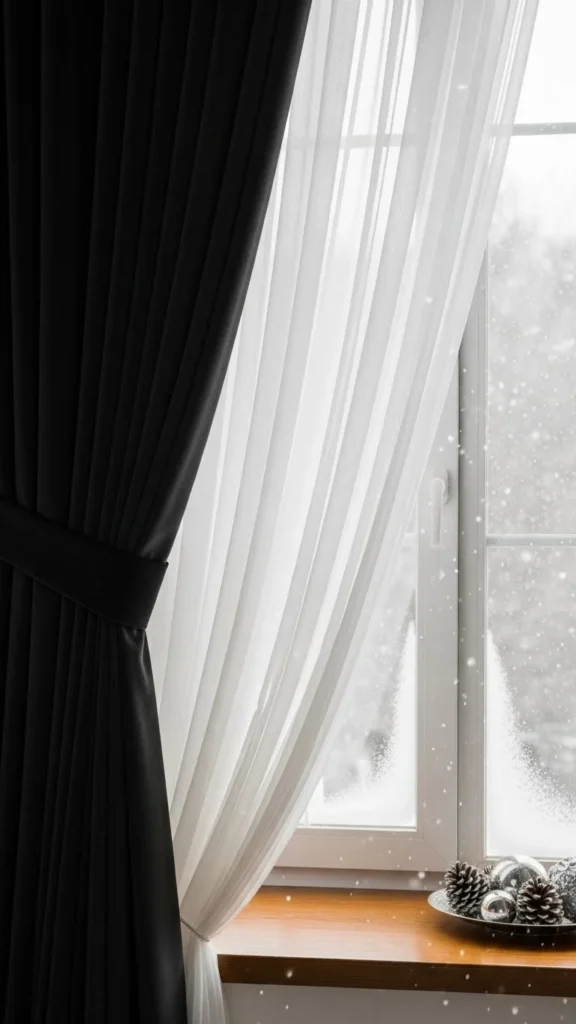
Velvet adds warmth instantly. Place sheer white panels closest to the window, then hang velvet drapes on the outer rod. This pairing gives privacy while keeping the room soft. For insulation, allow the velvet drapes to touch the floor so they seal out drafts. Choose jewel tones like navy, plum, or forest green for depth. If you’re on a budget, look for velvet-look polyester panels—they mimic the texture for less. Keep hardware simple. The layered look adds structure without crowding the space.
2. Dual-Rod Layering With Linen and Blackout Panels
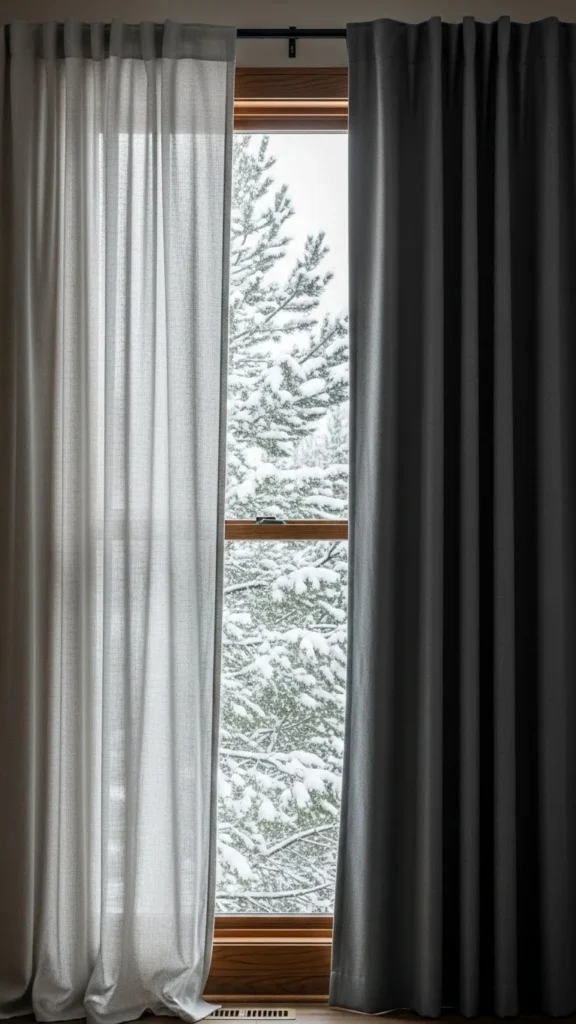
A dual-rod system makes layering easy. Place blackout panels on the inner rod to handle insulation. Add linen panels to the front for softness. Linen brings a natural winter feel without heavy weight. This combination works well in bedrooms where comfort matters. Choose soft neutral tones like oatmeal or stone. If you want savings, reuse old blackout curtains and add simple linen-blend panels. The layered effect adds depth while keeping the setup functional.
3. Triple Layer Treatment for Large Windows
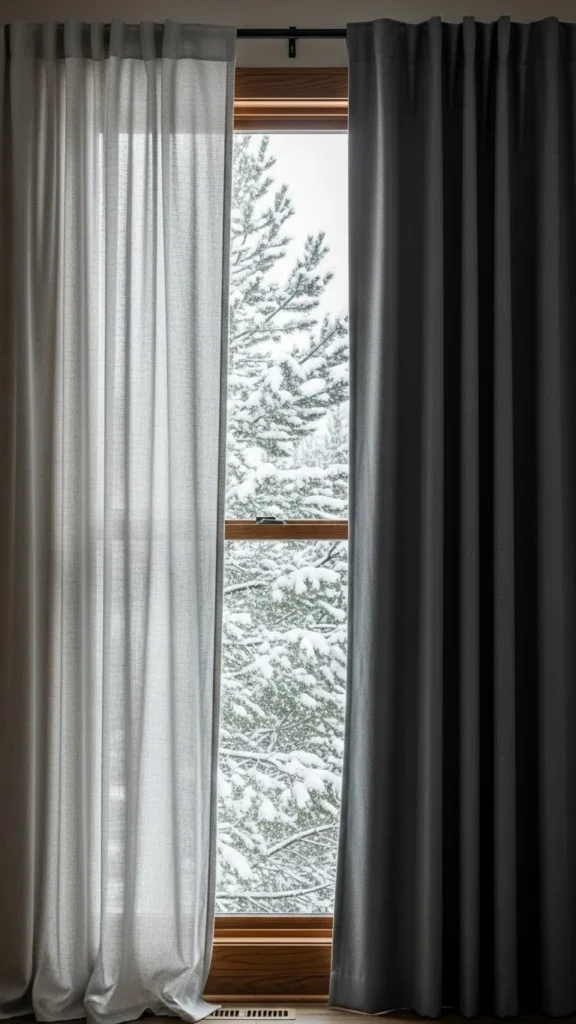
Large windows lose warmth quickly. Use three layers for better insulation: sheers, thermal liners, and outer drapes. Hang thermal liners using clip rings to avoid special hardware. Pick drapes in darker tones for a grounded winter look. If your budget is small, add a removable thermal liner behind existing curtains. This setup works well in living rooms where windows span wide walls. The extra layers feel cozy while keeping the room comfortable.
4. Roman Shades Under Textured Drapes
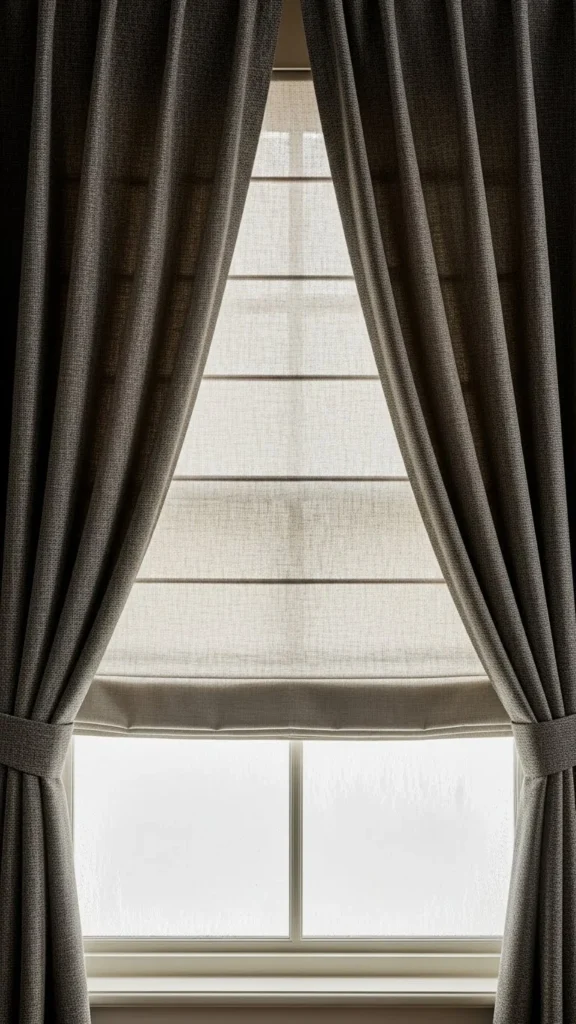
Roman shades offer structure. Combine them with textured drapes for a strong layered effect. This pairing works well for narrow windows. Choose warm fabric shades for better insulation. Add drapes with raised textures like basket-weave or soft ribbing. If you want a DIY approach, attach thermal fabric to the back of the Roman shade using adhesive strips. This keeps drafts out without replacing the shade.
5. Sheers With Patterned Winter Drapes
Patterns add personality. Keep sheers simple, then use drapes with subtle winter prints—like muted checks, soft florals, or abstract textures. This style works well in family rooms where a bit of visual interest feels inviting. Pair patterns with solid sheers to prevent the look from feeling busy. For budget savings, choose printed fabric and sew simple rod-pocket panels. The layered style softens winter light.
6. Floor-Pooling Insulated Drapes Over Sheers
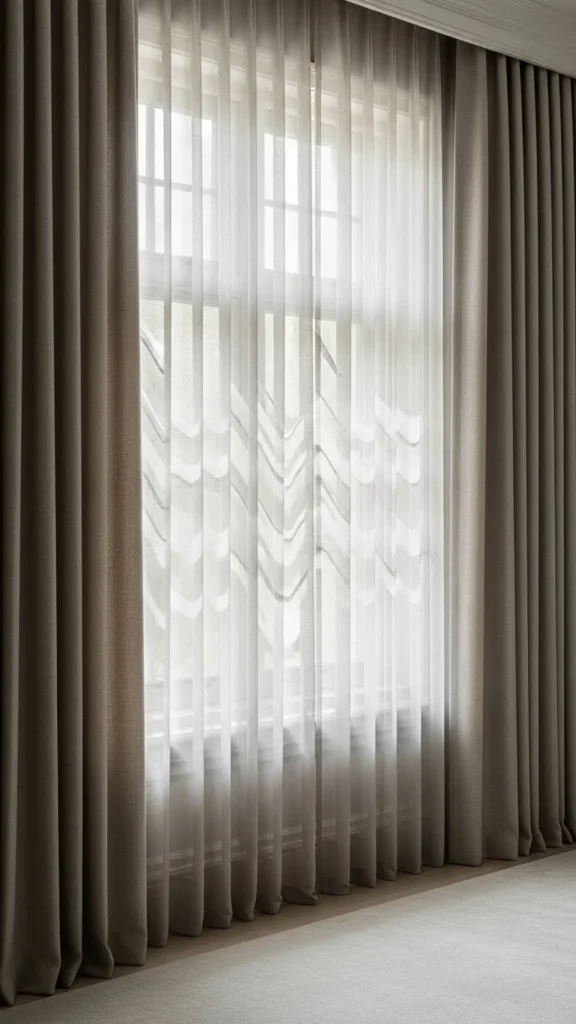
Long drapes that pool slightly add warmth and softness. Use insulated drapes for the outer layer. Keep the inner layer sheer so daylight can still pass through without losing privacy. If your drapes are too short, add a fabric border at the bottom to increase length affordably. This style works best in taller rooms or where you want a dramatic winter look.
7. Waffle-Texture Curtains With Light Blocking Liners
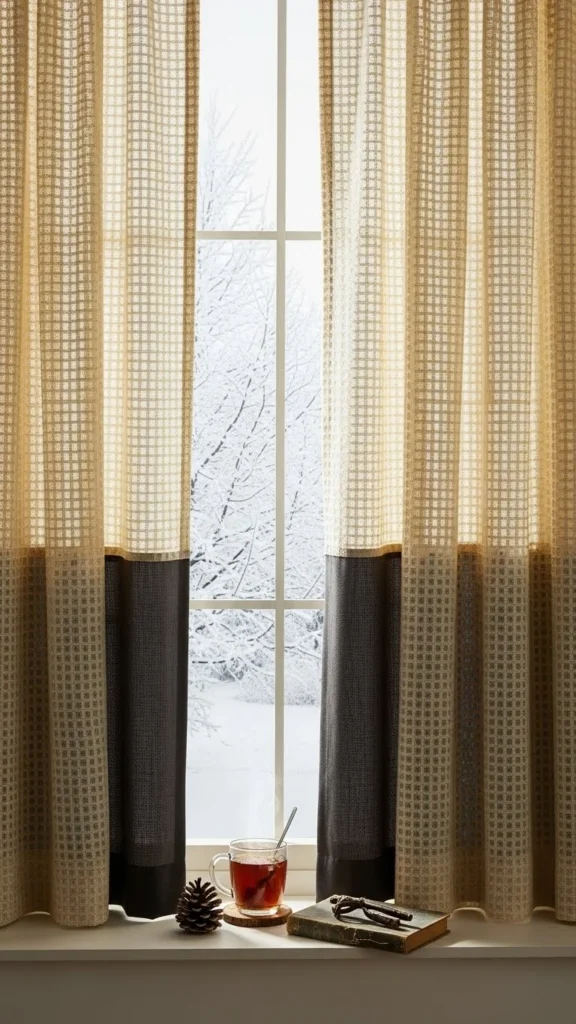
Waffle-texture fabric adds depth. Place light-blocking liners behind them using clip-on rings. This combination keeps the room warm without heavy fabrics. Choose warm neutrals like cream or taupe for a calm feel. If you want added insulation, line the waffle curtains with thermal fabric using fusible tape. This setup works well in bedrooms and study areas.
8. Layered Curtain Scarf With Thick Winter Panels
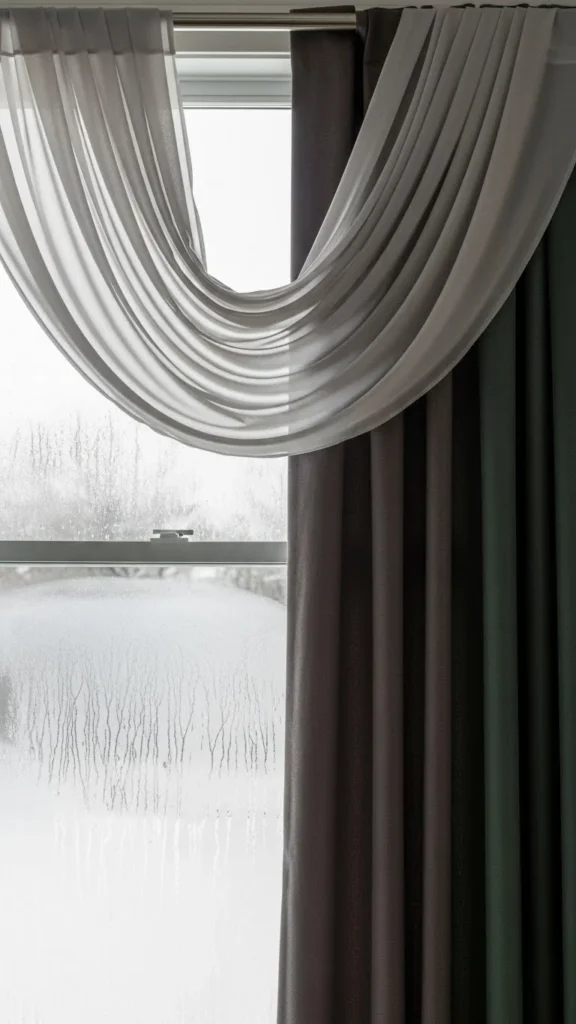
A curtain scarf adds softness. Drape it over the rod before hanging winter-weight panels. This creates gentle curves above the window. Choose a light fabric like chiffon or soft voile. Pair it with heavy drapes in wool-blend or insulated fabric. For a budget option, use a long lightweight throw as the scarf. This layered look works well in dining rooms or formal living spaces.
9. Café Curtains With Full-Length Drapes
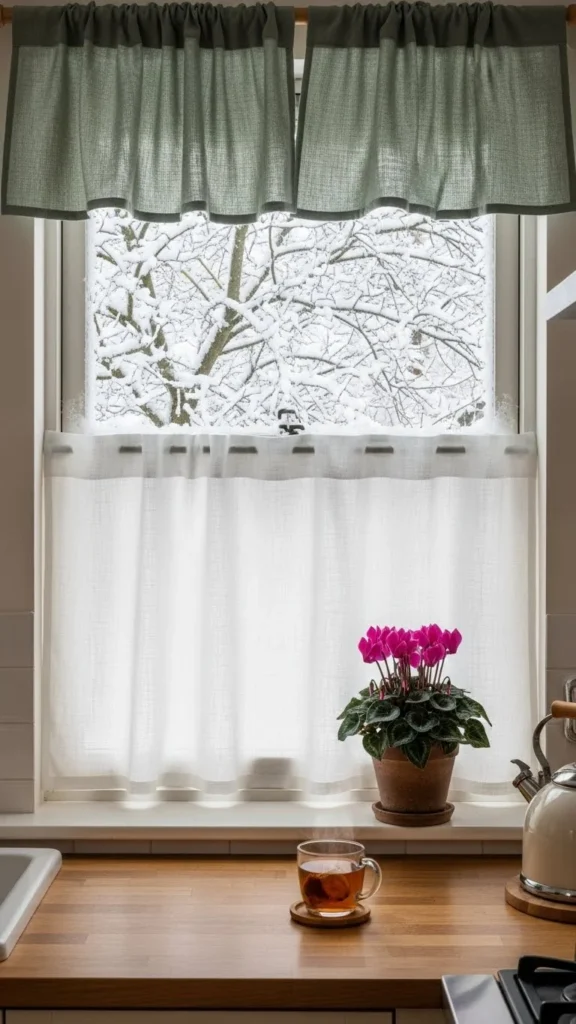
Café curtains provide lower privacy while letting light in. Add full-length drapes for warmth during winter. Place the café rod halfway up the window. Use linen or cotton fabric for a relaxed feel. Choose heavier drapes for evening insulation. This style works especially well in kitchens or breakfast nooks. If you’re saving money, repurpose old tablecloth fabric for the café panels.
10. Sheer Curtains With Thermal Roller Shades
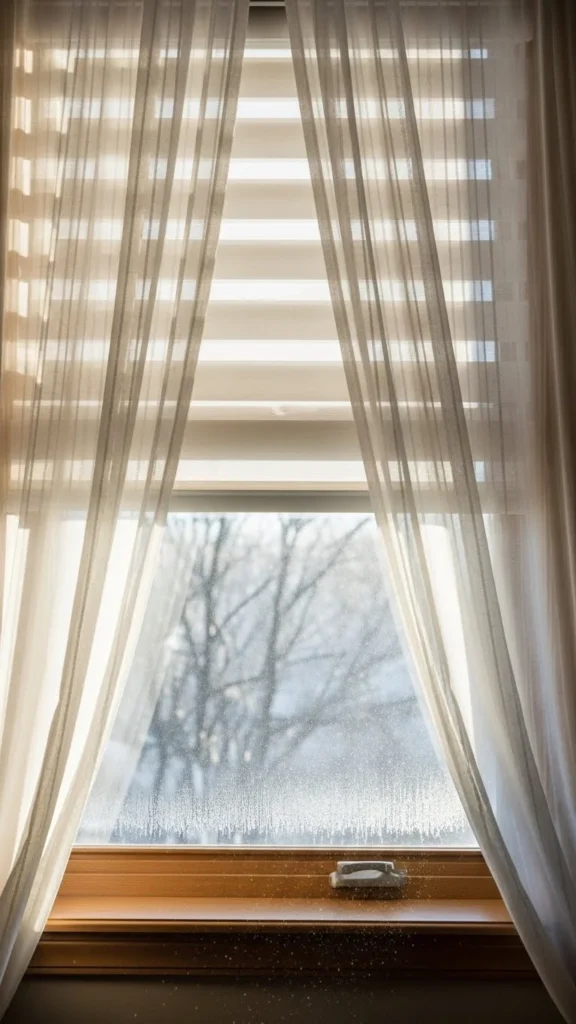
Thermal roller shades modernize layered styling. Pull them down at night for insulation and lift them during the day while sheers soften the light. This combination suits contemporary rooms where clean lines matter. Choose roller shades in simple tones like white, grey, or sand. If you want a practicality upgrade, use cordless shades. This setup protects against drafts while staying visually light.
11. Ruffled Sheers and Dark Winter Drapes
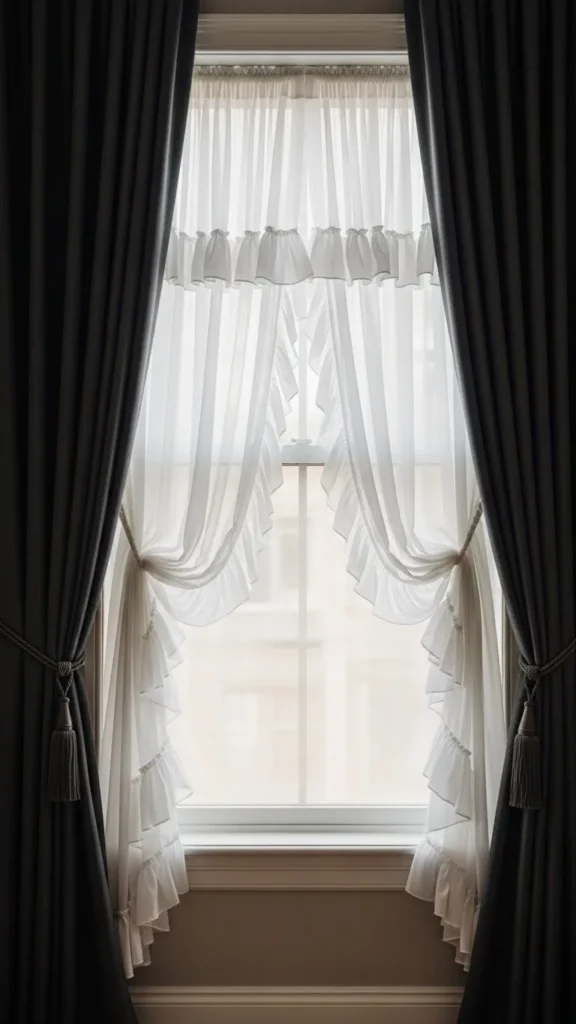
Ruffled sheers bring softness. Pair them with dark winter drapes for contrast. This combination creates depth without overwhelming the room. Choose ruffled panels in warm shades like ivory or blush. The dark drapes block drafts at night. If you want an inexpensive option, sew ruffled edges onto plain sheers. This style works beautifully in bedrooms or romantic winter settings.
12. Thermal Curtains With Wooden Rods and Rings
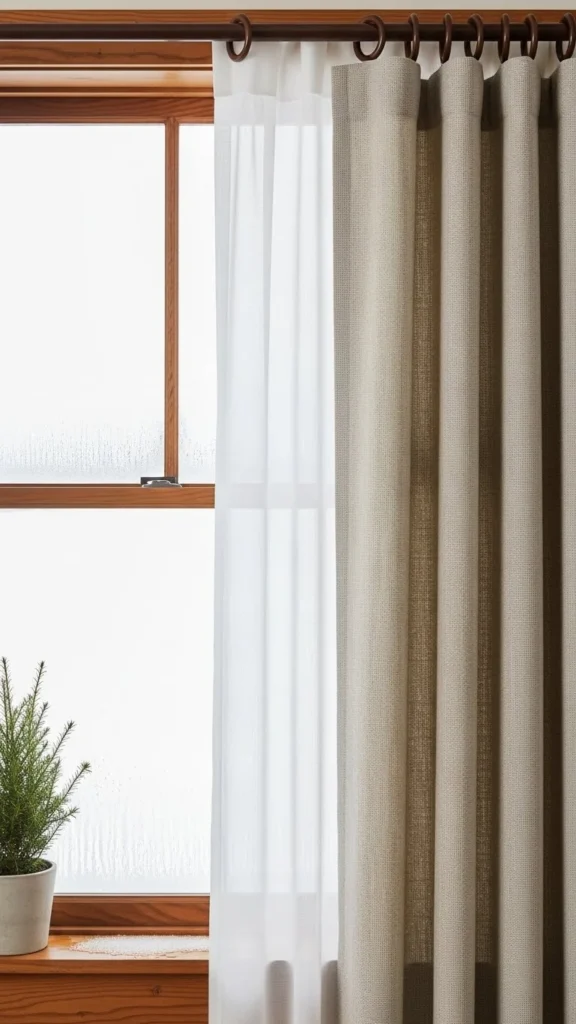
Wooden rods add natural warmth. Pair them with thermal curtains on the front layer and simple sheers behind. Use clip rings for easy sliding. Choose wood tones that match your flooring or furniture. This layered setup feels grounded and cozy. If your budget is tight, refinish an old rod using wood stain. Add sheers with subtle texture to soften the look.
13. Double-Width Drapes Over Linen Sheers
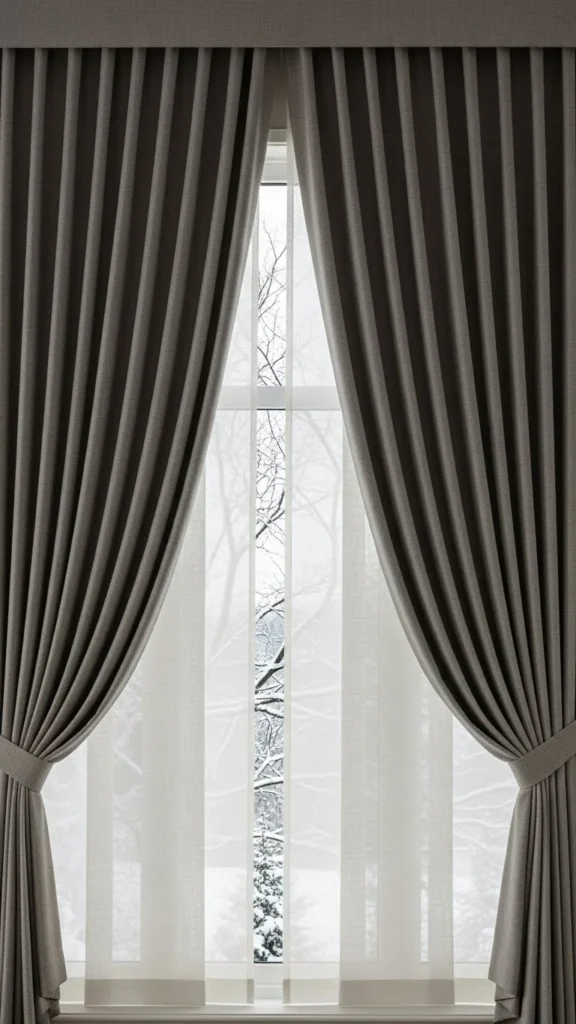
Double-width drapes create full coverage. They pool softly, adding comfort and insulation. Hang linen sheers behind them to let filtered light in during the day. This combination works well for tall or wide windows. Choose muted tones like fog grey or soft taupe for a calm winter palette. If you want savings, buy one extra-wide panel and split it into two.
14. Patterned Sheers With Solid Thermal Panels
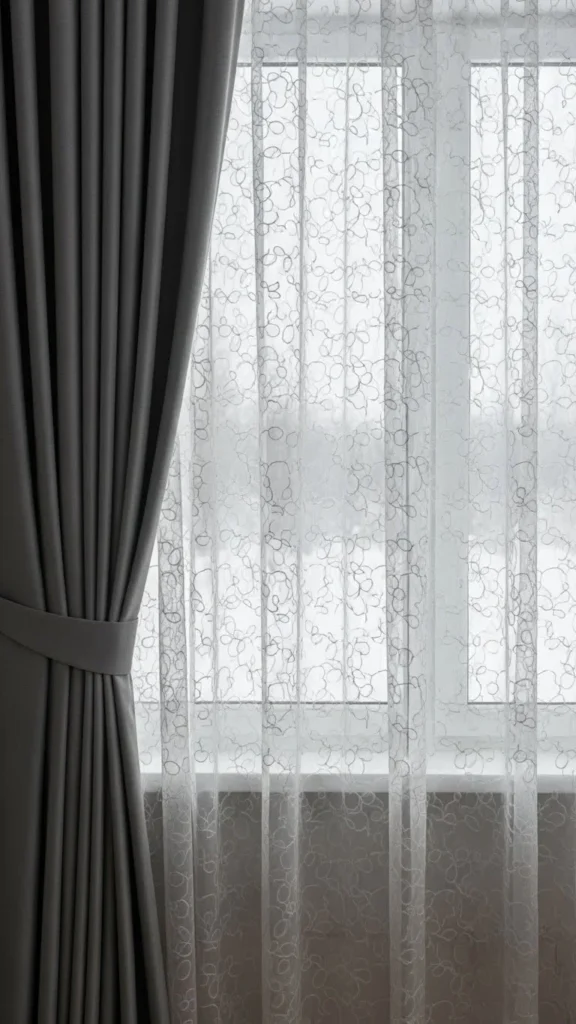
Patterned sheers add subtle detail. Choose soft prints like vines, dots, or faint geometric lines. Layer solid thermal panels in complementary tones. This keeps the look balanced while adding warmth. If you want budget-friendly patterned sheers, use lace tablecloths cut to size. This style works well in living rooms and dining spaces.
15. Dark Outer Drapes With Metallic Inner Sheers
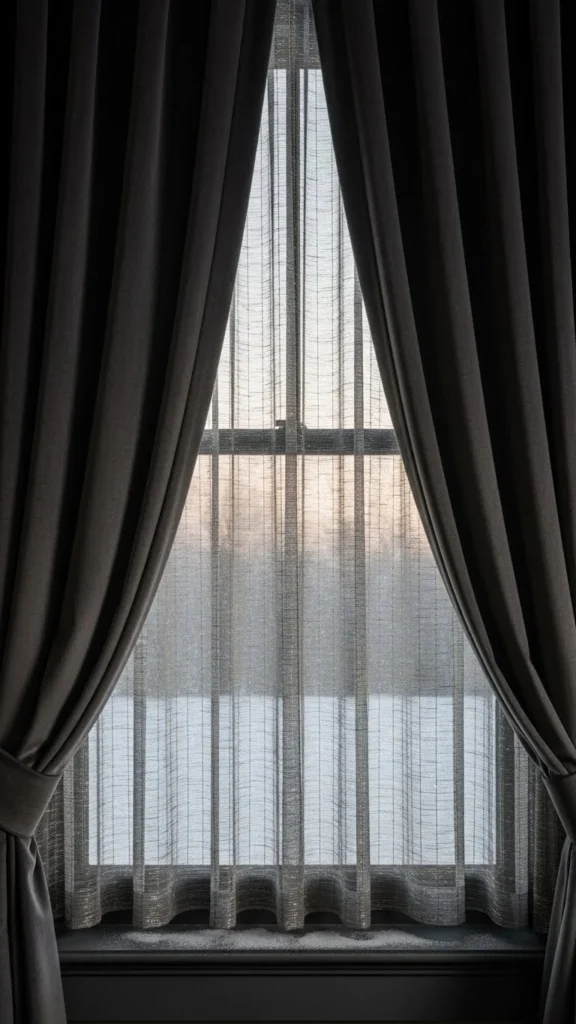
Metallic sheers add sparkle to winter rooms. Use them as the inner layer so they catch natural light. Place dark drapes on the outside for contrast. Choose colors like charcoal, espresso, or navy. This pairing creates a cozy evening atmosphere. For affordability, select sheers with subtle metallic threads rather than fully shiny fabrics. The look feels warm and stylish.
16. Heavy Wool Drapes With Bamboo Shades
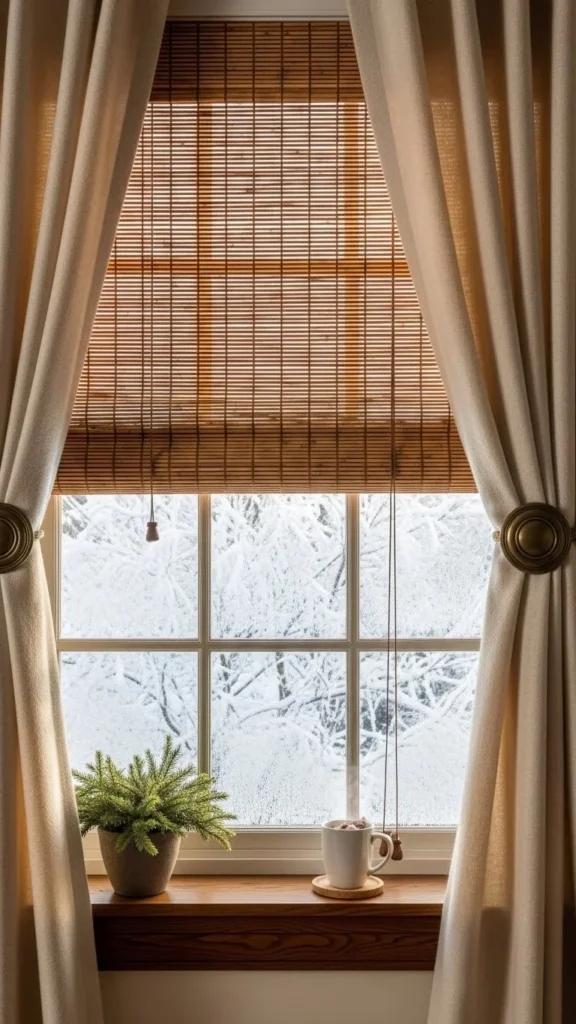
Bamboo shades add texture while controlling light. Layer wool drapes over them for warmth. This mix creates depth and natural contrast. Pick shades in warm wood tones and drapes in winter neutrals. If you want a DIY version, attach insulating fabric behind the wool drapes. This setup works well in rooms with rustic or nature-inspired décor.
17. Layered Drapes With Subtle Ombre Panels
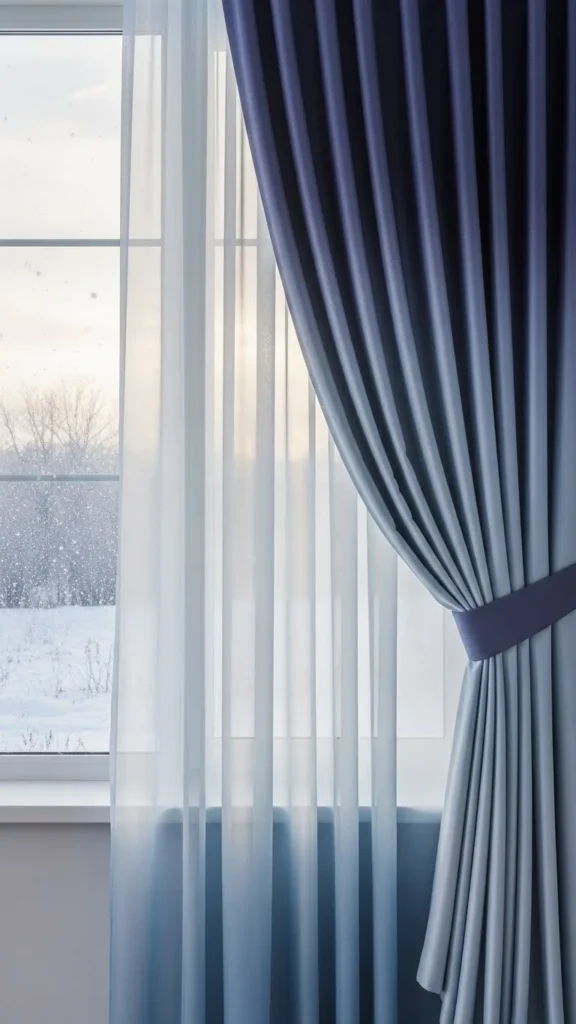
Ombre panels create gentle color shifts. Hang them as the outer layer so the gradient is visible. Use simple sheers behind them. This style works well in bedrooms or creative spaces. Choose winter tones like grey-to-white or beige-to-cream. If you want to save money, paint a soft ombre effect onto plain curtains using diluted fabric paint.
18. Sheer Curtain Pairs With Quilted Winter Panels
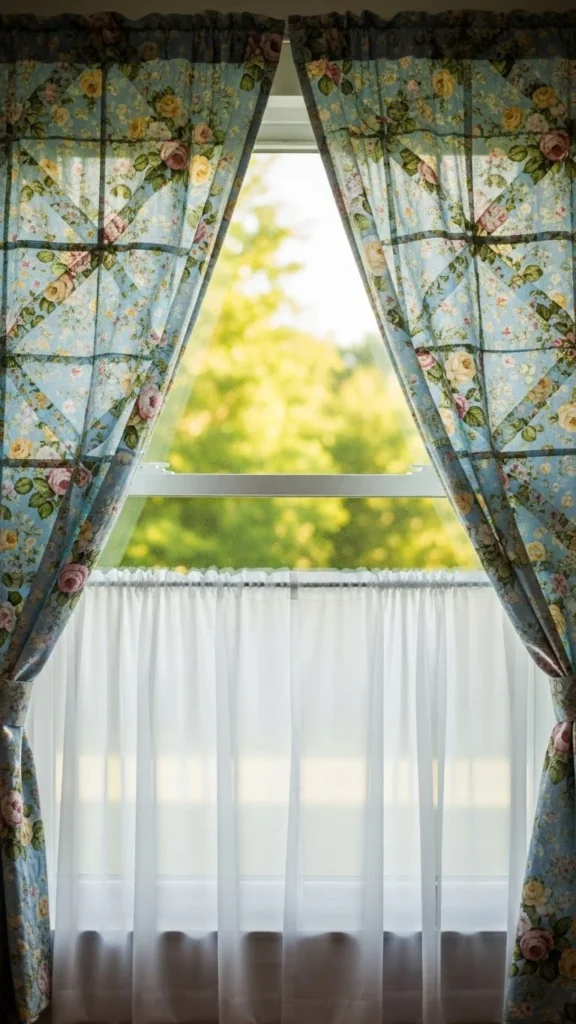
Quilted panels keep warmth inside. Use them as the front layer. Place sheer curtains behind them so the room stays bright during the day. Choose quilted designs in soft winter tones. If you want a low-cost version, use quilted bedspread material to make curtain panels. The layered result adds comfort and function.
19. Hanging Scarf Panels Behind Full Drapes
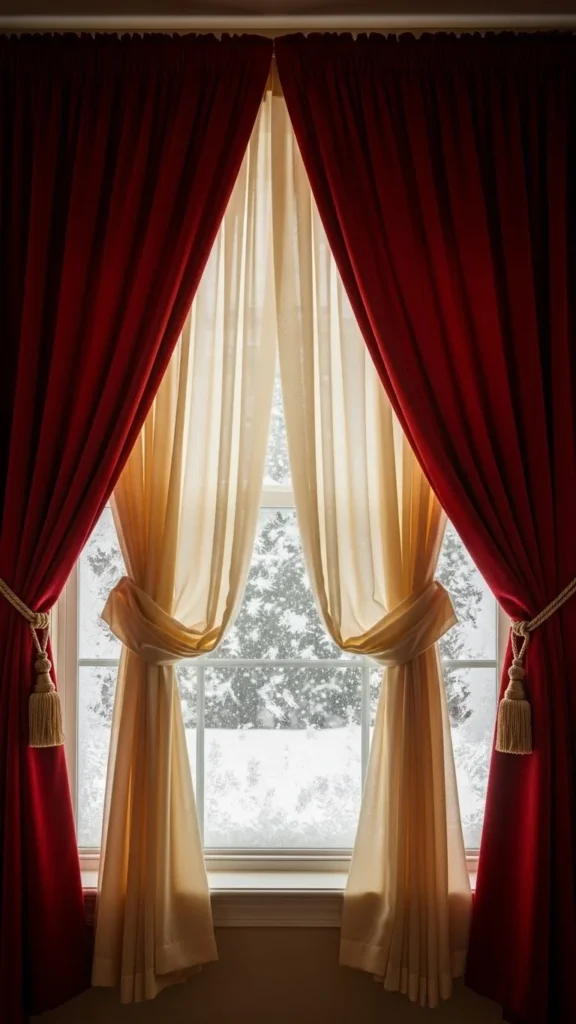
Scarf panels create delicate folds. Hang them behind full drapes using clip rings. They add softness without blocking light. Choose lightweight fabrics like voile or chiffon. Add warm-tone drapes to the outer layer for insulation. If you’re watching your budget, repurpose long scarves or lightweight throws. This setup works well in guest rooms or reading corners.
20. Velvet Panels With Sheer Side Wings
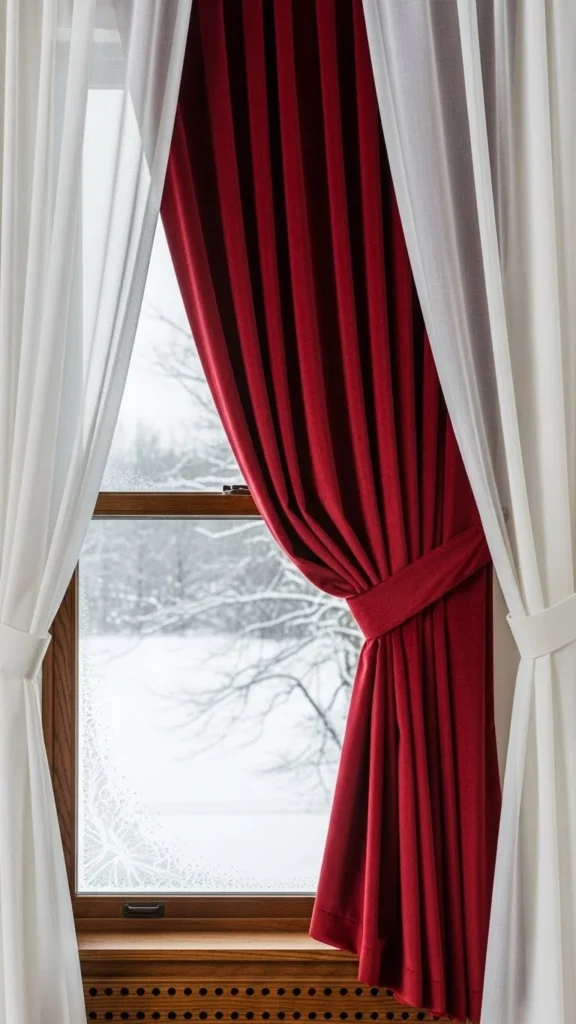
Velvet panels make a strong centerpiece. Add sheer side panels for lightness. This layered design creates a framed effect. Choose velvet in rich tones and sheers in pale neutrals. If the room is small, keep the velvet panels narrow. This setup adds warmth without taking over the space. A simple rod and rings complete the look.
21. Linen Sheers With Patterned Over-Drapes
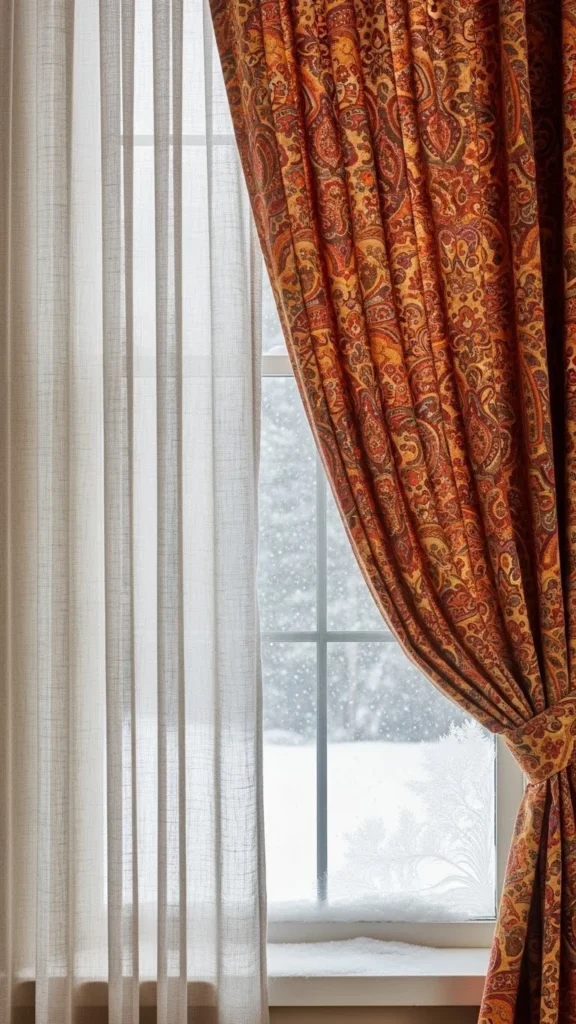
Linen sheers soften patterned drapes. Choose prints that echo winter themes—subtle checks, soft florals, or earthy graphics. Keep the sheers light and neutral. Hang patterned drapes with sturdy rods so panels fall cleanly. If you’re budgeting, choose printed fabric yardage and sew simple panels. This pairing works well in eclectic or lived-in spaces.
22. Thermal Blackout Panels With Decorative Tiebacks
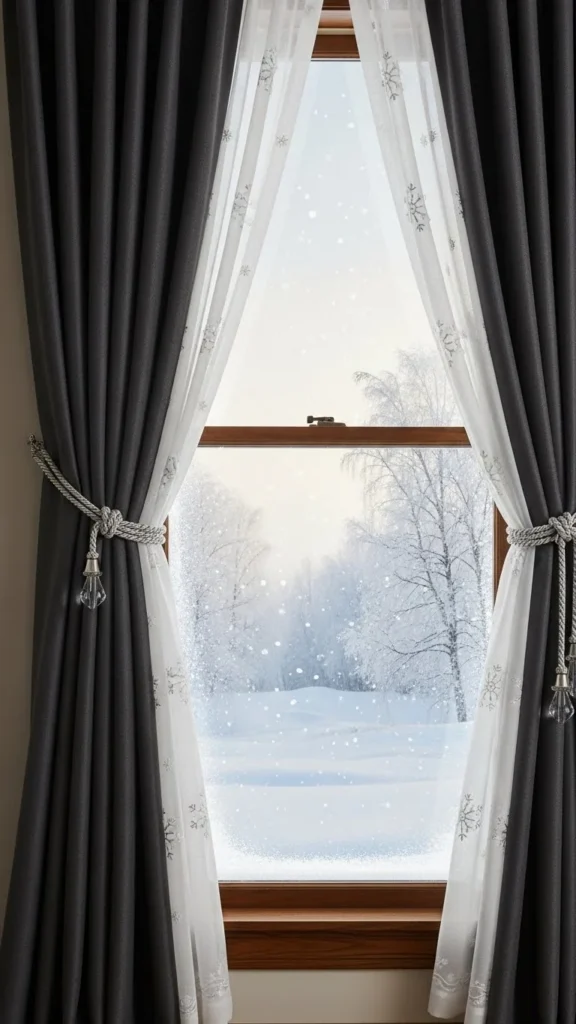
Tiebacks create shape. Use them with heavy blackout curtains to draw panels outward. Keep sheers behind them so the window still receives light. Choose tiebacks in soft winter materials like rope, knit, or fabric loops. If you want a DIY version, repurpose old belts or trims. This style works well in rooms where adjustable light control matters.
23. Layered Insulated Curtains With Top Valance
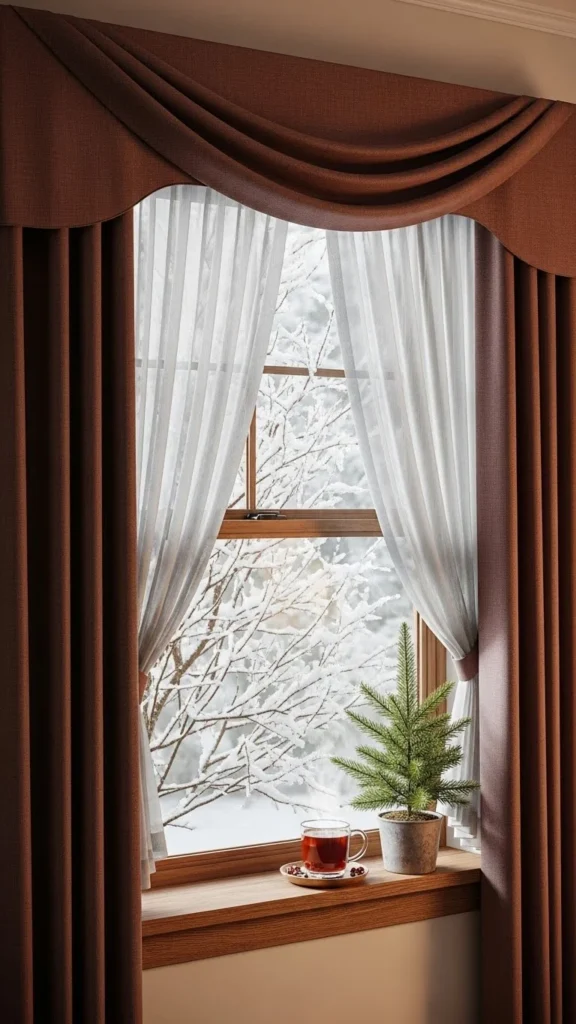
A valance adds a finished look. Use sheers behind insulated curtains for warmth and softness. Add a valance in a coordinating tone to hide hardware and create height. This setup works especially well on short windows. If saving money, make a simple valance from extra curtain fabric. The layered structure keeps the room warm while feeling classic and clean.
Conclusion
Layered curtains create comfort, warmth, and stylish texture during winter. With sheers, thermal panels, drapes, shades, and thoughtful hardware choices, you can build window treatments that soften light and keep your rooms insulated. These 23 ideas offer practical ways to layer fabrics in ways that look structured while still being easy to set up. Choose the pairings that match your décor and budget, experiment with textures, and enjoy a winter home that feels warm, polished, and inviting.
Leave a Reply