

A creative home office should feel inspiring the moment you sit down—but not so busy that it pulls your focus in ten directions. The goal is to build a space that supports ideas, keeps energy flowing, and still works for real, everyday tasks. With a few thoughtful styling choices, you can turn even a small corner into a workspace that feels personal, motivating, and easy to use.
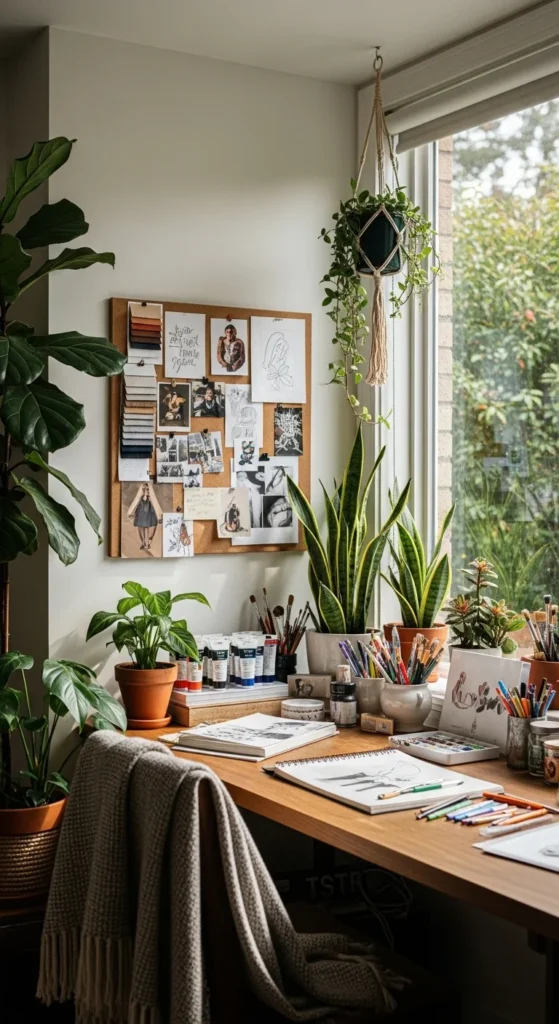
Start With a Clear Creative Zone
Every creative office needs a defined work area. This helps your brain associate the space with thinking, making, and problem-solving.
Start by:
- Positioning your desk where natural light hits from the side
- Keeping the wall in front of you visually calm
- Leaving the most expressive elements to the sides or behind you
A clear zone doesn’t mean plain. It means intentional. When your main work surface feels uncluttered, ideas move more freely.
Use Color in Small, Purposeful Ways
Color can support creativity when used carefully. Instead of painting everything bold, layer color through accents.
Try:
- A soft-colored chair
- A muted rug
- Art with warm tones
- Desk accessories in one color family
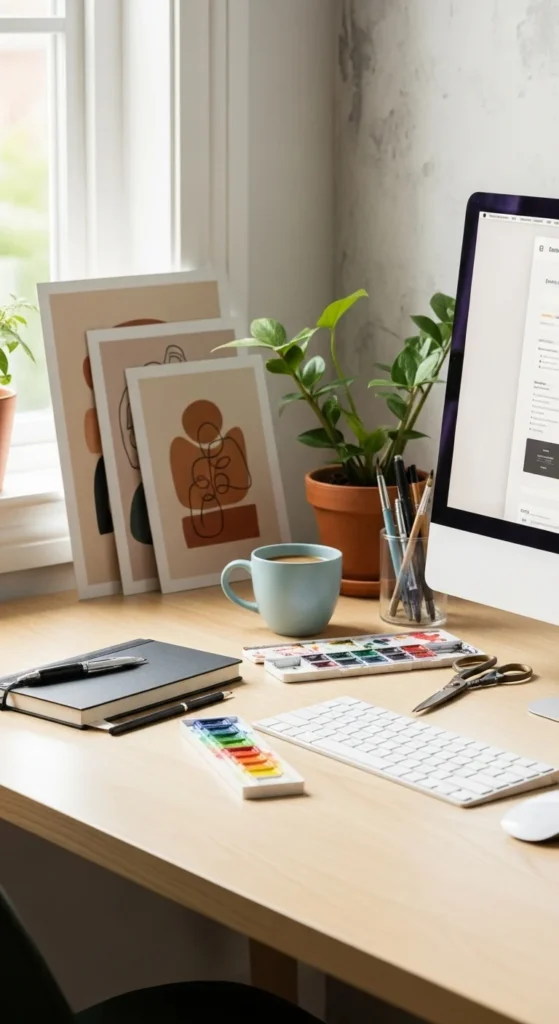
Stick to one or two main colors and repeat them throughout the room. This keeps the space expressive without feeling chaotic.
Create a Visual Inspiration Wall
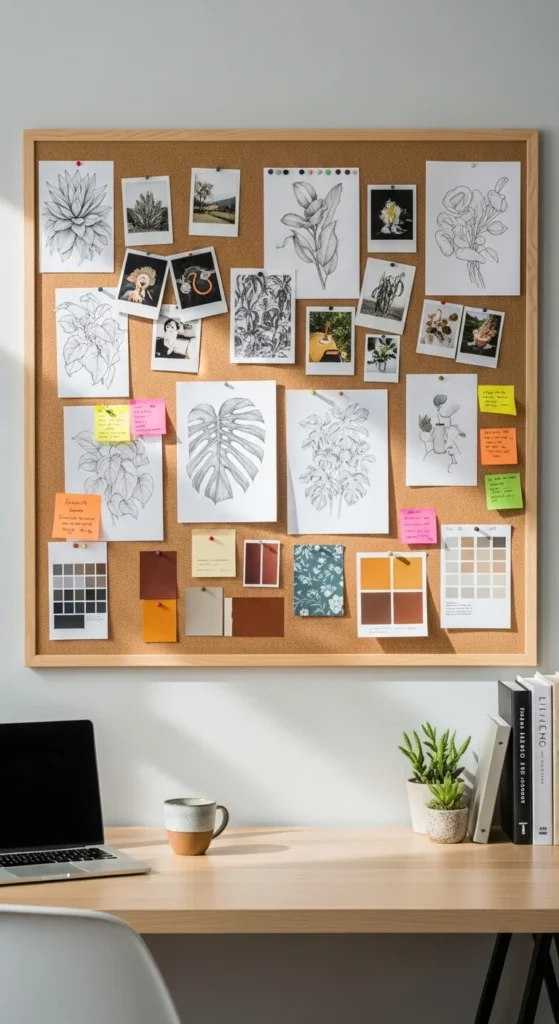
A creative office benefits from having ideas within sight. A small inspiration wall gives you visual energy without taking over the room.
Ideas for an inspiration wall:
- A pinboard with photos and sketches
- Framed prints leaned on a shelf
- Fabric swatches or color cards
- Pages from magazines or notebooks
Keep it editable. When inspiration changes, your wall should change with it.
Mix Textures to Keep the Space Interesting
Creativity thrives in spaces that feel layered and tactile. Texture adds depth without needing bold color.
Easy texture ideas:
- Wood desk or shelves
- Linen curtains or chair cushions
- Woven baskets for storage
- Ceramic or clay decor pieces
Mixing textures keeps the room from feeling flat and helps the office feel more personal and lived-in.
Keep Tools Visible but Organized
Creative work often benefits from seeing your tools. The trick is keeping them tidy enough to avoid distraction.
Use:
- Open jars for pens and brushes
- Small trays for frequently used items
- Shallow shelves for notebooks and books
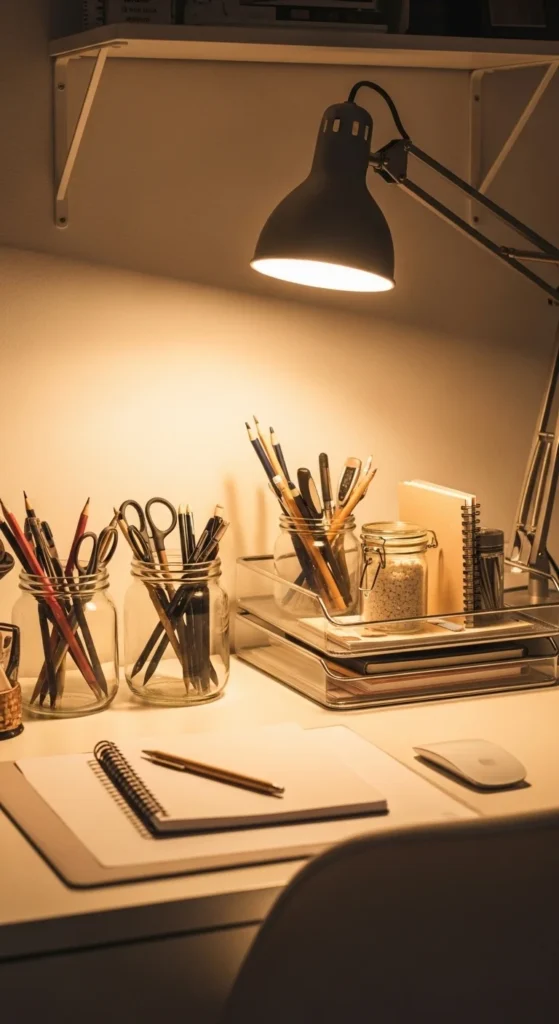
When tools are easy to reach, you’re more likely to act on ideas right away.
Add Greenery for Mental Breaks
Plants help soften a workspace and give your eyes a place to rest. They also make the room feel more alive.
Good options include:
- Small potted plants on shelves
- One medium plant near the desk
- Faux greenery if light is limited
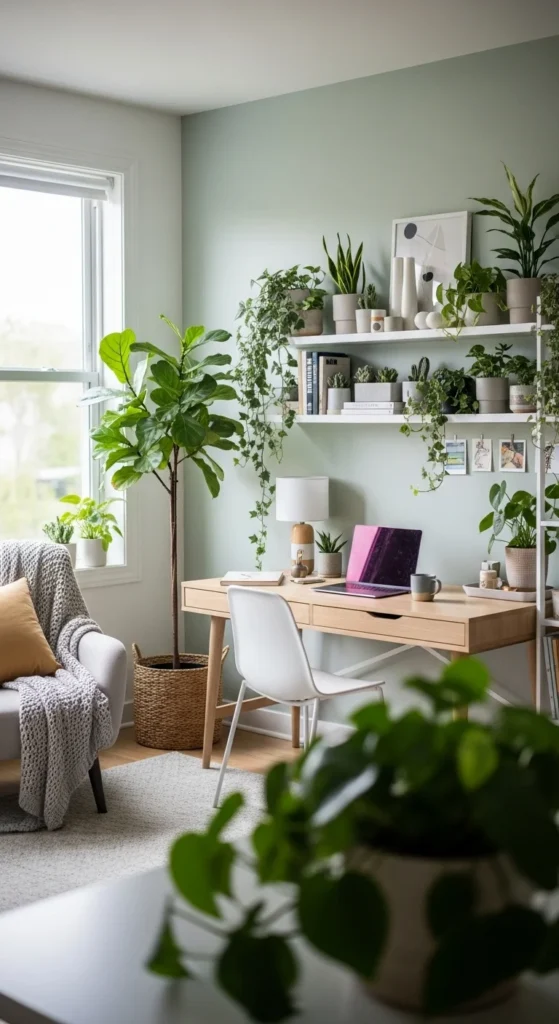
Keep greenery simple. One or two well-placed plants work better than many small ones.
Use Lighting to Match Your Creative Rhythm
Lighting affects how ideas flow. A creative office benefits from layered lighting instead of one harsh source.
Include:
- Natural light during the day
- A desk lamp for focused tasks
- A warm accent lamp for evenings
Avoid lighting that casts strong shadows or glare on your screen. Comfort supports longer creative sessions.
Personalize Without Overcrowding
Personal items help your office feel like yours. The key is choosing a few meaningful pieces instead of many small ones.
Good personal touches:
- A framed photo
- A favorite object or souvenir
- One piece of art that makes you pause
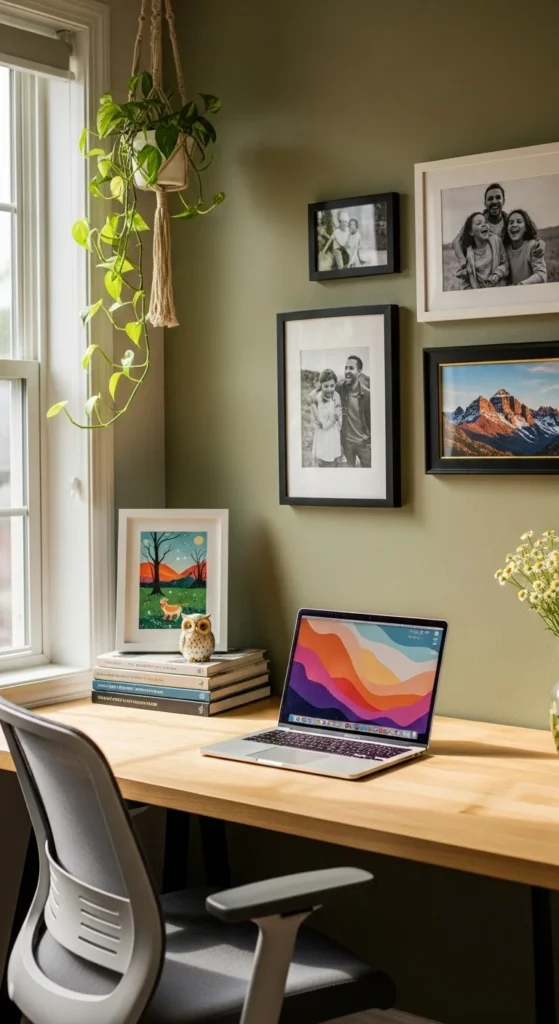
If the space starts to feel busy, remove one item. Open space helps ideas breathe.
Make Room to Move Things Around
Creative energy changes. Your office should be flexible enough to change with it.
Try:
- Lightweight chairs
- Moveable shelves
- Desk accessories that can shift positions
When your space adapts easily, you’re more likely to experiment and stay engaged.
Final Takeaway
A creative home office doesn’t need to be loud or complicated to spark ideas. With a clear work zone, thoughtful color, layered textures, and personal inspiration, you can build a space that supports both focus and imagination. Start small, adjust as you go, and let the room evolve alongside your creative process.
Save this guide for later when you’re ready to refresh your workspace and give your ideas room to grow.
Leave a Reply