

A home office should help you focus, not compete for your attention. Yet many workspaces slowly fill up with papers, random decor, and “just in case” items that never get used. The good news is that decorating without clutter doesn’t mean boring or bare. It means choosing pieces that earn their place and letting the room breathe.
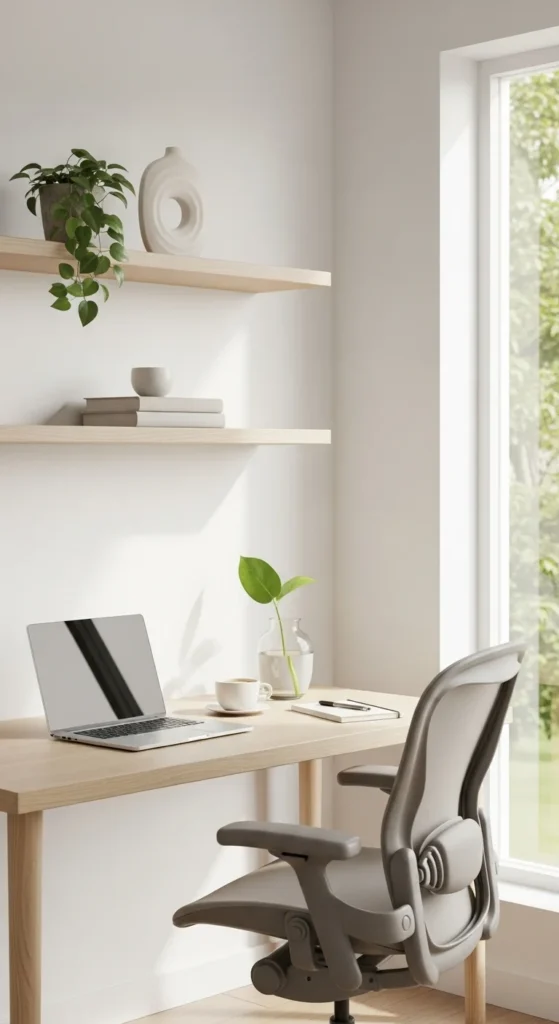
This guide walks through simple, realistic ways to decorate a home office so it feels calm, functional, and visually balanced—without stripping away personality.
Start With Fewer Surfaces, Not More
Clutter often begins with too many places to put things. Extra tables, unused shelves, or crowded desktops invite piles.
Instead:
- Keep one main work surface
- Limit side tables or extra cabinets
- Leave some walls completely empty
An open wall is not wasted space. It gives your eyes a break and makes the room feel larger. If something doesn’t have a clear purpose, remove it before decorating anything new.
A good rule: if you don’t touch it during your workday, it probably doesn’t belong on your desk.
Choose Storage That Hides, Not Displays
Open shelving looks great in photos, but in real life it shows every cable, notebook, and mismatched item. If you want a clutter-free look, closed storage works better.
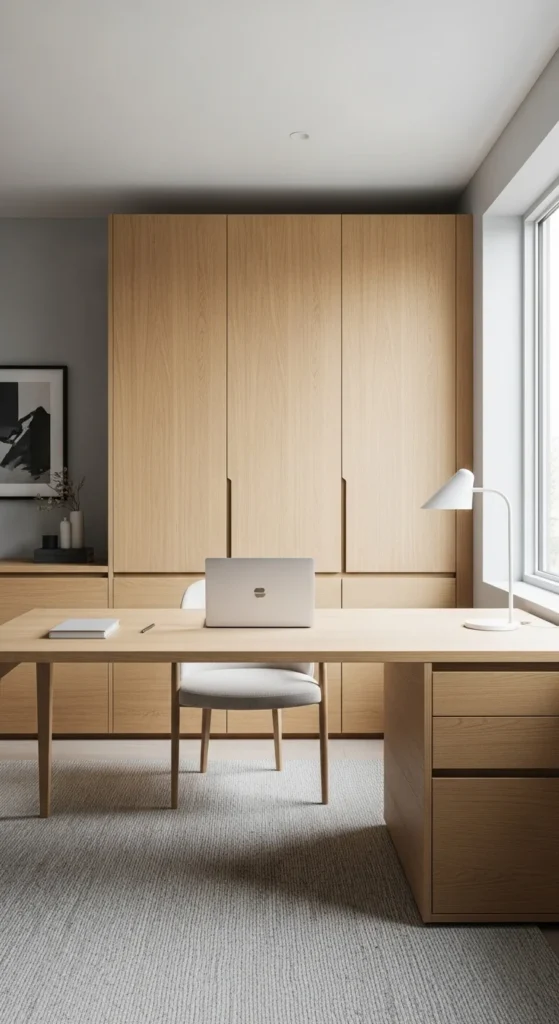
Try these ideas:
- Cabinets with doors instead of open shelves
- Drawer units under the desk
- Storage boxes that match the room’s color palette
If you do use open shelves, limit them to one or two levels and leave space between objects. Empty space is part of the design.
Decorate With Function First
The easiest way to avoid clutter is to decorate using items that already serve a purpose.
Good examples:
- A desk lamp that doubles as a style piece
- A pinboard that replaces piles of loose notes
- A tray that keeps small items contained
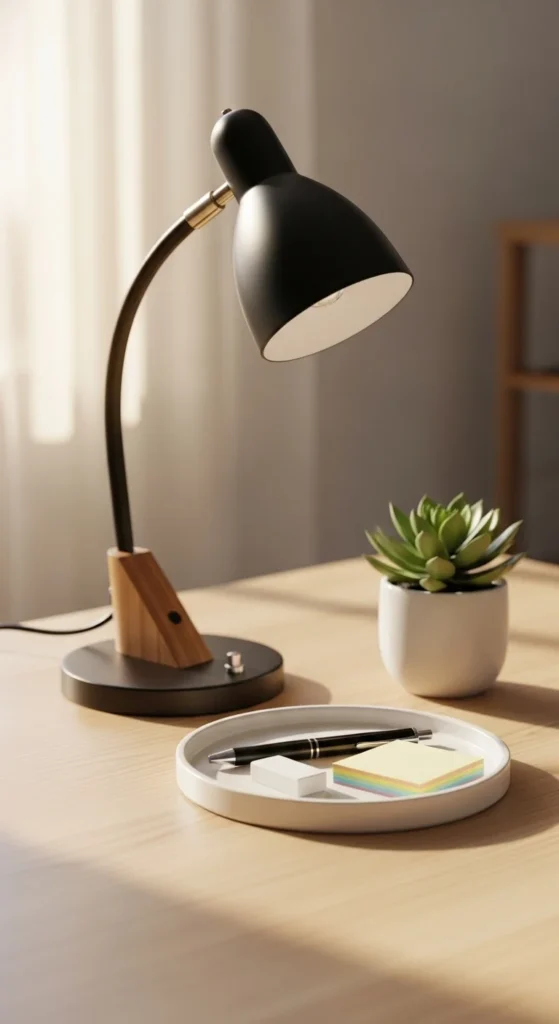
When decor is functional, it never feels like “extra stuff.” It earns its spot by making your day easier.
Keep the Desk Surface Intentionally Sparse
Your desk is the visual center of the room. The more items on it, the more cluttered the space feels.
Aim for:
- One lamp
- One organizer
- One personal item
That’s it.
Store everything else in drawers or cabinets. If you love styling, rotate desk decor every few months instead of adding more. This keeps the space feeling new without piling things up.
Use Wall Decor With Clear Boundaries
Wall decor can add personality without creating physical clutter—but only if it’s controlled.
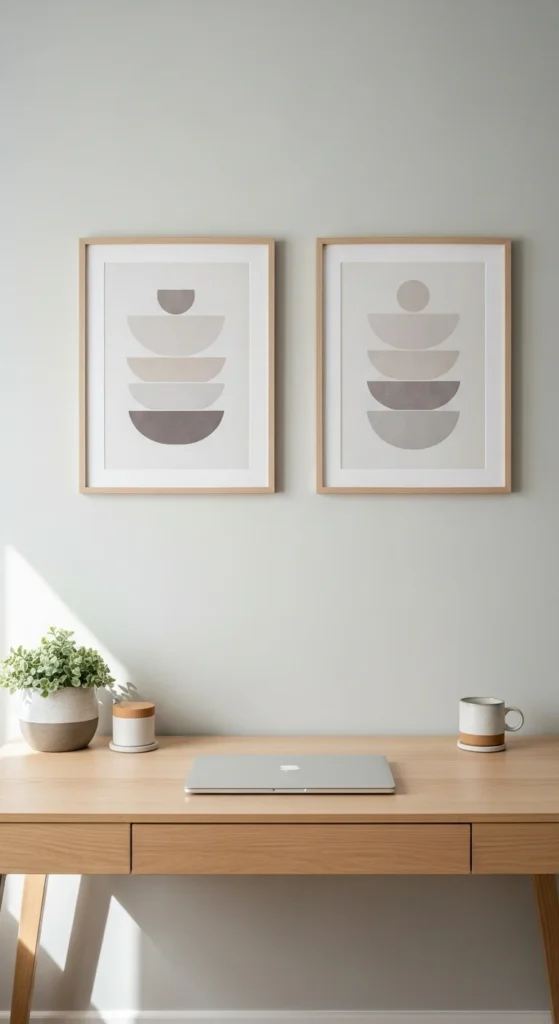
Tips that work:
- Hang art in pairs or small groups
- Keep frames similar in size or color
- Avoid gallery walls in small offices
One large print or two medium frames often look cleaner than many small ones. The goal is visual calm, not visual noise.
Limit Decor to a Consistent Color Palette
Too many colors make a room feel busy, even when it’s tidy. A limited palette creates instant order.
Try:
- One main neutral (white, beige, soft gray)
- One supporting tone (light wood, warm tan)
- One accent color at most
This applies to everything—decor, storage, frames, even stationery. When colors repeat, the room feels cohesive and uncluttered.
Add One Plant, Not Five
Plants bring life into a home office, but too many quickly overwhelm the space.
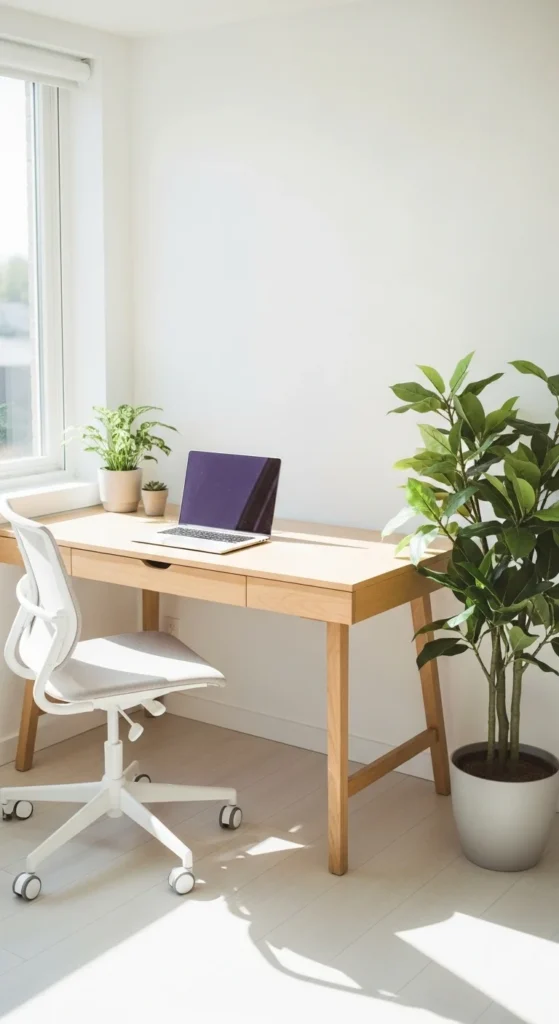
Choose:
- One medium floor plant or
- One small desk plant
Avoid tiny plants scattered everywhere. One strong visual anchor looks calmer and more intentional.
Hide Cables and Tech Accessories
Nothing ruins a clean office faster than visible cords.
Simple fixes:
- Cable clips under the desk
- A cord box for power strips
- Wireless accessories where possible
When cables are hidden, the room instantly feels more organized—even if nothing else changes.
Leave Some Space Unstyled on Purpose
The biggest mistake in home office decor is filling every corner.
Empty space:
- Helps your brain rest
- Makes decor stand out more
- Keeps the room flexible
You don’t need to decorate every shelf, wall, or corner. A little restraint goes a long way.
Final Takeaway
Decorating a home office without clutter is less about buying the “right” items and more about choosing fewer, better ones. Start by removing what doesn’t serve your workday. Then add decor slowly, with intention.
A calm office supports focus, creativity, and comfort—all without overflowing shelves or crowded desks.
Save this guide and revisit it anytime your workspace starts feeling a little too full.
Leave a Reply