

A calm home office is not about perfection. It’s about creating a space that reduces visual noise and supports steady concentration. When your surroundings feel quiet and intentional, your mind follows. The goal is not to strip personality away, but to shape the room so nothing fights for your attention while you work.
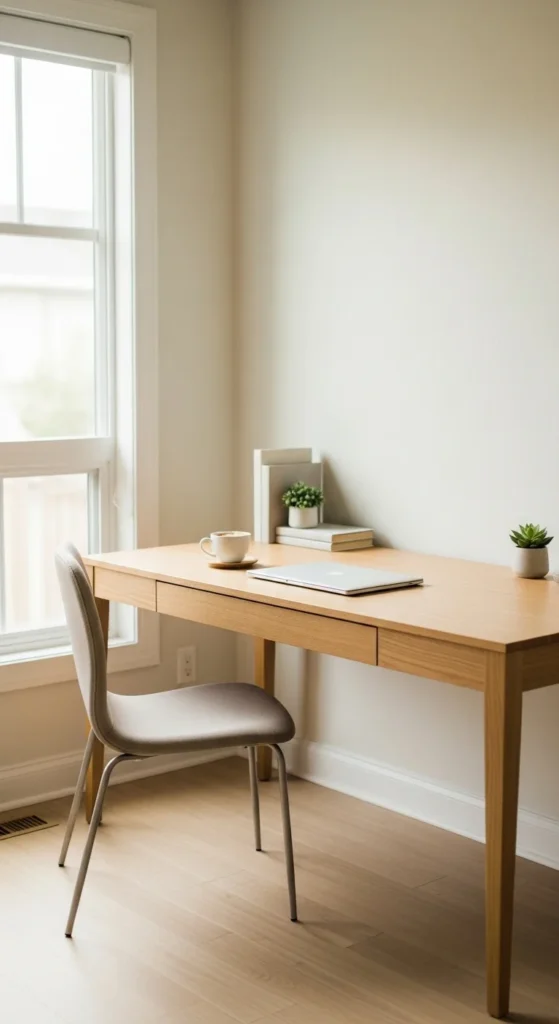
This guide shares practical ways to style a home office that feels balanced, grounded, and easy to focus in—using simple layouts, gentle colors, and realistic choices that work in everyday homes.
Start With a Clear Visual Base
Before adding anything new, remove visual distractions. Too many objects pull your attention in different directions, even if the room is tidy.
Focus on:
- A clear desk surface
- Open floor space
- Walls with breathing room
A calm office usually starts with fewer items than you expect. If something does not support your work or comfort, take it out first. Styling works better after the space is simplified.
Choose Soft, Low-Contrast Colors
Color has a direct effect on focus. High contrast and bold shades can feel energizing, but they often distract over time.
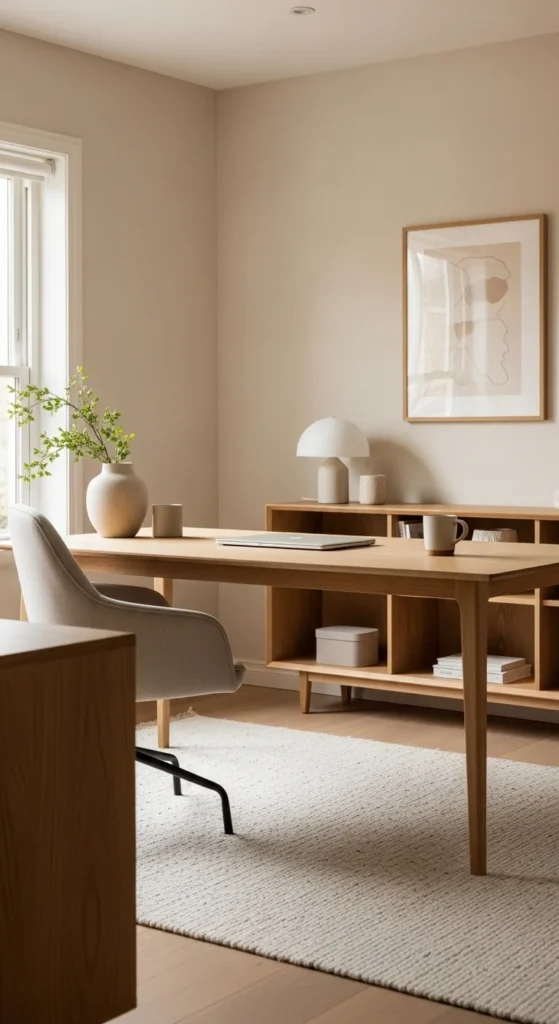
Good choices include:
- Warm white
- Soft beige
- Light gray
- Pale wood tones
Keep the palette tight. When surfaces, furniture, and decor stay within the same tone family, the room feels steady rather than busy.
Keep the Desk Setup Minimal and Intentional
The desk is the heart of the office. A crowded desk often leads to mental clutter.
Aim for:
- One lamp
- One organizer
- One personal item
Everything else should live in drawers or cabinets. If you like decor, rotate one small item occasionally instead of adding more. This keeps the desk visually calm and functional.
Use Closed Storage to Reduce Visual Noise
Open shelves can quickly turn into visual chaos. Closed storage keeps the room feeling organized, even on busy days.
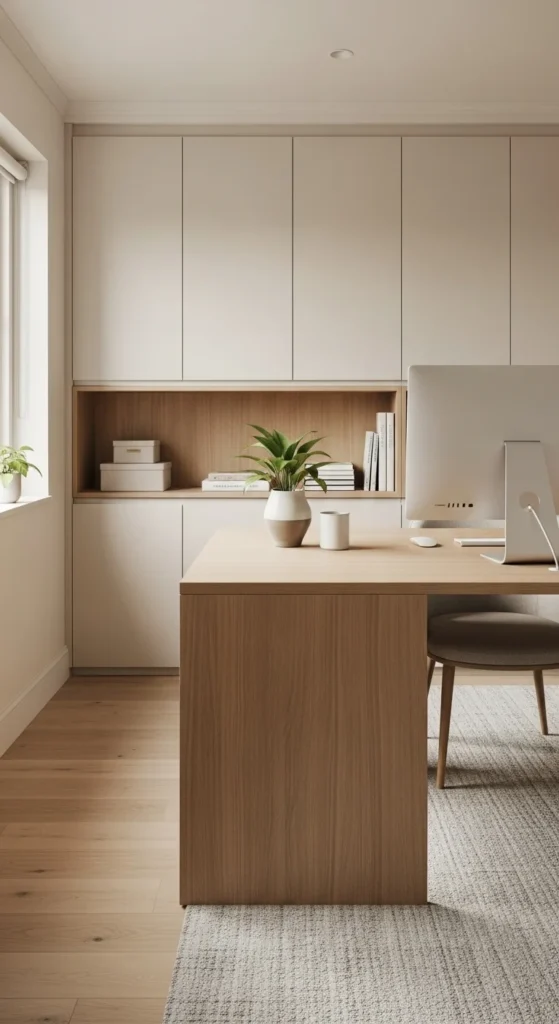
Helpful options:
- Drawer units under the desk
- Cabinets with flat fronts
- Matching storage boxes
If you use open shelving, leave empty space between items. A shelf that is half empty often looks more peaceful than one filled edge to edge.
Let Natural Light Lead the Layout
Natural light supports focus and keeps the room feeling open. Position your desk where light reaches it without glare.
If possible:
- Face the window or sit beside it
- Use sheer curtains instead of heavy ones
- Keep window sills mostly clear
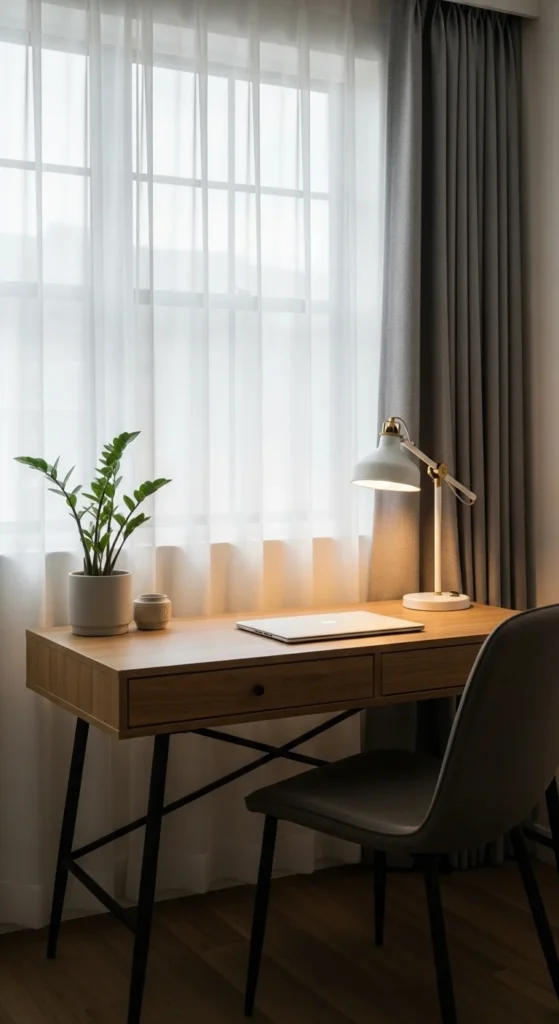
Light should move freely through the room. Blocking it with heavy decor or furniture can make the space feel closed in.
Add Texture Instead of More Color
A calm office doesn’t have to feel flat. Texture adds depth without visual overload.
Simple ways to add texture:
- A linen curtain
- A woven chair seat
- A soft rug under the desk
Stick to similar tones so texture becomes the detail, not color contrast. This keeps the room interesting while staying easy on the eyes.
Limit Wall Decor to One Focal Area
Too much wall art can quietly distract you throughout the day. Instead of spreading decor everywhere, choose one clear focal point.
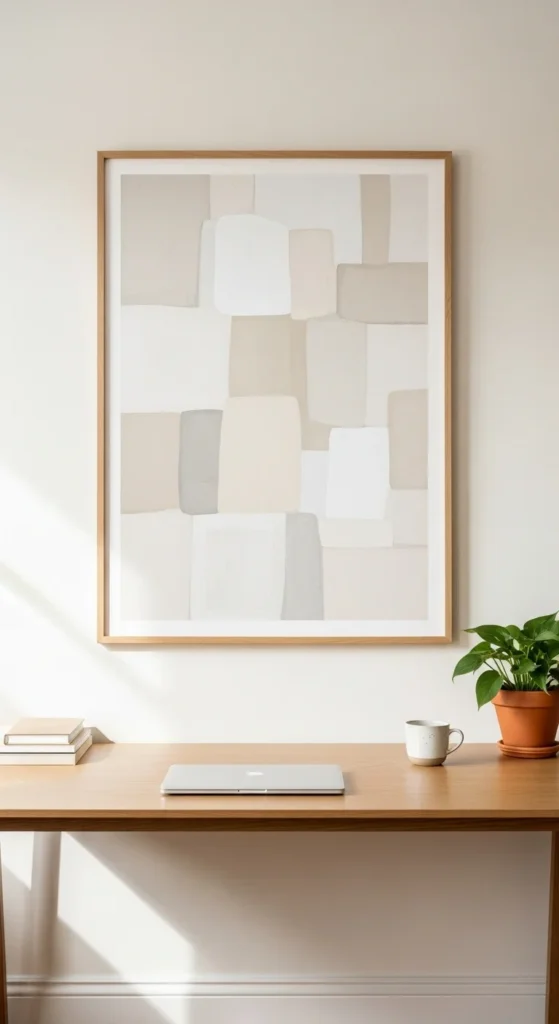
Options that work well:
- One large artwork
- Two evenly spaced frames
- A simple pinboard with only current items
Leave other walls bare. Empty wall space helps the room feel calm and controlled.
Keep Technology Visually Quiet
Cables, chargers, and extra screens add visual clutter fast. A calm office hides tech as much as possible.
Quick fixes:
- Cable clips under the desk
- A cord box for power strips
- Wireless keyboard and mouse
When cables disappear, the room immediately feels more organized and less stressful.
Use One Plant as a Soft Anchor
Plants help soften a workspace, but too many can feel distracting.
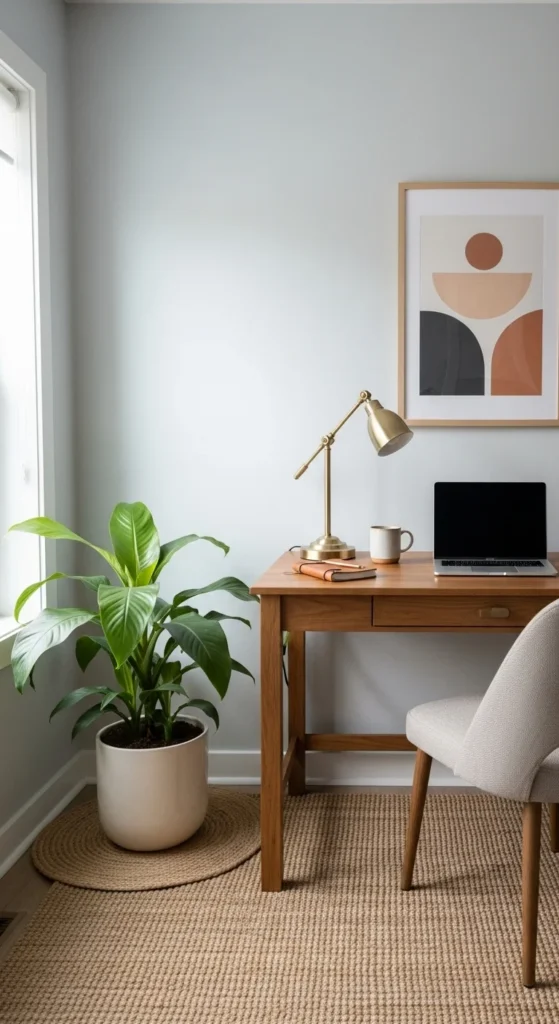
Choose:
- One medium floor plant
- Or one small desk plant
Keep the rest of the room clear. One plant gives life without overwhelming the space.
Leave Empty Space on Purpose
Calm rooms are not filled to the edges. Empty space is part of the design.
Allow for:
- Bare sections of wall
- Open desk corners
- Unused shelf space
This gives your eyes places to rest and helps your focus stay on the task in front of you.
Final Takeaway
Styling a calm home office for focus is about subtraction before addition. Fewer items, softer colors, and intentional placement create a workspace that supports concentration instead of draining it.
Start small. Clear one surface. Simplify one wall. Adjust the lighting. Over time, the room will begin to feel calmer—and your workdays will feel steadier because of it.
Save this guide and revisit it whenever your office starts to feel visually loud.
Leave a Reply