

Wall shelves are one of the smartest, easiest ways to add both storage and style to your home—especially if you’re working with limited square footage. They lift clutter off the floor, add vertical interest, and instantly make a room feel more open and organized. But choosing the right shelves is key. The wrong style or placement can make a room look cramped instead of spacious.
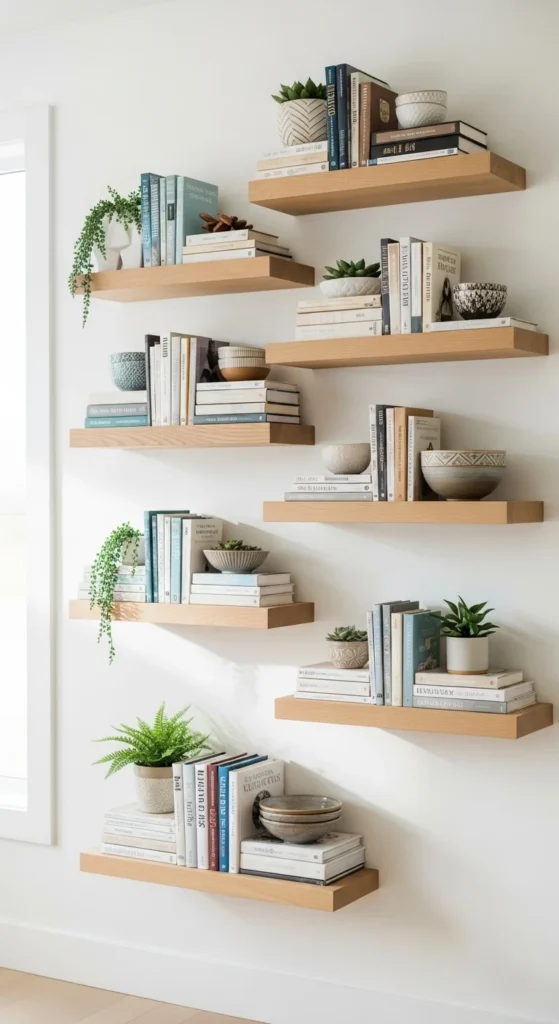
Here’s how to pick wall shelves that not only look beautiful but also help you maximize every inch.
Start With Your Storage Needs
Before picking a design, think about what you actually need to store. This prevents overcrowding and helps you choose shelves that fit your lifestyle.
Ask yourself:
- Do I need shelves for books?
- For decor pieces?
- For bathroom essentials?
- For kitchen jars and spices?
- For kids’ toys or craft supplies?
Knowing your purpose ensures you select shelves that match the weight, size, and quantity of the items you’ll display.
For example:
✨ Books need sturdy brackets.
✨ Small décor suits lightweight floating shelves.
✨ Bathrooms need moisture-resistant materials.
Pick the Right Shelf Style for Your Space
Different shelf styles work better in different rooms. Choosing the right one instantly boosts both function and aesthetics.
✅ Floating Shelves
Minimal, sleek, and perfect for small spaces. They make walls feel open because there are no visible brackets.
✅ Bracket Shelves
More traditional and great for heavier items. The brackets add visual structure and support.
✅ Box Shelves
Boxed or cube-style shelves are ideal for displaying small items or creating a grid-like feature wall.
✅ Corner Shelves
Perfect for awkward corners or unused nooks.
✅ Picture Ledges
Shallow shelves that hold frames, books, and décor without taking up much depth.
Choosing the right shelf style helps ensure it blends smoothly with your furniture and maximizes your storage potential.
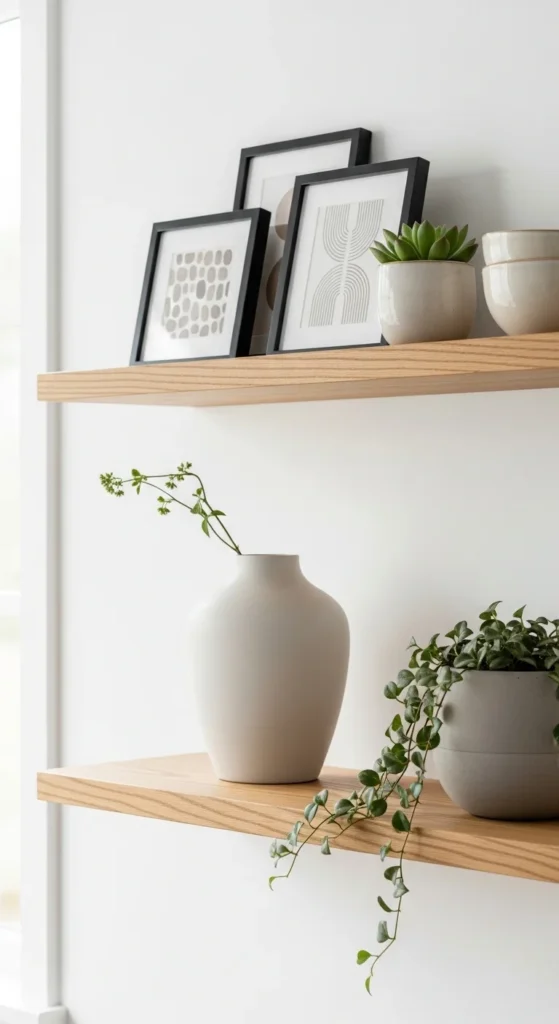
Measure Before You Buy (It Matters!)
Even the most beautiful shelf won’t help you maximize space if it doesn’t fit properly.
Measure:
- Wall width—to avoid awkward gaps
- Shelf depth—shallow shelves (5–7 inches) save space
- Height between shelves—leave room for taller items
- Eye level height—for the most visible styling zone
In small spaces, choose narrower shelves to maintain walking and movement areas.
Pro tip: Use painter’s tape to outline the shelf on the wall before installing. This helps you see how it will feel in the room.
Choose Smart Materials for Durability
The material you choose affects both style and longevity.
Great material choices include:
- Solid wood for a warm, natural look
- Metal shelves for industrial or modern styles
- Glass shelves for minimal, airy rooms
- Laminate or MDF for budget-friendly options
If you’re displaying heavy items like books or kitchen jars, always choose stronger materials. Lightweight décor? Floating MDF shelves work perfectly.
Think Vertical: Go Higher to Save Floor Space
Using vertical space is the key to making small rooms feel bigger.
Install shelves:
- Above doorways
- Over desks
- Behind sofas
- Above bed headboards
- Inside closets
- Over kitchen countertops
- In unused corners
Vertical stacking draws the eye upward, creating the illusion of height and giving you more storage without touching the floor.
Create Balance Through Shelf Placement
Where you place your shelves impacts how spacious the room feels.
Try these placement tips:
- Hang shelves at eye level for the best visual balance.
- Don’t overcrowd one wall—spread shelves throughout the room.
- Leave breathing space around each shelf to avoid clutter.
- Use symmetrical placement if you want a calm, organized vibe.
Shelf placement can make or break the entire room’s design flow.
Style With Intention (Less Is More)
Shelves that are overfilled will instantly make your space feel smaller. Keep your display thoughtful and airy.
Here’s a simple formula:
- One tall item (vase, plant, frame)
- One horizontal piece (small stack of books)
- One decorative accent (candle, sculpture)
Use negative space to your advantage.
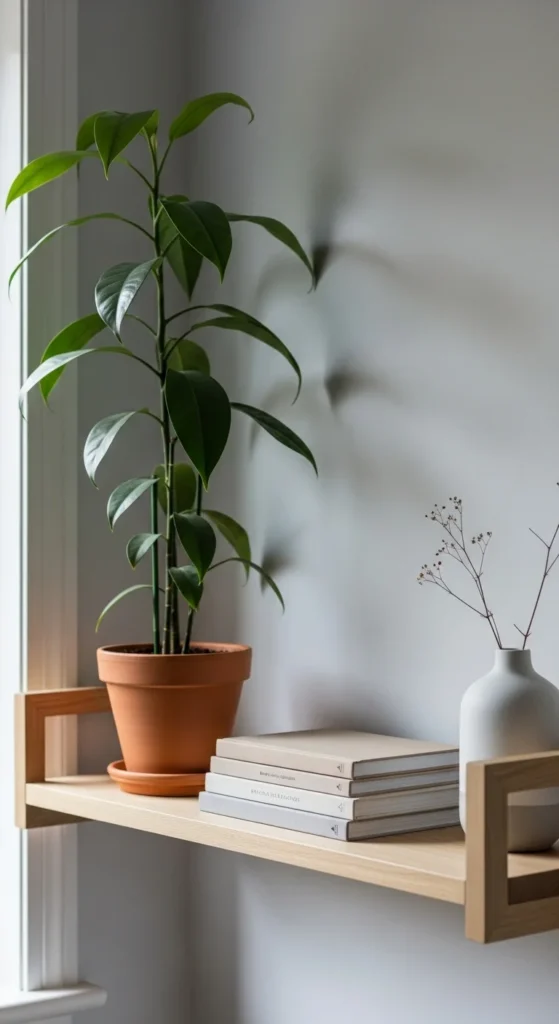
Rotate items seasonally to keep your shelves feeling fresh.
Choose Colors That Open Up the Room
Shelf colors can dramatically change how big your space feels.
Best color choices for small rooms:
- White
- Light wood
- Soft gray
- Neutral beige
- Light oak
These tones blend into the wall and allow your décor pieces to stand out without overwhelming the room.
If you prefer bold shelves, keep the surrounding area simple and uncluttered.
✅ Takeaway
Choosing the right wall shelves can completely transform your space, making it feel more open, organized, and beautifully styled. Start with your needs, measure carefully, pick the right materials and placement, and style thoughtfully. Even the smallest rooms can feel spacious when you use shelves strategically.
Leave a Reply