

Shelves are one of the easiest places to decorate—but also one of the easiest to overcrowd. A few extra books, a cluster of trinkets, or too many plants, and suddenly the shelf feels cluttered instead of beautiful. The secret is balance: the right mix of décor, empty space, height, and texture. With a little strategy, you can style shelves that look clean, curated, and effortlessly stunning.
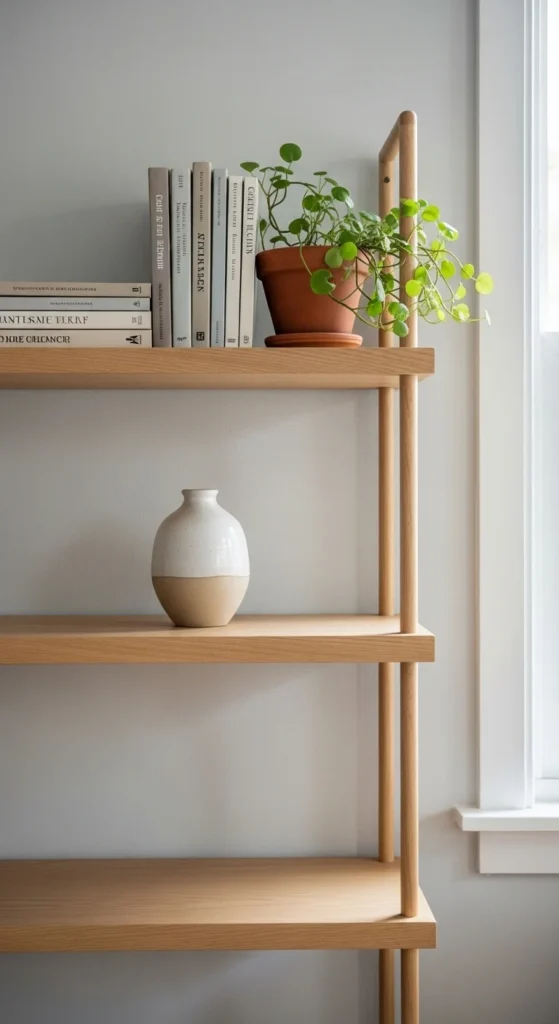
Let’s walk through simple steps to create perfectly styled shelves without overwhelming them.
Start With a Clean Slate
Before you add anything, clear off the shelves completely. Starting fresh helps you see the space more clearly and prevents you from automatically putting everything back in the same spot.
As you begin:
- Remove all items
- Wipe down the shelves
- Sort décor pieces into groups (books, plants, ceramics, baskets, frames)
- Keep only items you truly love
This gives you a clean foundation—and keeps clutter from sneaking back in.
Choose a Simple Color Palette
A cohesive color palette instantly makes shelves look intentional rather than messy. Too many colors can overwhelm the eye, especially in small spaces.
You can choose:
- Neutrals (white, beige, black, wood)
- Earthy tones (terracotta, olive, tan)
- Soft pastels
- A modern black-and-white look
- A warm mixed-wood palette
Pick 2–4 main colors and let them guide your décor choices.
Use the Rule of Thirds for Easy Styling
A simple trick: Divide each shelf visually into three sections and style each section lightly. This helps prevent overcrowding and keeps your shelves looking balanced.
For each section, use:
- One medium-sized item
- One small item
- One breathing space
Or style one section fully and let the other two sections stay light.
This creates rhythm—without clutter.
Mix Heights and Shapes for Visual Interest
Shelves feel crowded when everything is the same size. Mixing items of different heights and shapes creates a more dynamic, airy look.
Consider using:
- Tall vases or candlesticks
- Medium decorative objects
- Small bowls or trinkets
- A plant with trailing leaves
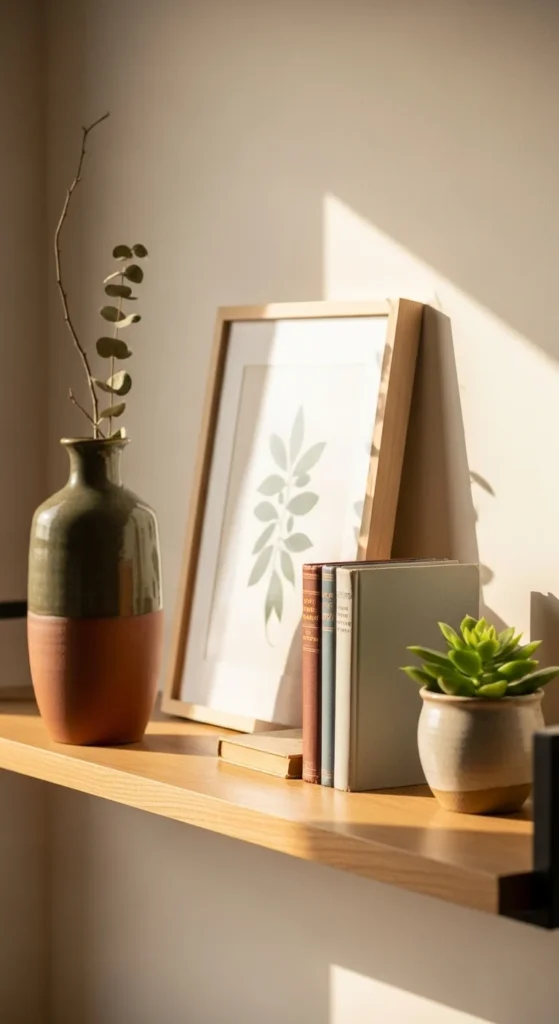
The goal is contrast—not quantity.
Leave Open Space to Let the Shelf Breathe
One of the most common decorating mistakes is filling every inch of a shelf. Empty space is essential—it’s what makes styled shelves feel clean and modern.
Leave space:
- On the sides
- Between décor clusters
- Behind items for layering
Treat empty space as an intentional design element.
Add Books Strategically
Books add warmth and personality, but too many can quickly overcrowd shelves.
Try a few simple book styling techniques:
- Stack books horizontally for texture
- Lean one vertically behind an object
- Use 3–5 books per section rather than stuffing them in
- Mix books with décor pieces
Books should complement the shelf—not dominate it.
Layer Items Without Adding Clutter
Layering adds depth and visual richness—but only when done lightly.
To layer without overcrowding:
- Place a framed photo or art piece at the back
- Add one object in front (a vase, candle, or plant)
- Keep the rest of the space simple
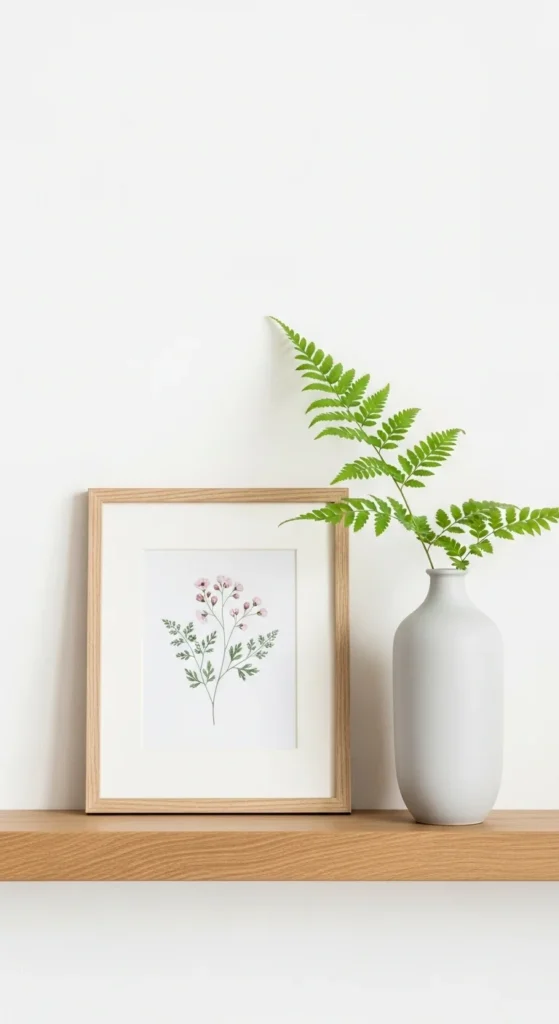
Avoid layering more than two items deep.
Incorporate Natural Elements for Warmth
Nature softens shelves and makes them feel inviting.
Try adding:
- A small plant
- A wooden bowl
- A wicker basket
- Dried flowers
- A stone or clay piece
Even one natural element per shelf helps balance more modern or decorative items.
Use Decorative Boxes or Baskets to Hide Small Items
If you have loose items you need to store, baskets or boxes can hide clutter while still keeping shelves stylish.
Great for storing:
- Remote controls
- Chargers
- Coasters
- Small office supplies
- Candles
- Kids’ items
Stick to ones with clean lines or neutral tones to maintain a minimalist look.
Switch Up Orientation for Variety
Varying the direction of objects keeps the design interesting. For example:
- One shelf heavy on décor
- One shelf featuring books
- One shelf with a plant as the focal point
- One shelf kept extra simple
This creates flow from top to bottom and avoids visual clutter.
Edit Your Shelves Often
The best-styled shelves evolve over time. Every few months:
- Remove pieces you no longer love
- Rotate seasonal items
- Simplify areas that look heavy
- Add one new piece for freshness
Editing prevents buildup and keeps the space feeling light.
Final Takeaway
Decorating shelves without overcrowding is all about balance—clean lines, thoughtful placement, and plenty of breathing room. With a simple color palette, varied heights, intentional spacing, and a mix of textures, you can create shelves that look curated, stylish, and completely clutter-free.
Leave a Reply