

Natural light can completely change how a home office feels. It affects focus, comfort, and even how long you can work without feeling drained. Decorating around natural light isn’t about adding more decor—it’s about letting light move freely and choosing pieces that work with it instead of against it.
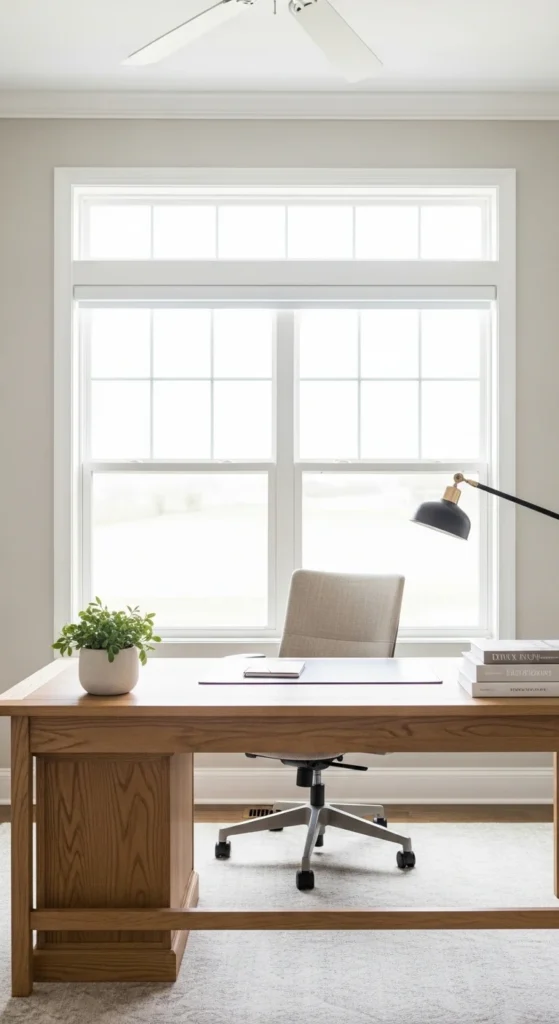
This guide walks through practical ways to decorate a home office so natural light becomes the main feature, creating a space that feels open, calm, and easy to work in.
Position the Desk to Catch the Light
Where the desk sits matters more than most decor choices. Natural light should reach your workspace without glare.
Good desk placement:
- Facing the window
- Positioned beside the window
- Slightly angled toward light
Avoid placing your desk with your back directly to the window. This can cause screen glare and uneven lighting. If light feels harsh at certain times of day, sheer curtains help soften it without blocking brightness.
Keep Window Areas Visually Clear
Windows should feel open, not crowded. Heavy decor around them can stop light from spreading through the room.
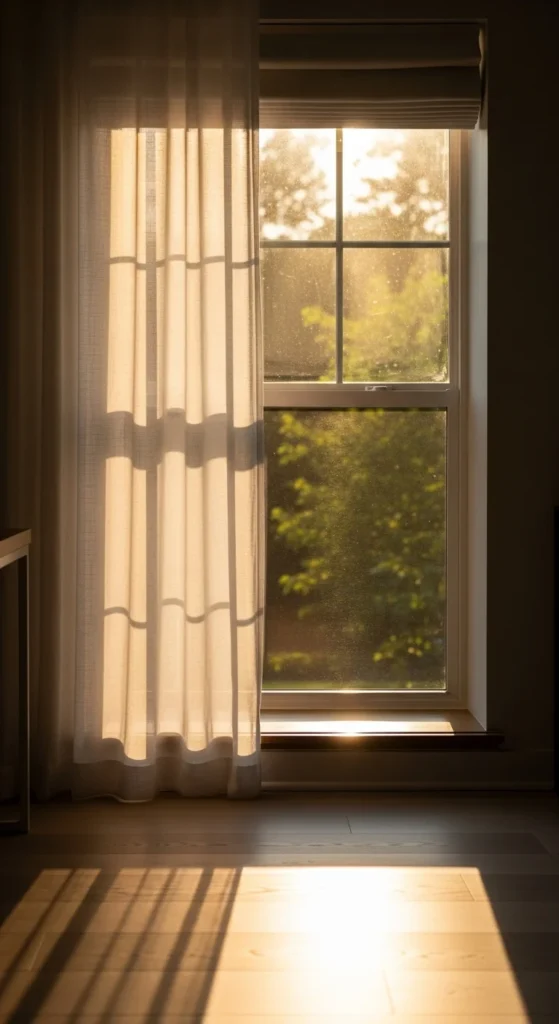
Simple fixes:
- Clear the window sill
- Remove heavy curtains
- Avoid tall furniture near the window
If you add decor near the window, keep it low and off to the sides so light can travel freely.
Use Light Colors to Reflect Daylight
Light colors help bounce daylight deeper into the room. Dark finishes absorb it instead.
Good light-reflecting choices:
- Soft white walls
- Pale beige or light gray
- Light wood furniture
You don’t need to repaint everything. Even swapping a dark desk or shelf for a lighter one can noticeably change how bright the room feels.
Choose Sheer or Lightweight Window Coverings
Window coverings should soften light, not block it.
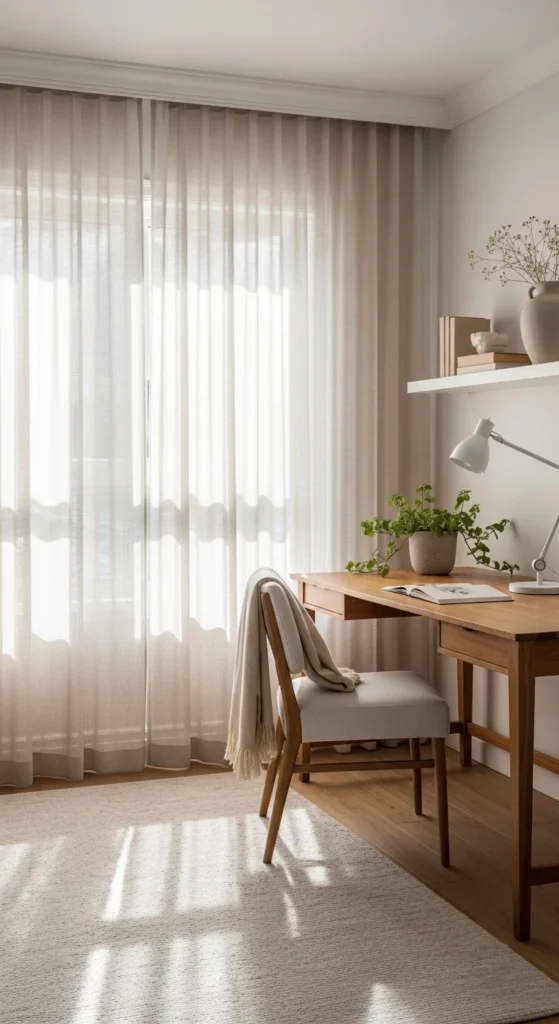
Better options include:
- Sheer curtains
- Linen-style panels
- Light roman shades
Avoid thick fabrics or dark colors during daytime hours. Keep coverings easy to pull aside so windows stay open while you work.
Use Mirrors to Spread Light
Mirrors can double the effect of natural light when placed thoughtfully.
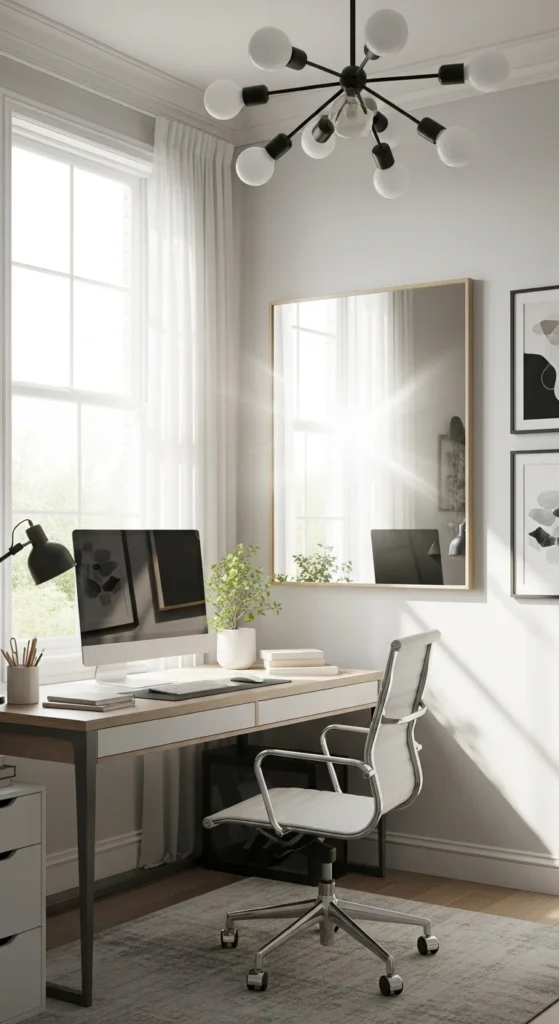
Try:
- Hanging a mirror opposite the window
- Leaning a mirror on a side wall
- Using mirrored frames or trays
Even a small mirror can help brighten darker corners of the room.
Keep the Desk Surface Light and Open
A cluttered desk blocks light visually, even if the room itself is bright.
Aim for:
- A clear desk surface
- Light-colored desktop
- Minimal accessories
When light hits an open surface, it reflects back into the room instead of being absorbed by stacks of items.
Use Closed Storage Instead of Open Piles
Open storage filled with supplies can interrupt the flow of light.
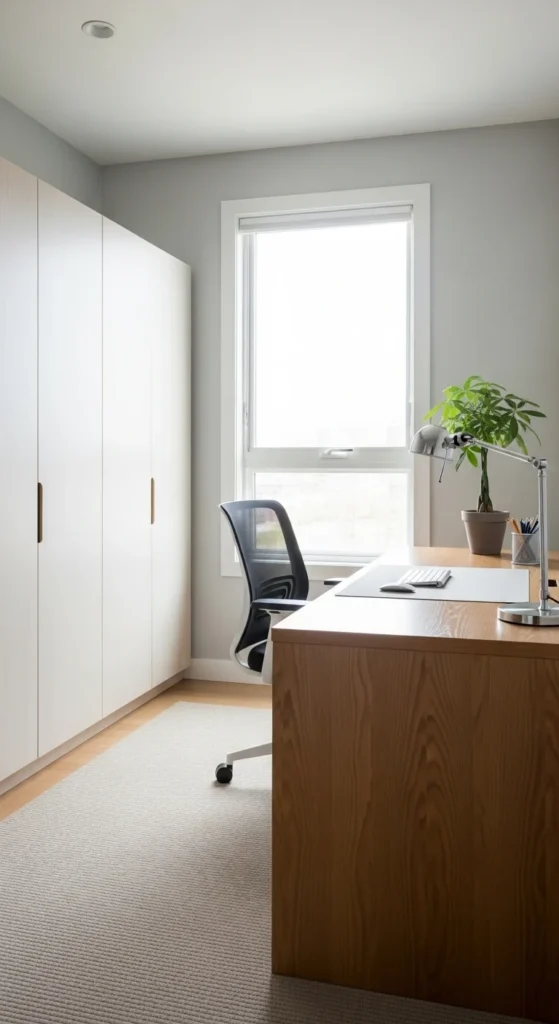
Better choices:
- Closed cabinets
- Drawer units under the desk
- Matching storage boxes
This keeps visual clutter low and allows light to remain the focus.
Add Soft Texture Without Blocking Light
Texture adds comfort, but it should stay visually light.
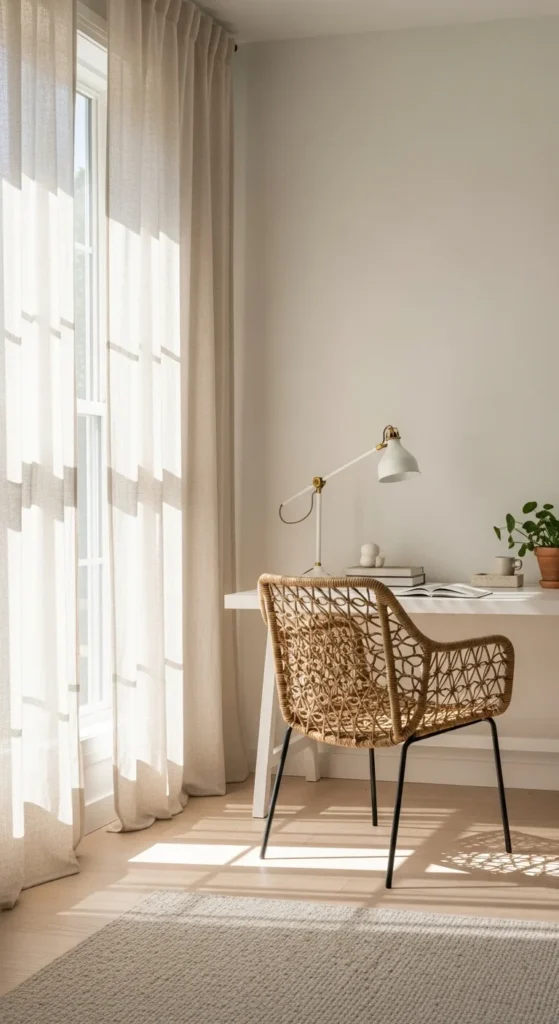
Good texture ideas:
- Linen curtains
- Woven chair seats
- Thin rugs under the desk
Stick to pale tones so texture doesn’t darken the space.
Keep Wall Decor Minimal Near Windows
Walls near windows should stay calm so light stands out.
Avoid:
- Busy gallery walls
- Dark artwork near windows
- Heavy shelves beside the glass
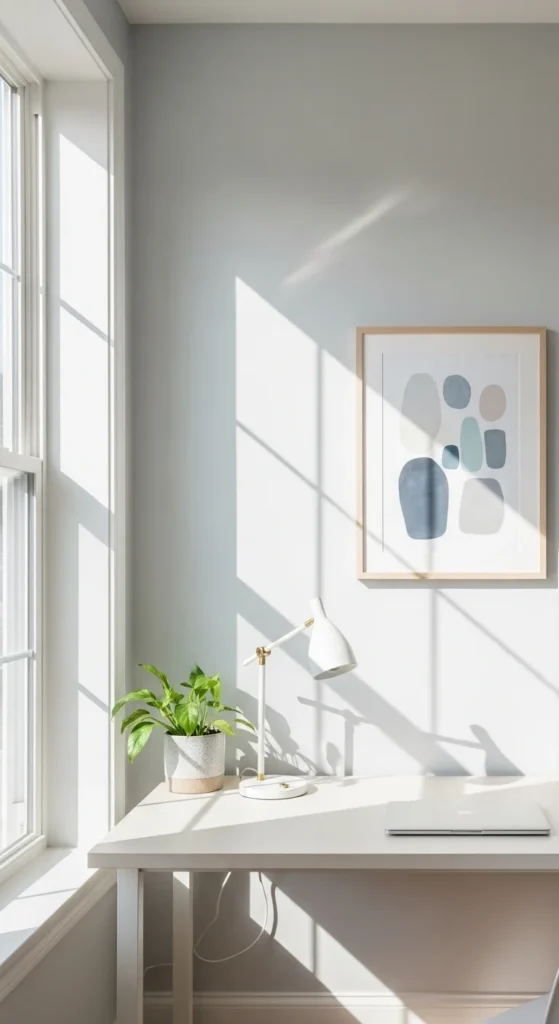
If you add art, place it farther from the window so light remains the main feature.
Add One Plant to Work With the Light
Plants thrive in natural light and soften a workspace when used carefully.
Choose:
- One medium floor plant near the window
- Or one small desk plant
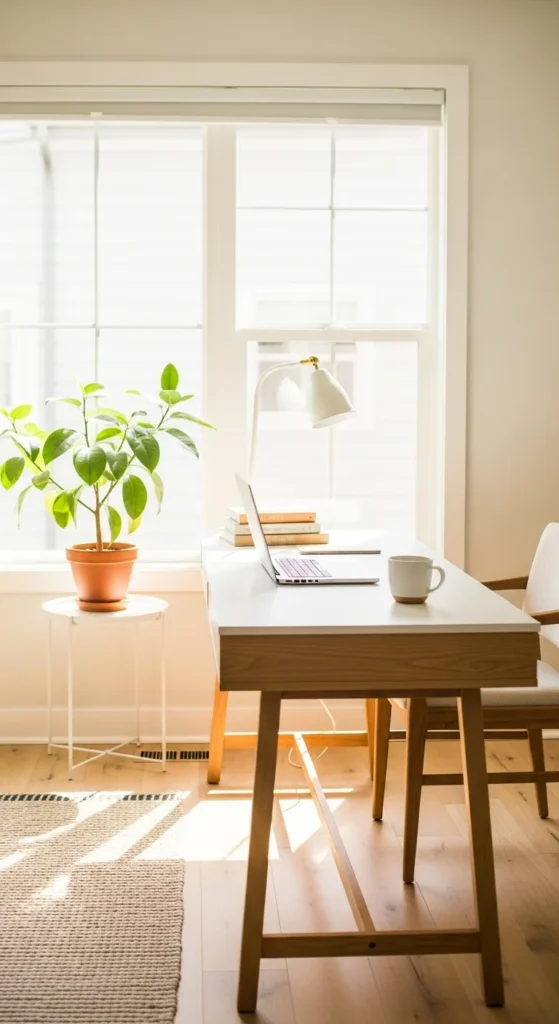
Avoid filling window areas with multiple plants. One strong green element is enough.
Keep Artificial Lighting Subtle
Even in bright rooms, you’ll need lighting for cloudy days or evenings.
Use:
- A simple desk lamp
- Warm light tones
- Minimal lamp design
Artificial light should support natural light, not overpower it.
Leave Open Space Where Light Lands
Pay attention to where sunlight falls during the day.
Leave those areas:
- Free of clutter
- Clear of tall objects
- Visually open
Empty space allows light to shape the room naturally.
Final Takeaway
Decorating a home office with natural light is about restraint and placement, not decoration overload. Clear windows, light colors, simple furniture, and thoughtful layout allow daylight to do the heavy lifting.
Start by clearing space around your window. Adjust desk placement. Simplify surfaces. Small changes can dramatically change how your office feels throughout the day.
Save this guide and revisit it whenever your workspace starts to feel darker or heavier than it should.
Leave a Reply