

A home office bookshelf can easily turn into a catch-all for papers, books, and random decor. When styled with intention, though, it becomes one of the strongest visual features in the room. A beautiful bookshelf is not about filling every inch. It’s about balance, breathing room, and choosing what actually deserves to be seen.
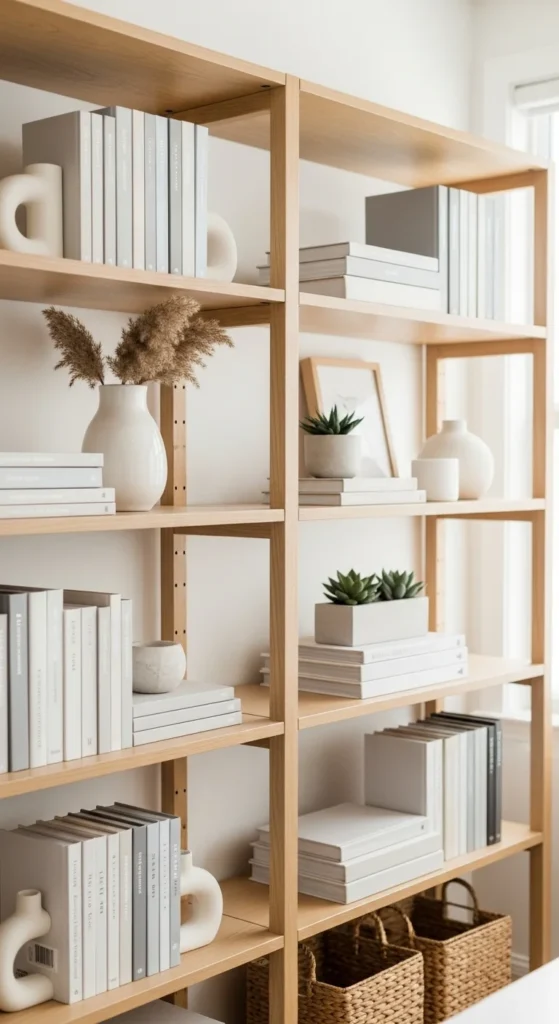
This guide shows how to style a home office bookshelf so it looks polished and calm while still being practical for everyday work.
Start by Editing Before Styling
The biggest styling mistake is starting with everything still on the shelf. Before decorating, remove all items.
Then put back only:
- Books you use or love
- A few meaningful decor pieces
- Storage that hides clutter
If something doesn’t fit those categories, store it elsewhere. A shelf styled with fewer items always looks more intentional than one packed edge to edge.
Group Books by Size and Color
Books set the structure of a shelf. How you arrange them matters more than how many you have.
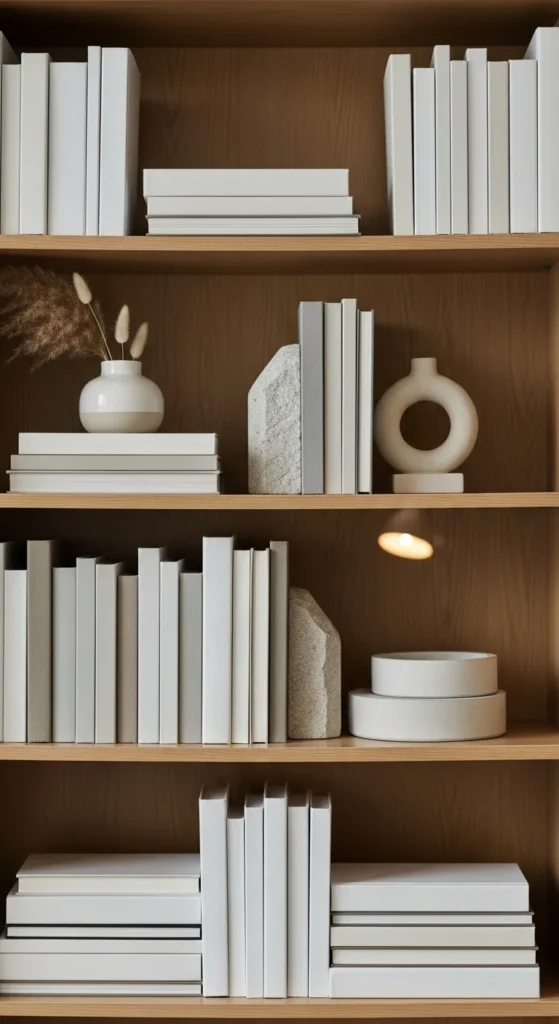
Try these layouts:
- Vertical stacks for height
- Horizontal stacks for breaks
- Grouping by similar colors for calm
Avoid mixing every size and color in one section. Order creates visual calm, even if the shelf is not perfectly symmetrical.
Leave Empty Space on Purpose
Open space is not wasted space. It allows your eye to rest and makes decor stand out.
Aim for:
- At least one empty section per shelf
- Gaps between book groupings
- Space above horizontal stacks
When shelves feel too full, remove one item rather than adding another to “fix” it. Often, less solves the problem.
Mix Decor With Practical Storage
A beautiful bookshelf still needs to work.
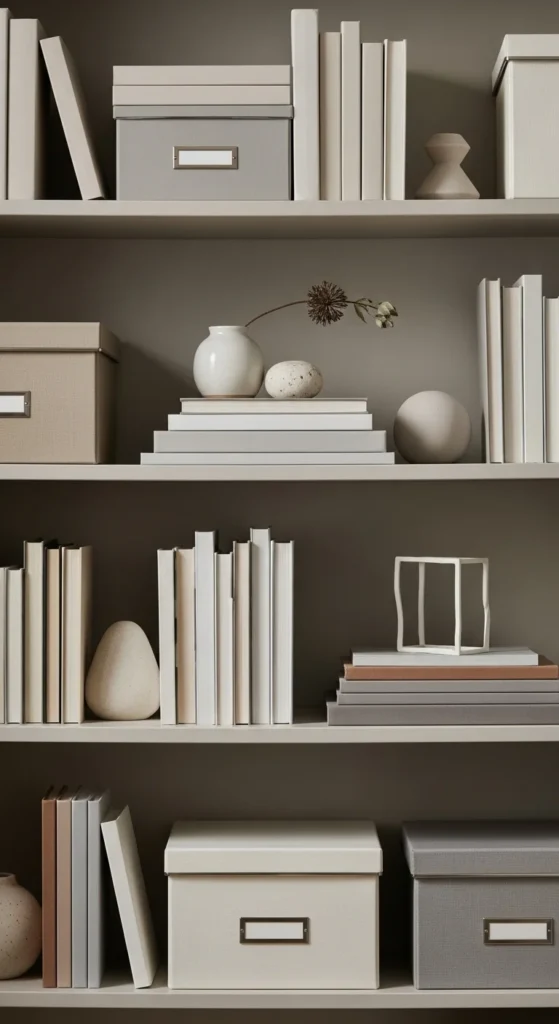
Good storage choices include:
- Fabric or wood boxes
- Matching file bins
- Lidded containers
Use storage to hide papers, cords, or supplies. When practical items disappear visually, the shelf looks calmer without losing function.
Use the Rule of Odd Numbers
Decor looks more natural when grouped in odd numbers.
For example:
- Three books stacked horizontally
- One object placed on top
- One empty space beside it
This avoids stiff, overly styled shelves. Keep groupings loose rather than tightly packed.
Add Texture Instead of More Color
Color overload makes shelves feel busy. Texture adds depth without visual noise.
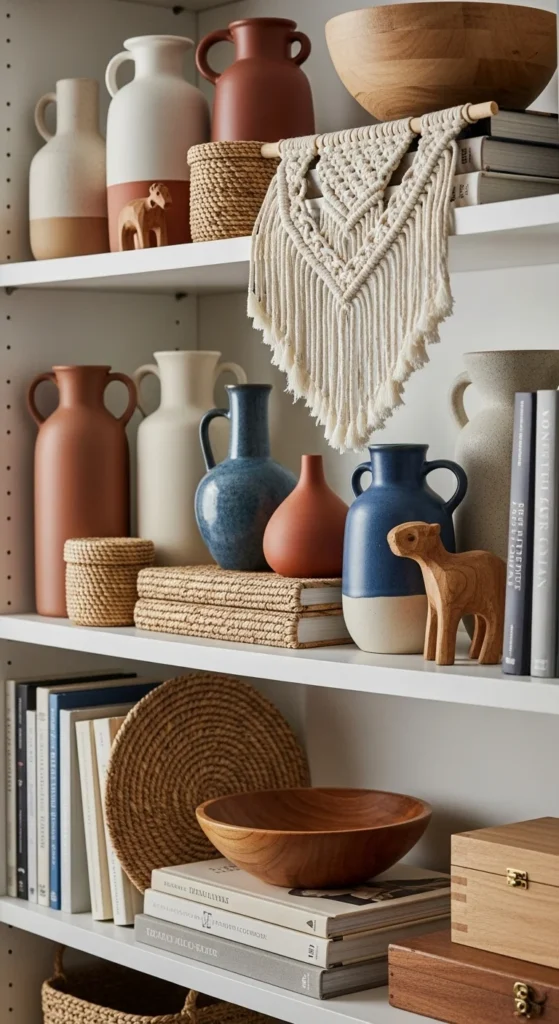
Easy texture ideas:
- Ceramic vases
- Woven baskets
- Natural wood objects
Stick to a tight color palette so texture becomes the focus.
Vary Height Across the Shelf
Flat shelves look dull when everything is the same height.
Create movement by:
- Pairing tall books with low objects
- Adding a vertical frame or vase
- Breaking rows with horizontal stacks
This keeps the shelf visually interesting without clutter.
Limit Decorative Objects Per Shelf
Too many decorative items compete for attention.
A simple guideline:
- One to three decor pieces per shelf section
Choose objects that mean something or have a strong shape. One well-chosen piece looks better than several small fillers.
Use Artwork as Shelf Decor
Artwork doesn’t have to hang on the wall.
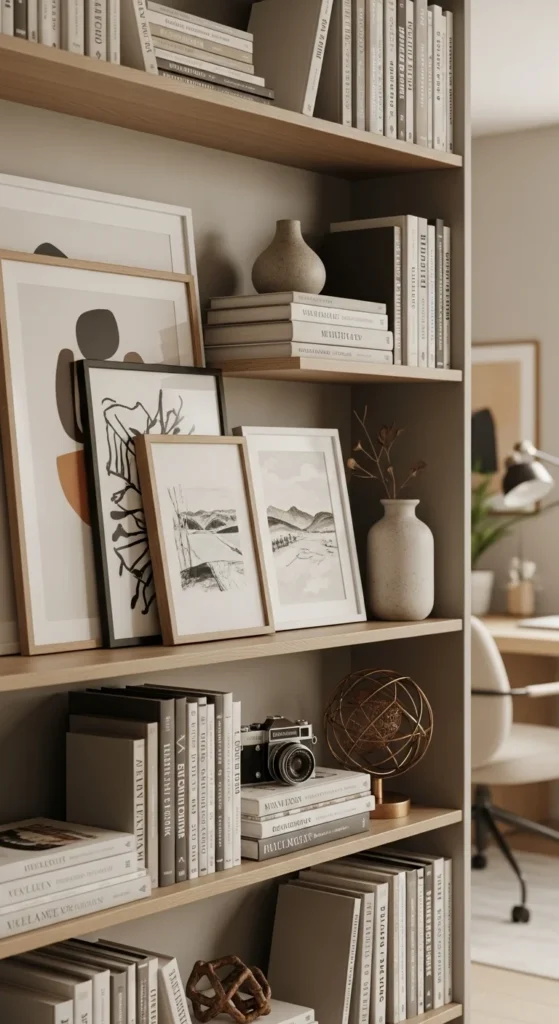
Lean framed prints behind books or objects. This adds depth and softness without taking up extra room. Keep frames simple and colors muted.
Add One Plant for Life
Plants soften shelves and prevent them from feeling rigid.
Choose:
- One trailing plant on an upper shelf
- Or one compact plant on a lower shelf
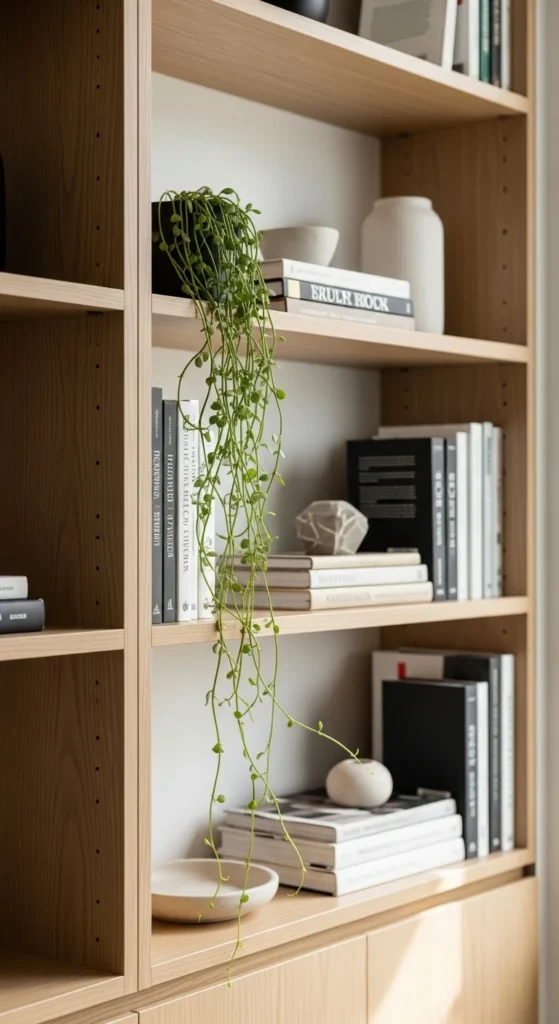
Avoid placing plants on every level. One strong green element is enough.
Keep the Top Shelf Lighter
The highest shelf should feel lighter than the rest.
Use:
- Fewer books
- Smaller objects
- More open space
Heavy items placed too high can make shelves feel top-heavy and overwhelming.
Step Back and Adjust Slowly
Shelf styling improves when you step back often.
After placing items:
- Walk away
- Return with fresh eyes
- Remove one thing if it feels crowded
Beautiful shelves usually come from editing, not adding.
Final Takeaway
Styling a home office bookshelf beautifully is about balance, restraint, and intention. When books are organized, decor is limited, and empty space is respected, shelves feel calm and polished rather than busy.
Start by removing more than you think you should. Then build slowly with pieces that serve a purpose or bring quiet visual interest. A well-styled bookshelf supports focus—and makes your home office feel finished without feeling full.
Save this guide and revisit it anytime your shelves start drifting back toward clutter.
Leave a Reply