

A small home office doesn’t have to feel cramped, cluttered, or uninspiring. With the right layout and styling choices, even a tight corner can turn into a workspace that feels calm, practical, and visually balanced. The key is to work with the space you have, not against it. This guide breaks down realistic ways to style a home office with limited space so it supports focus, comfort, and everyday use.
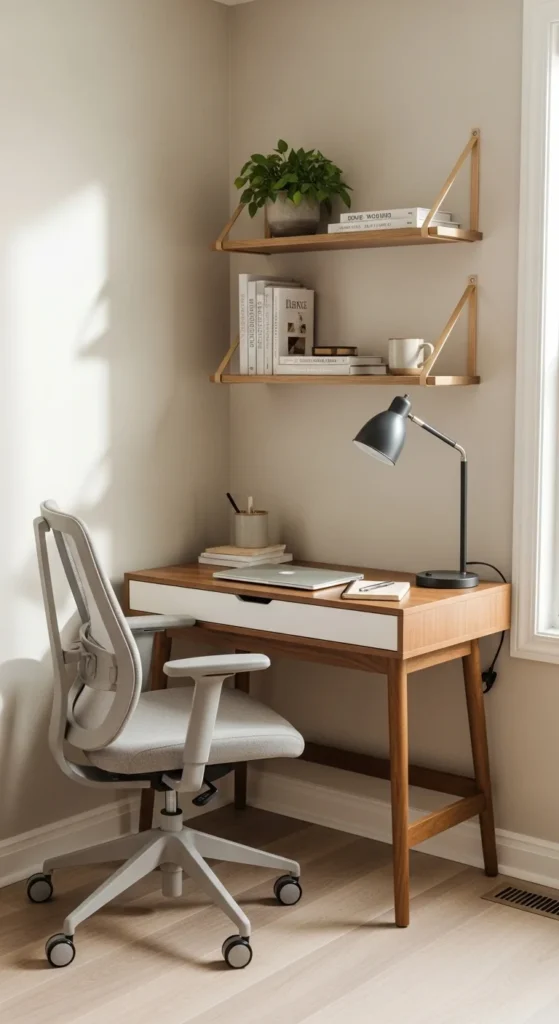
Start by Defining One Clear Work Zone
When space is limited, boundaries matter. Your home office should feel like a dedicated zone, even if it’s part of another room.
Good options include:
- A corner near a window
- A wall between two doorways
- A narrow spot along one wall
- A desk at the end of a bedroom or living area
Avoid spreading office items across the room. Keeping everything within one defined area helps the space feel intentional instead of improvised.
Choose the smallest desk that still fits your daily tasks. Extra surface area often turns into clutter.
Choose Furniture That Fits the Scale of the Room
Oversized furniture is the fastest way to make a small office feel tight. Scale matters more than style here.
Look for:
- Slim desks with open legs
- Chairs without bulky arms
- Shallow shelving instead of deep bookcases
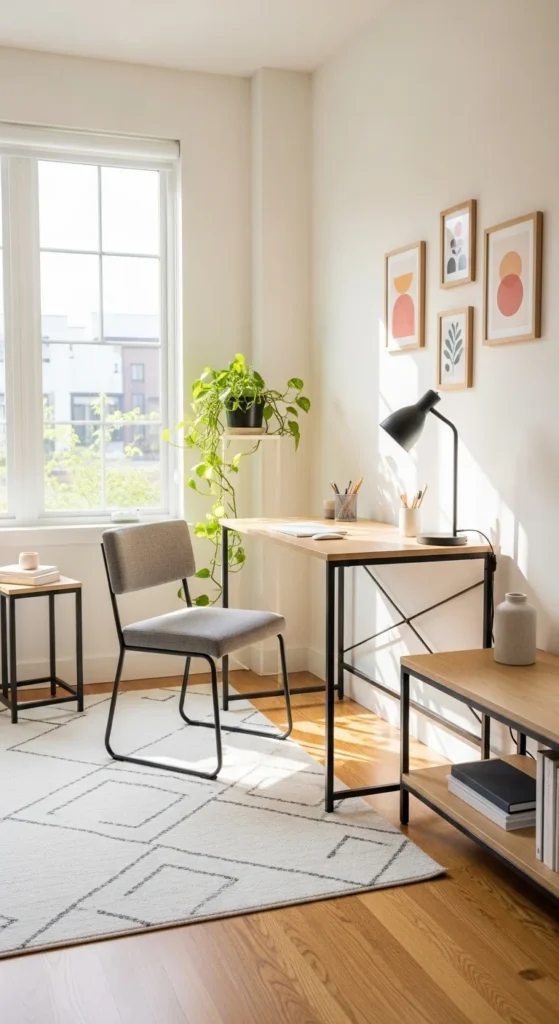
If storage is built into the desk, keep it minimal. One drawer is often enough. Too many drawers can visually weigh down the space.
Use Vertical Space Instead of Floor Space
When floor space is limited, walls become your best asset. Vertical storage keeps the room functional without closing it in.
Smart vertical ideas:
- Wall-mounted shelves above the desk
- Pegboards for tools and supplies
- Floating ledges for books and decor
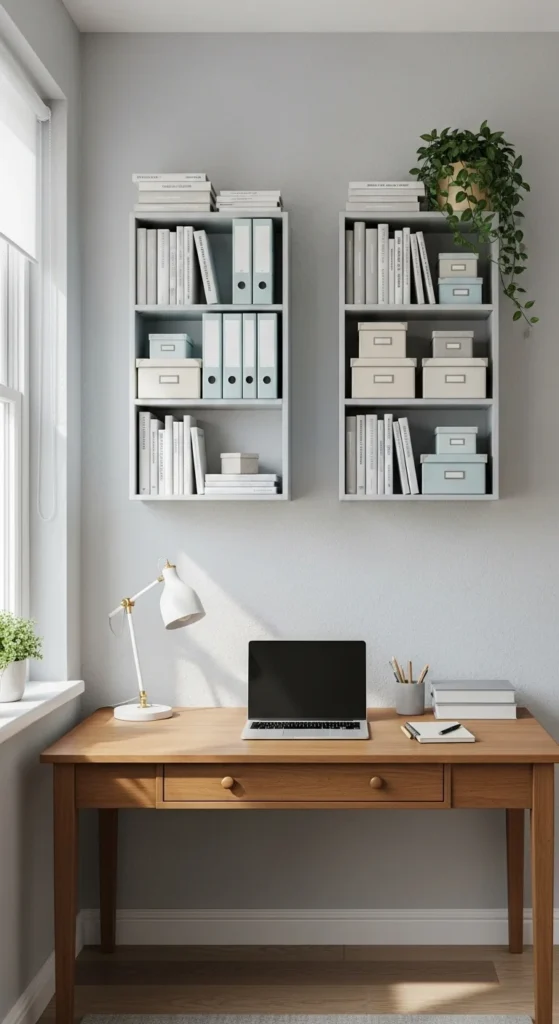
Keep shelves light and uncluttered. Use matching containers or baskets to avoid visual noise.
Keep the Color Palette Light and Consistent
Light colors help small spaces feel open. This doesn’t mean everything has to be white, but consistency matters.
Safe color choices:
- Warm white
- Soft beige
- Light gray
- Muted pastels
Stick to one main color and one supporting tone. Too many colors in a small space can feel busy and distracting.
If you want contrast, bring it in through texture rather than color.
Let Natural Light Work for You
Natural light makes a small office feel larger and more comfortable. Position your desk to take advantage of it whenever possible.
Tips:
- Place the desk near a window
- Keep window treatments light and minimal
- Avoid blocking light with tall furniture
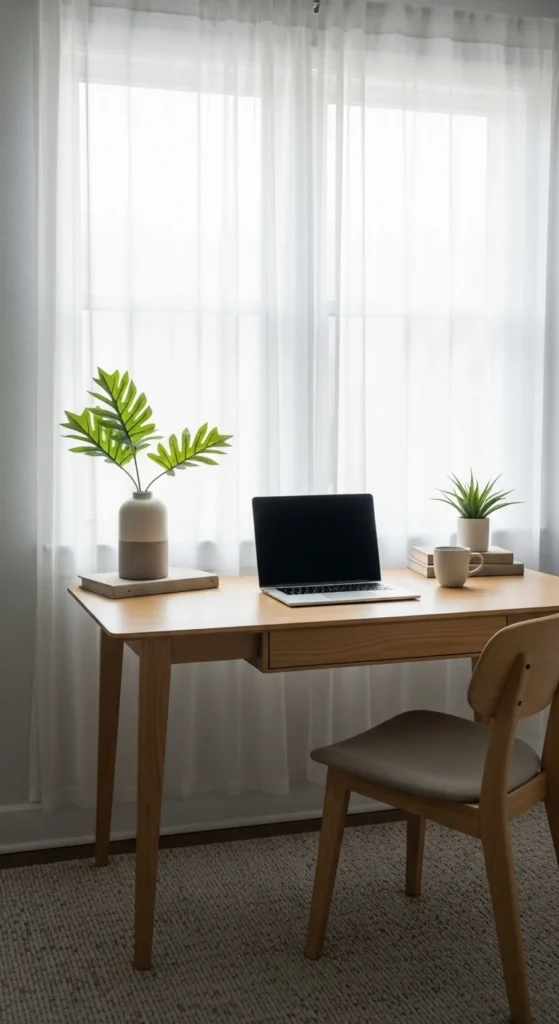
If natural light is limited, use layered lighting instead of one harsh overhead source.
Keep Decor Simple and Purposeful
Decor matters in small spaces, but less truly works better. Each item should either serve a function or add calm visual interest.
Good decor choices:
- One framed print or photo
- A small plant
- A simple desk lamp
Avoid filling every surface. Open space helps the room breathe and keeps the office feeling manageable.
Choose Storage That Disappears Visually
Storage is necessary, but it shouldn’t dominate the room. In small offices, storage should blend in.
Try:
- Matching storage boxes
- Closed containers instead of open piles
- Under-desk baskets
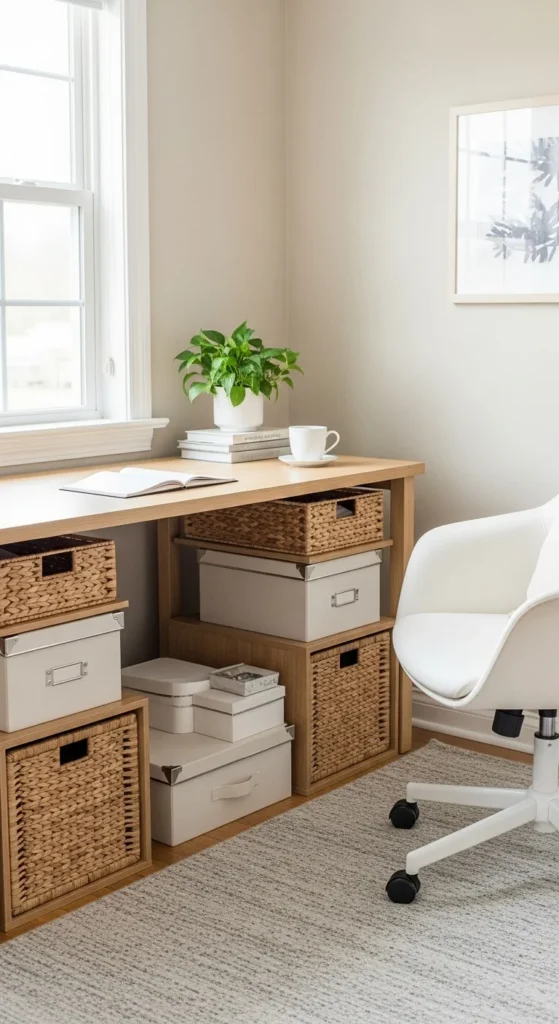
When storage looks calm, the entire space feels calmer.
Keep Cables and Supplies Out of Sight
Visible cables and supplies make small spaces feel messy quickly. A little organization goes a long way.
Simple fixes:
- Cable clips or sleeves
- Desk trays for daily items
- Drawer organizers for small tools
Keeping surfaces clear makes the office feel larger than it is.
Make the Space Flexible
A small office often needs to serve more than one purpose. Flexibility keeps it functional long-term.
Ideas:
- A chair that tucks fully under the desk
- A desk that doubles as a vanity or console
- Moveable shelves or carts
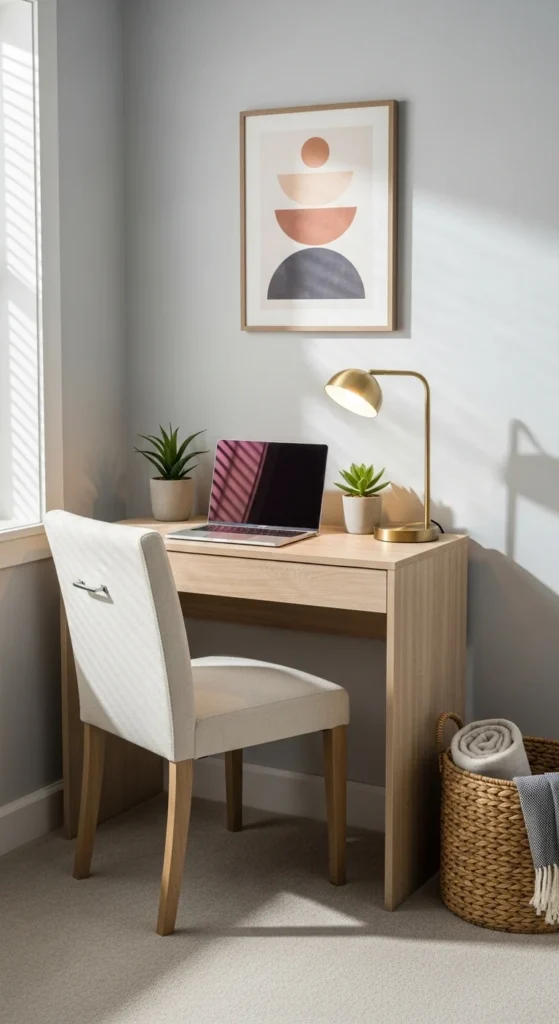
This approach works well in bedrooms, living rooms, or shared spaces.
Final Takeaway
Styling a home office with limited space is about clarity, scale, and intention. By choosing compact furniture, using vertical storage, keeping colors light, and limiting decor, you can create a workspace that feels calm and functional without taking over the room. Start with one corner, keep what you truly use, and let simplicity do the heavy lifting.
Save this guide for later when you’re ready to make a small office work smarter, not harder.
Leave a Reply