

Mixing patterns in your home can feel tricky, but when done right, it makes your space vibrant, stylish, and full of personality. The key is to balance colors, scales, and textures so the patterns feel intentional rather than overwhelming. Whether you’re decorating a small apartment or a spacious home, these tips will help you layer patterns like a pro.
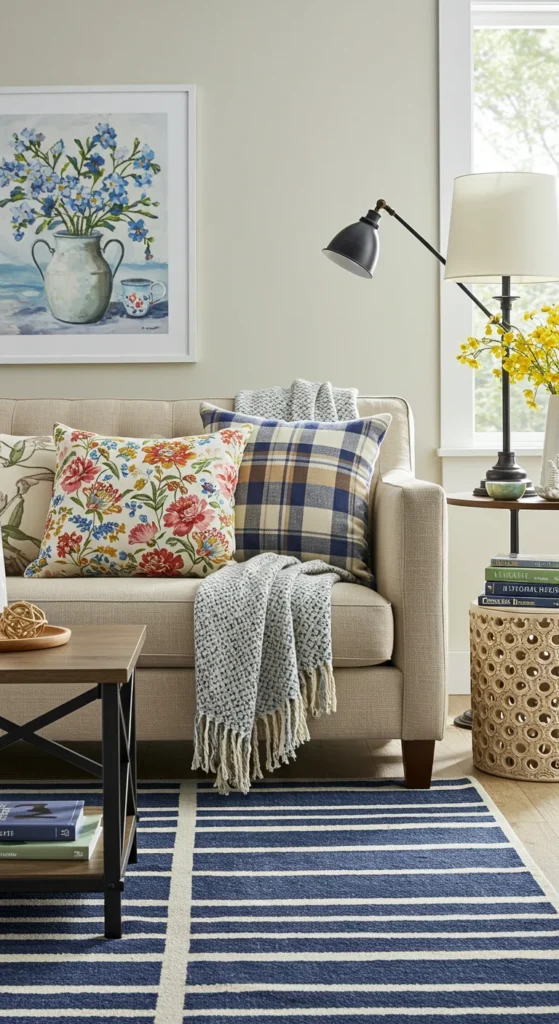
Start with a Base Color Palette
The easiest way to prevent clashing patterns is to stick to a consistent color palette. Choose two to three main colors and one or two accent colors that work well together.
- For example, combine navy, white, and beige with pops of mustard or blush.
- Use your dominant color for the largest elements like rugs or curtains.
- Let secondary colors show up in smaller pieces like pillows or lampshades.
Keeping the colors consistent ties everything together and makes bold patterns feel harmonious.
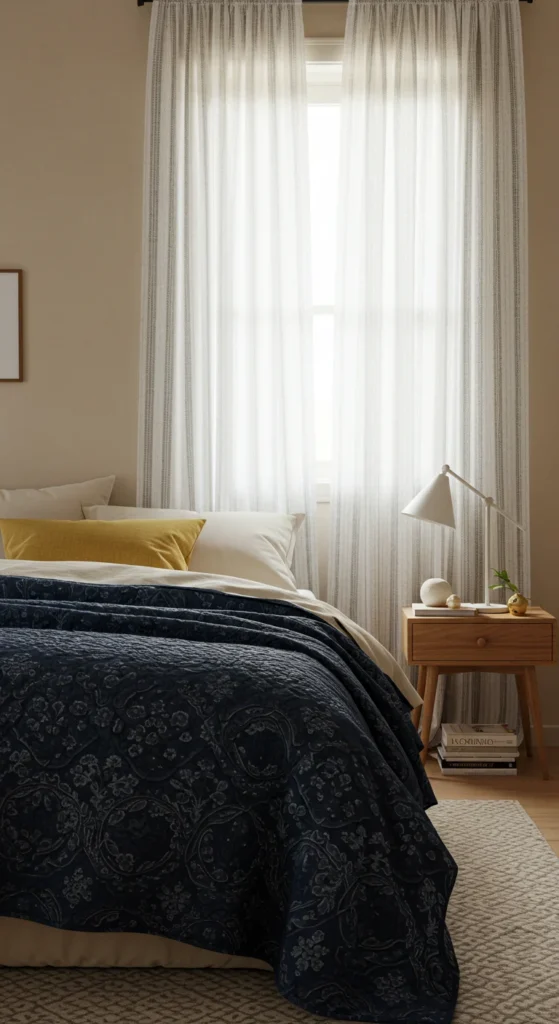
Play with Scale
Patterns that vary in scale naturally complement each other. Mixing large-scale and small-scale designs keeps the look balanced and pleasing to the eye.
- Pair a large floral rug with small polka-dot or checkered pillows.
- Use medium-scale patterns on drapes or bedding to bridge the gap between large and small designs.
- Avoid using multiple patterns that are the same size—they’ll compete for attention.
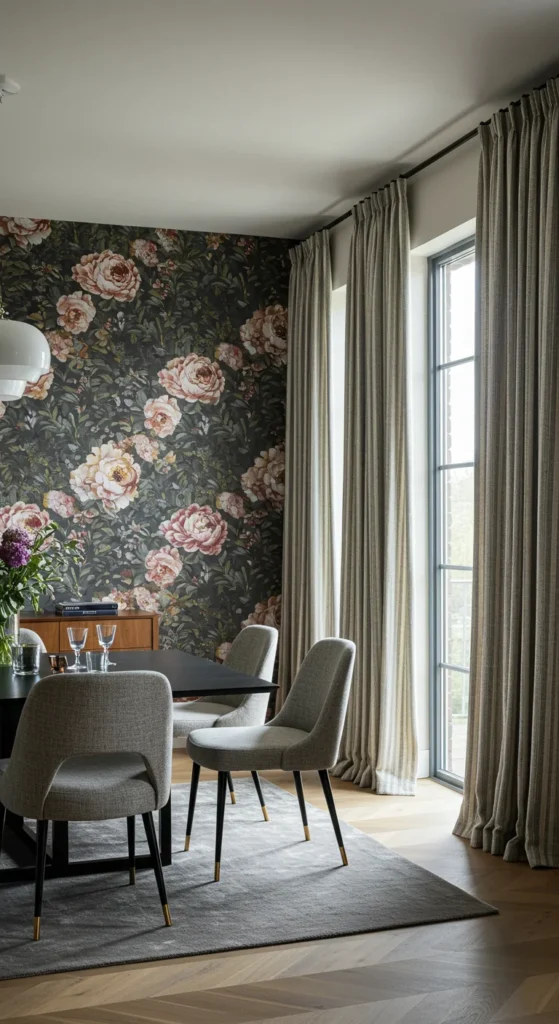
Mix Pattern Types for Interest
Combining different pattern types helps the space feel layered and intentional. Stripes, florals, plaids, and geometrics can work beautifully together when united by color and scale.
- Try pairing organic patterns like florals with structured ones like checks or stripes.
- Limit yourself to three to four pattern types to keep things cohesive.
- Let solid-colored pieces act as “visual breathers” between bold patterns.
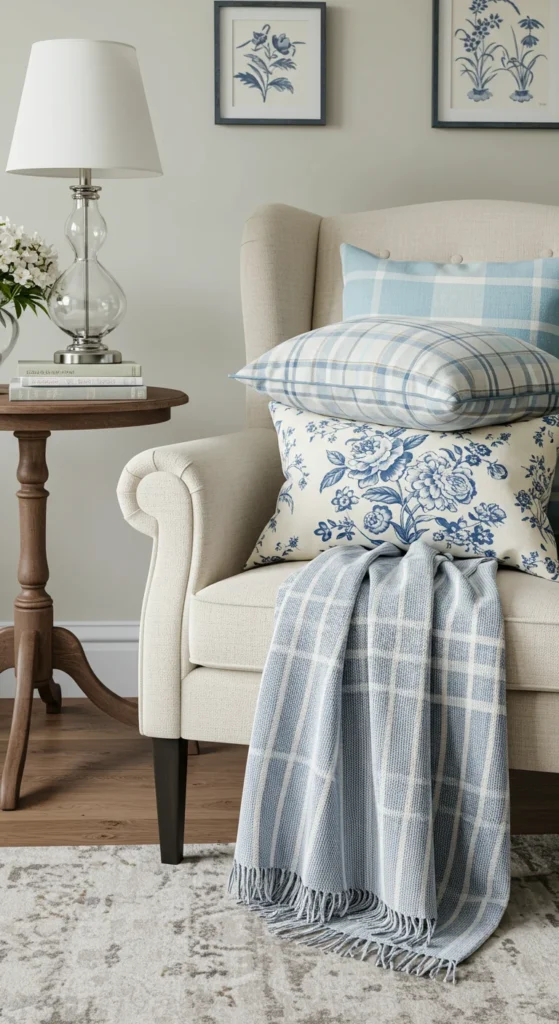
Use Neutrals to Ground the Look
Neutrals act like a visual pause and keep bold patterns from feeling too busy. Incorporate solids in natural tones to break up the patterns and allow each one to stand out.
- Choose solid-colored rugs or sofas if your walls or curtains are patterned.
- Use wooden furniture, jute rugs, or linen curtains as calming elements.
- Add neutral accessories like ceramic vases or woven baskets for texture without extra pattern.
Repeat Patterns for Cohesion
Repeating a pattern in different parts of the room creates flow and makes the space feel curated. It’s a subtle trick that helps tie everything together.
- If you use striped curtains, add a striped pillow in a similar color.
- Echo a floral print from your bedding on a lampshade or wall art.
- Repeat a geometric pattern on rugs and smaller decorative pieces.
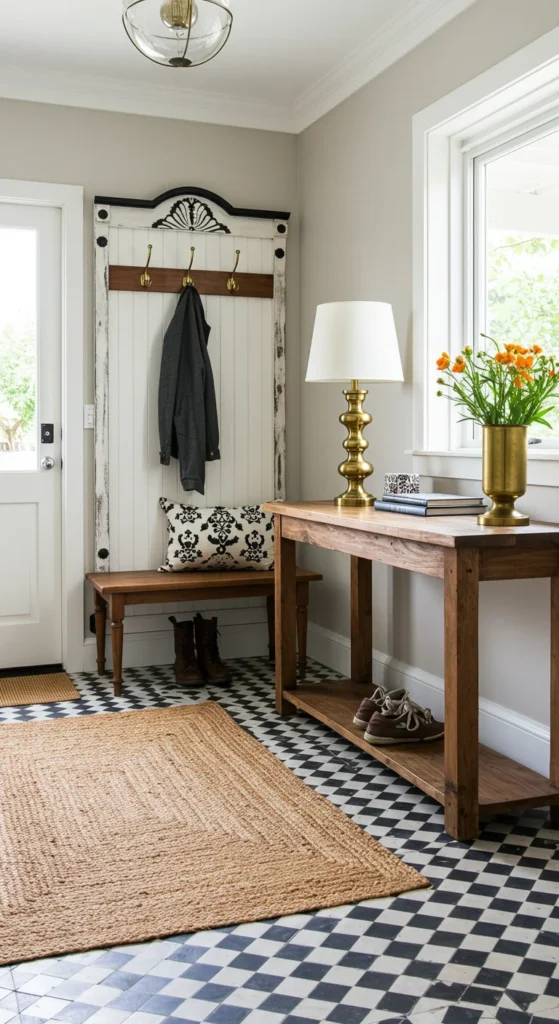
Add Texture for Depth
Texture is just as important as color and pattern. Mixing smooth and rough textures softens bold designs and makes the decor feel cozy.
- Combine a fluffy patterned throw with smooth linen pillows.
- Use woven baskets and natural wood accents to add warmth.
- Textured walls or curtains in a solid color can tone down bold prints while adding interest.
Seasonal Pattern Swaps
Keep your space lively by swapping out smaller patterned items each season.
- Use plaid or tartan pillows in the winter for a warm, rustic vibe.
- Switch to light floral or tropical prints in spring and summer.
- Keep storage baskets handy to rotate items like pillow covers, table runners, or curtains.
Quick Do’s and Don’ts
Do:
- Stick to a color story to avoid overwhelming the room.
- Combine at least one neutral element for balance.
- Keep patterns to three or four types for cohesion.
Don’t:
- Overcrowd with too many patterns of the same size.
- Forget to add solids and textures to create visual breaks.
Takeaway
Mixing patterns in home decor doesn’t have to be intimidating. By focusing on a cohesive color palette, playing with scale, and balancing patterns with neutrals and textures, you can create a Pinterest-worthy space that feels lively yet put-together.
Leave a Reply