

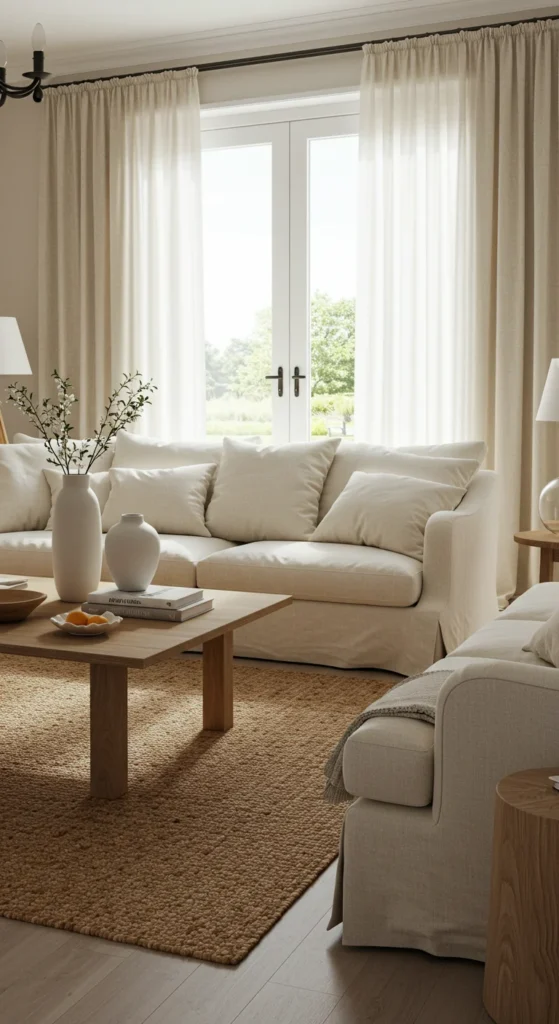
Neutral decor never goes out of style. Soft whites, warm beiges, taupe grays, and subtle earthy tones create interiors that feel calm, chic, and adaptable. These shades pair beautifully with natural materials like wood, stone, and linen, giving your home a polished yet cozy atmosphere. The following ideas show how to design neutral spaces that feel timeless while staying inviting and practical.
1. Layer Different Shades of White
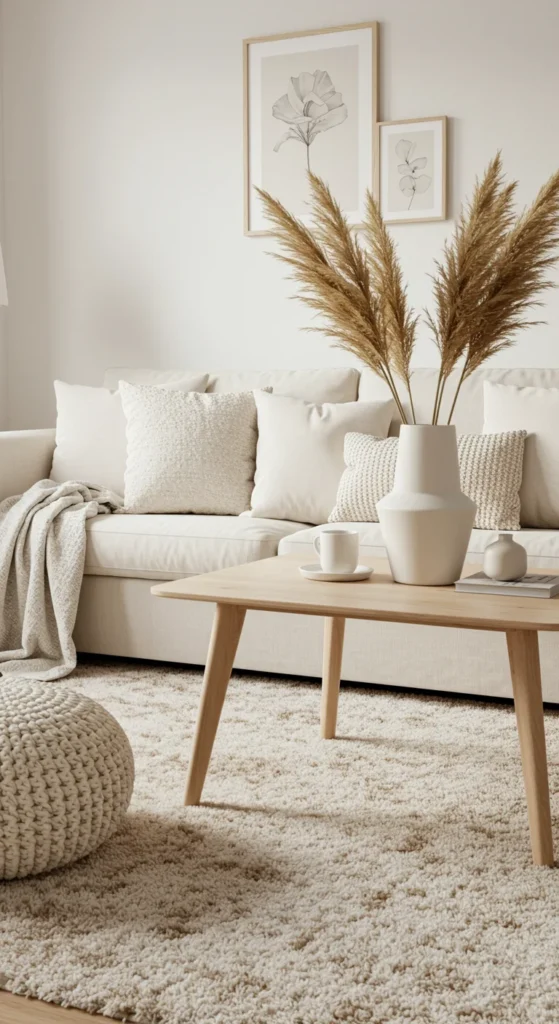
White is never one-dimensional when you mix subtle shades.
- Combine ivory, cream, and chalky white textiles to avoid a flat look.
- Use textured rugs and knitted throws for depth.
- Add small décor pieces like white ceramic vases to tie everything together.
This layered approach keeps the room light yet visually interesting without feeling cold.
2. Incorporate Light Wood Tones
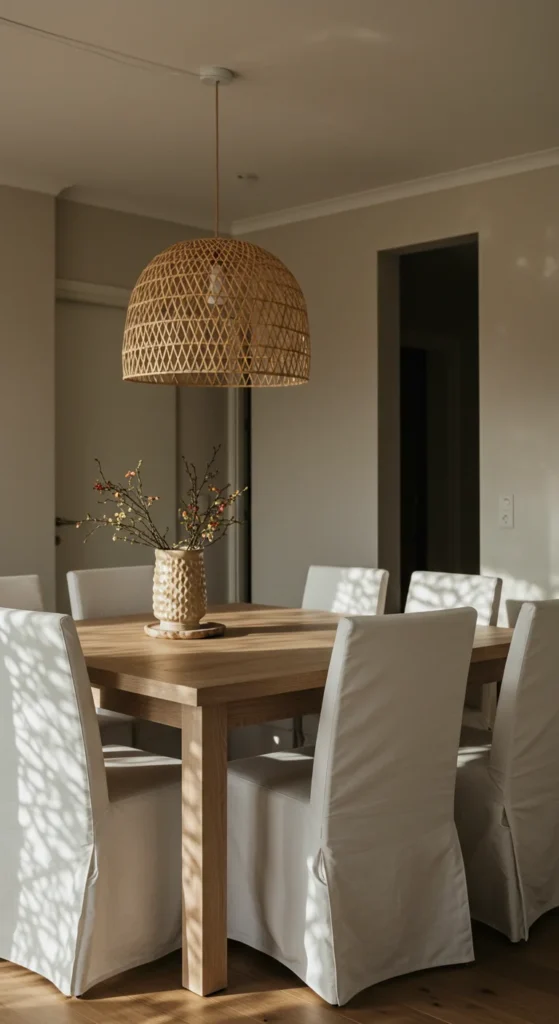
Wood adds warmth to neutral spaces.
- Opt for light oak, birch, or ash for furniture pieces.
- Pair wood tables with linen chairs for an organic contrast.
- Balance with white walls to keep the space feeling airy.
The natural texture of wood softens neutral rooms and makes them feel grounded.
3. Use Beige Linen Curtains
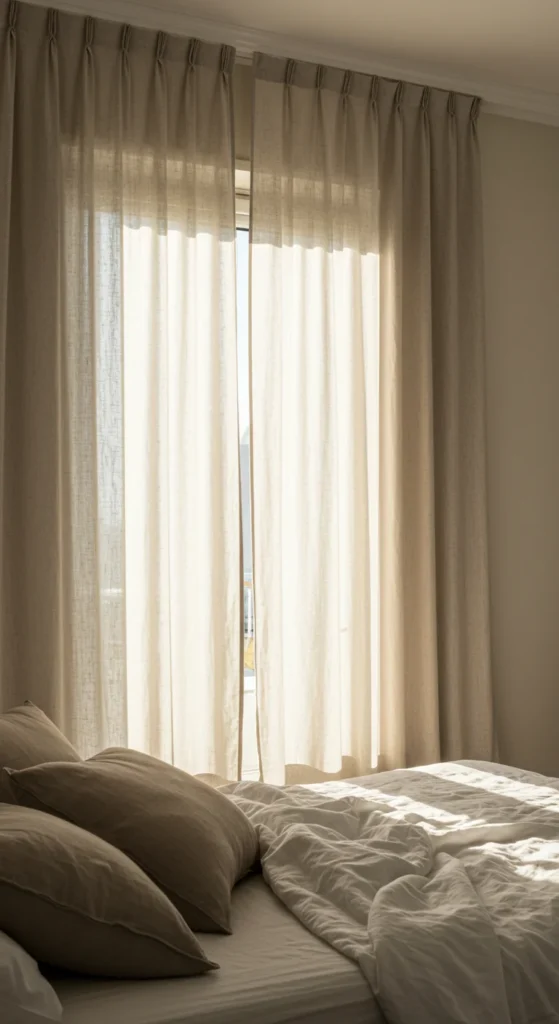
Curtains in earthy neutrals frame windows elegantly.
- Pick linen or cotton curtains in beige or sand tones.
- Allow them to fall to the floor for a graceful silhouette.
- Layer with sheer white panels for softness and light control.
This choice adds both texture and a sense of understated luxury.
4. Add Natural Fiber Rugs
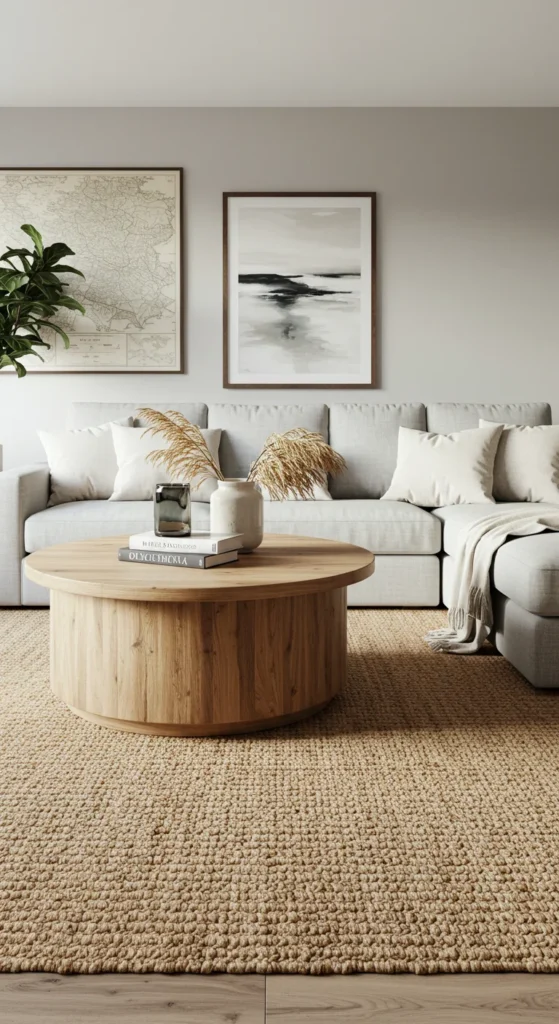
Rugs made from natural fibers create organic charm.
- Place jute or sisal rugs in living areas or bedrooms.
- Layer smaller rugs, like cowhide or wool, for dimension.
- Stick to tan, beige, or cream tones to blend seamlessly.
These durable rugs are stylish and bring subtle texture to floors.
5. Choose Stoneware Decor
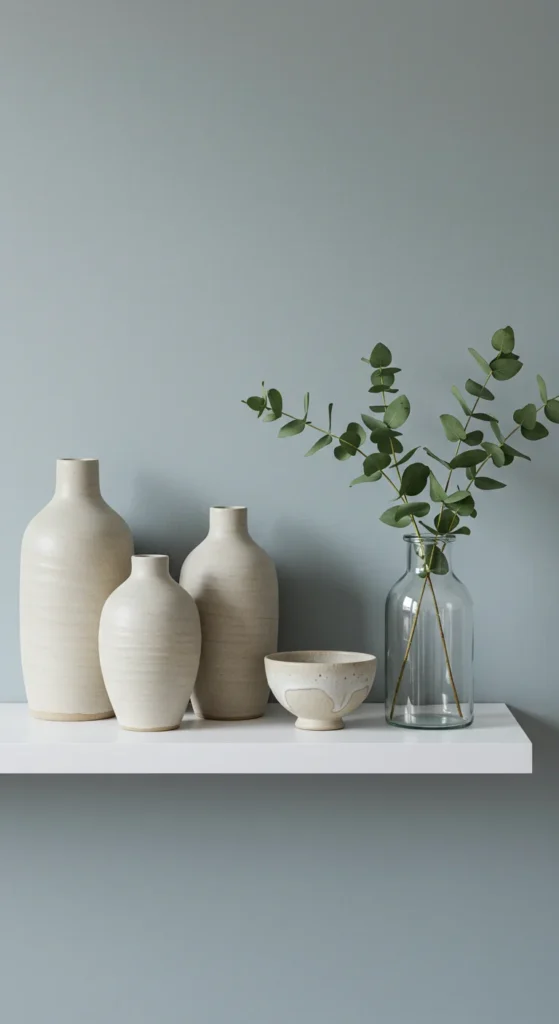
Stoneware adds rustic texture to neutral rooms.
- Display stone or ceramic vases and bowls on shelves and tables.
- Choose matte finishes for a sophisticated feel.
- Pair with greenery for contrast.
Small stoneware pieces can give your space character without adding bold colors.
6. Highlight Architectural Details
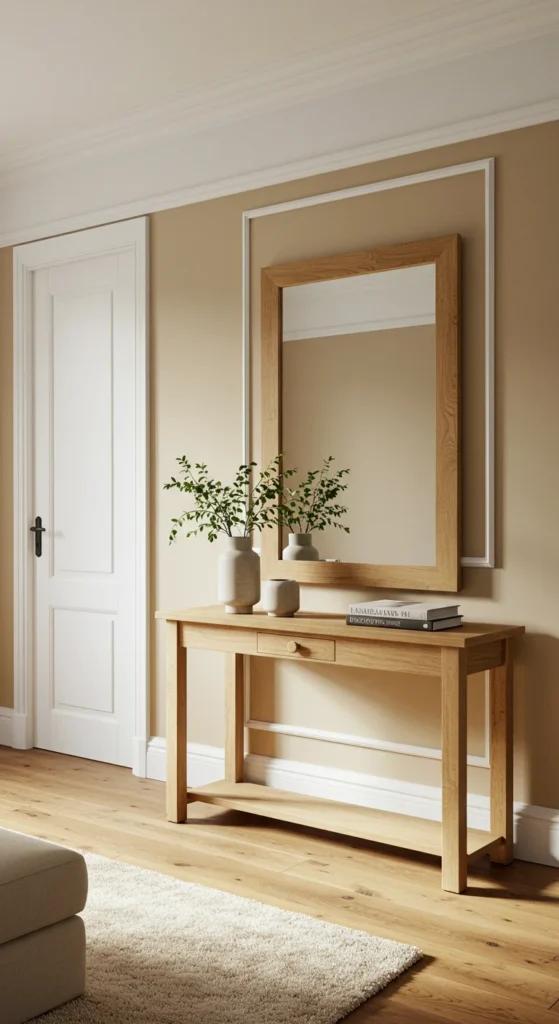
Details like trim and molding stand out beautifully in neutral palettes.
- Paint crown moldings, wainscoting, or built-in shelves in crisp white.
- Use slightly darker tones for walls to accentuate the trim.
- Add slimline furniture in matching wood tones to stay cohesive.
Highlighting these elements elevates the look while keeping it classic.
7. Mix Warm and Cool Neutrals
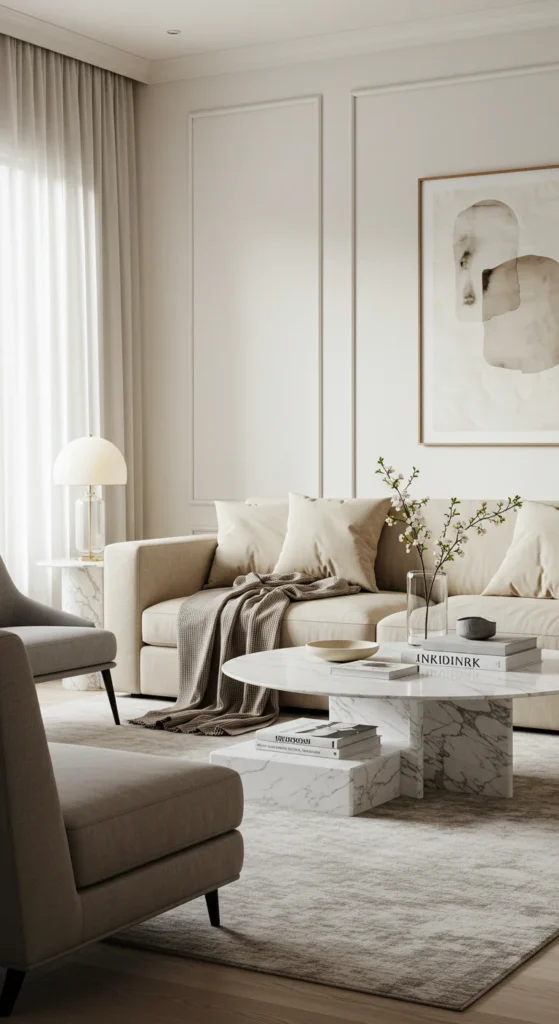
Combining different undertones keeps rooms balanced.
- Pair warm beige fabrics with cool gray furniture.
- Use a white or cream rug as a unifying base.
- Include metallic or glass accents for subtle shine.
This creates depth and avoids a monotonous single-tone palette.
8. Add Texture with Woven Baskets
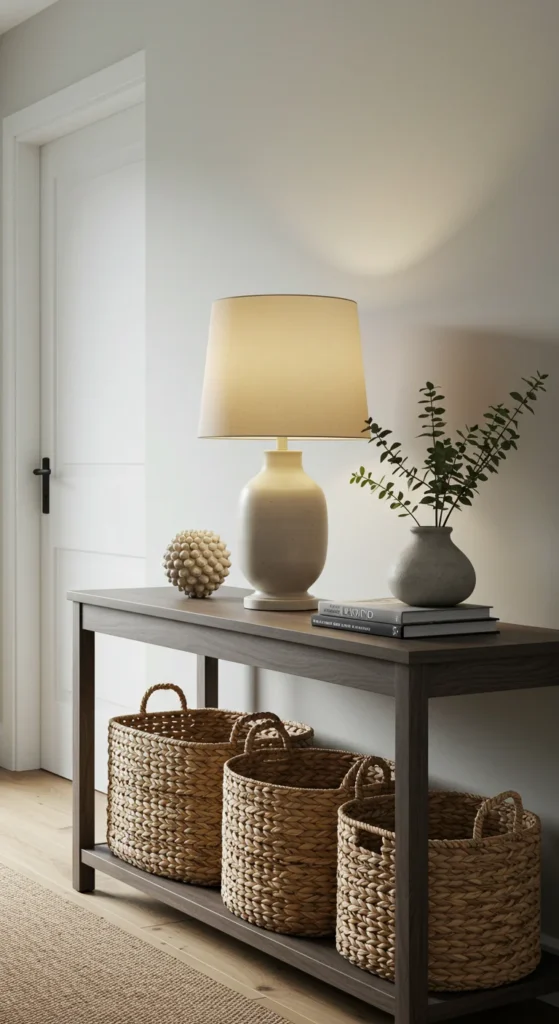
Baskets are both practical and stylish.
- Store throws, toys, or magazines in woven seagrass or rattan baskets.
- Tuck them under benches, consoles, or next to sofas.
- Stick to natural colors to maintain harmony.
Their textures break up smooth surfaces and bring warmth to any corner.
9. Keep Artwork Subtle
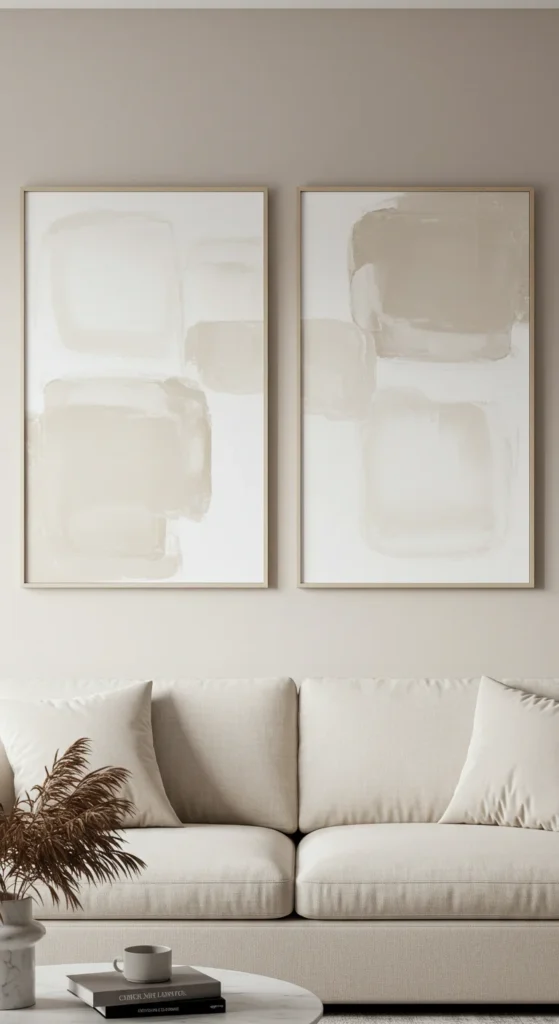
Art in muted colors adds personality without disrupting the calm vibe.
- Choose abstract or minimal prints in cream, taupe, or light gray.
- Use slim wooden or white frames to keep it understated.
- Hang above sofas or beds for a balanced focal point.
Neutral artwork blends with the palette while enhancing visual interest.
10. Incorporate White Marble Surfaces
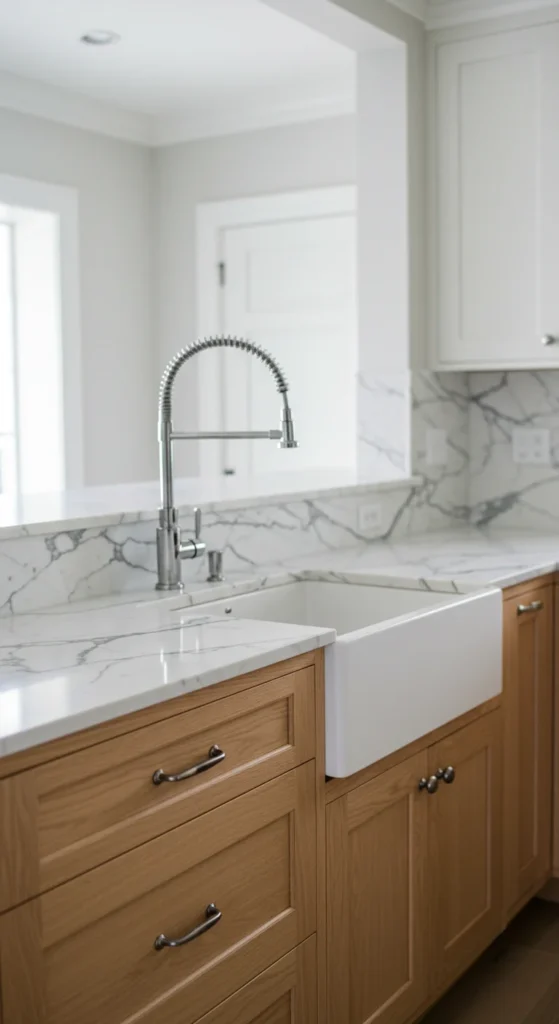
Marble brings timeless elegance to neutral designs.
- Install marble countertops, tabletops, or trays for a chic touch.
- Pick stones with light veining to add soft contrast.
- Pair with wood or metal fixtures for balance.
Its natural pattern adds refinement without overwhelming the room.
11. Layer Cozy Throw Blankets
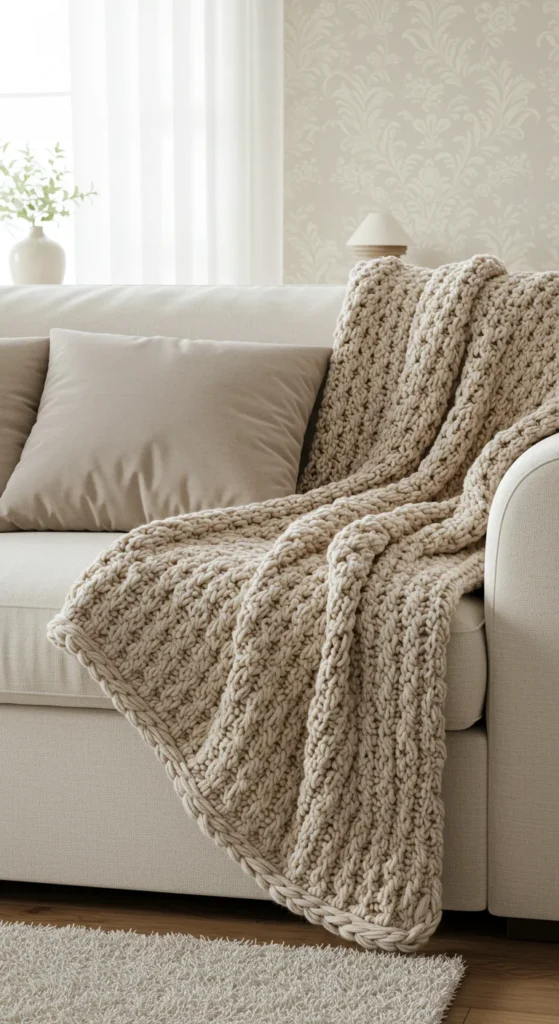
Throws add both comfort and character.
- Use chunky knit or woven cotton throws in soft taupe, ivory, or sand.
- Layer across beds or sofas to create a welcoming feel.
- Rotate textures seasonally to keep things fresh.
They instantly make neutral rooms feel more inviting.
12. Play with Subtle Patterns
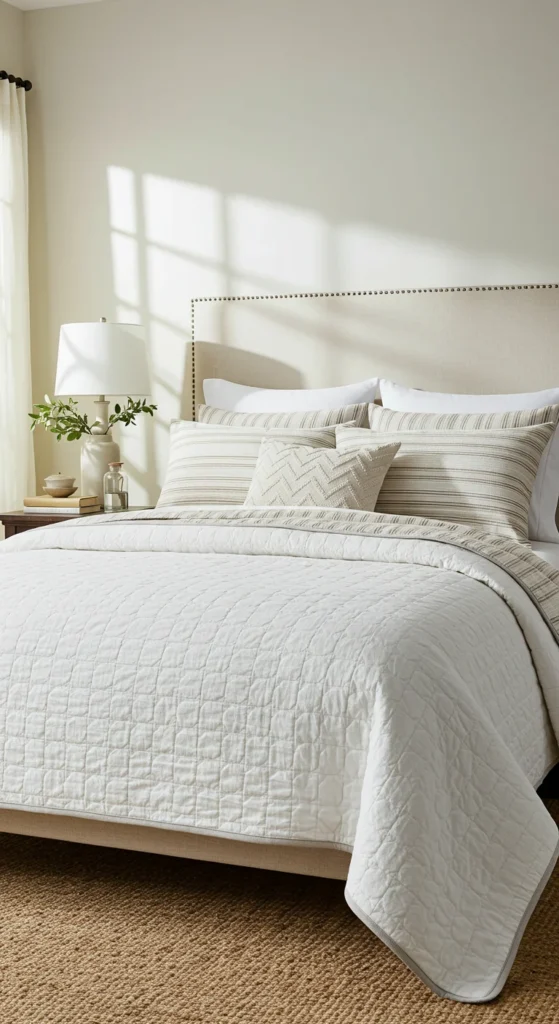
Patterns don’t have to be bold to stand out.
- Pick stripes, herringbone, or geometric prints in similar tones.
- Use on bedding, pillows, or rugs for quiet contrast.
- Limit patterns to one or two pieces to maintain balance.
This approach adds depth without clashing with the palette.
13. Add Greenery for Contrast
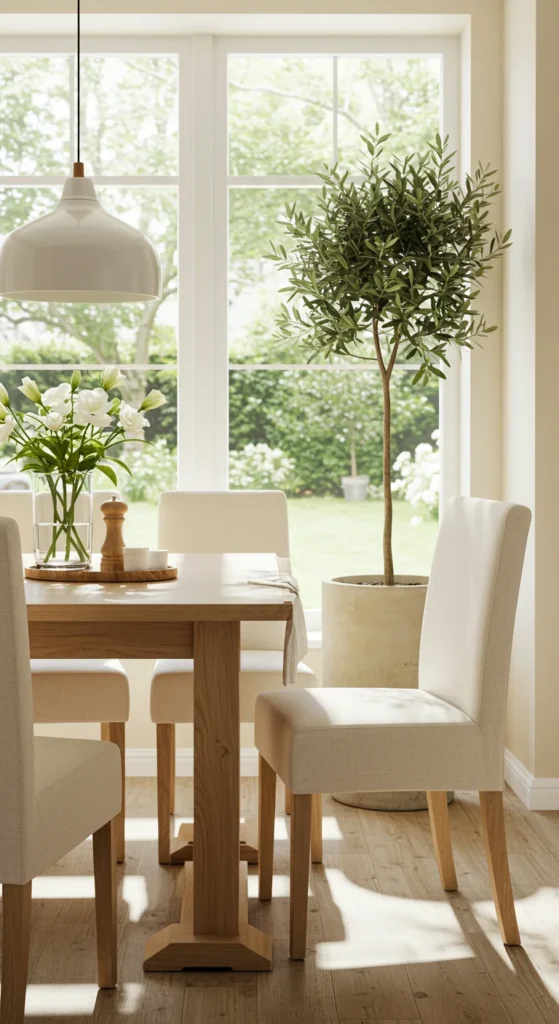
Plants bring life to muted spaces.
- Choose olive trees, fiddle-leaf figs, or small succulents.
- Place them in neutral-toned pots to keep the look cohesive.
- Use greenery in corners, on shelves, or as centerpieces.
The touch of green enlivens neutral interiors naturally.
14. Incorporate Black Accents
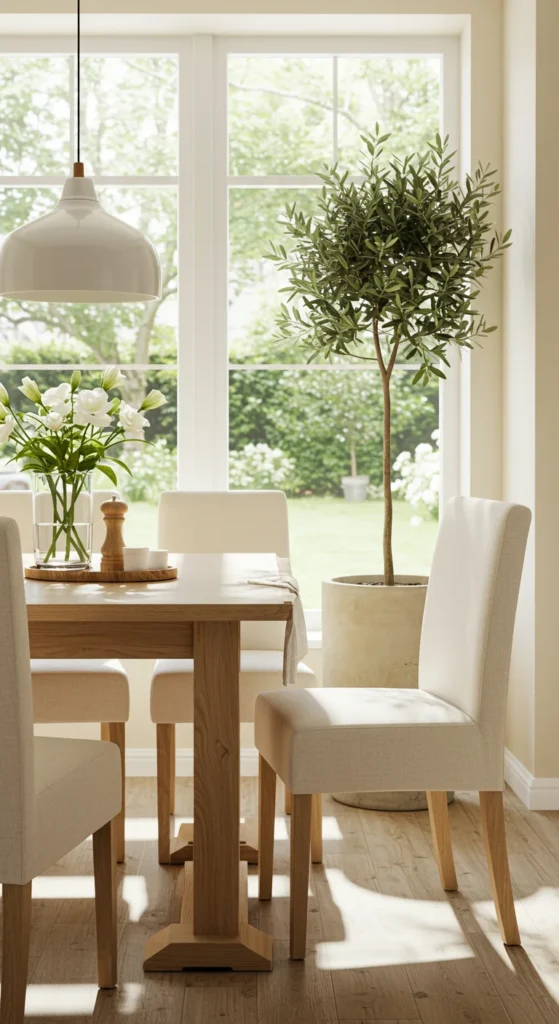
Black adds structure to light palettes.
- Include black lamps, picture frames, or small side tables.
- Keep accents slim and minimal so they don’t overpower the space.
- Pair with soft fabrics to maintain balance.
This contrast anchors the room and adds a refined edge.
15. Opt for Upholstered Headboards
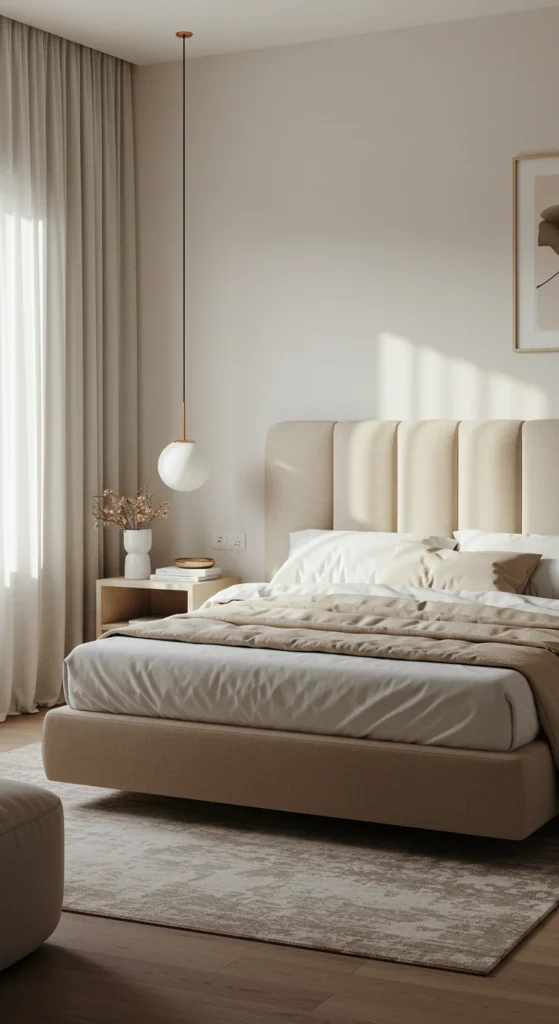
Headboards can act as subtle statement pieces.
- Choose fabric headboards in beige or taupe linen.
- Pair with white or cream bedding for a clean, cohesive look.
- Add matching bedside lamps for symmetry.
It’s a simple way to bring softness and sophistication to bedrooms.
16. Use Soft Lighting
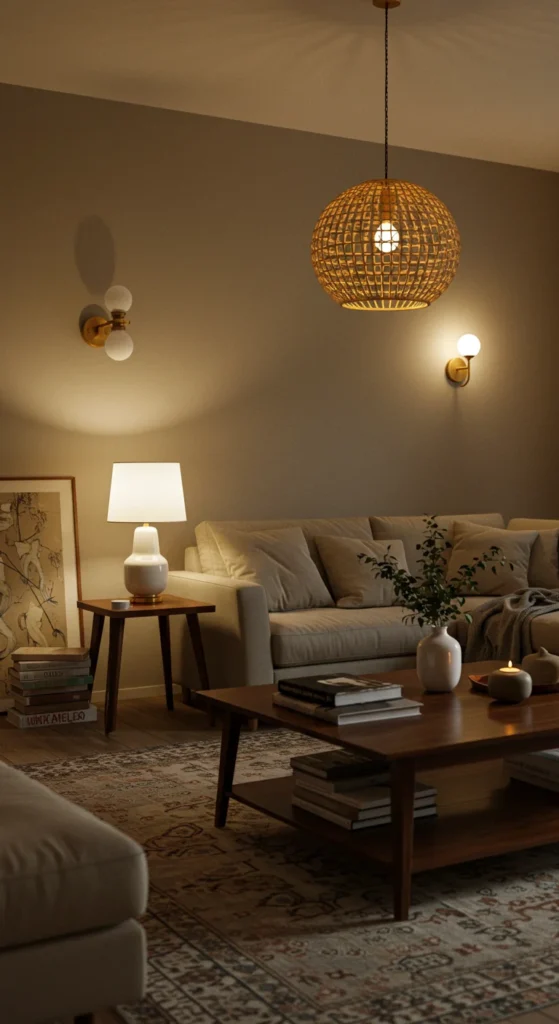
Lighting defines the mood in neutral spaces.
- Layer floor lamps, wall sconces, and pendants to create cozy pools of light.
- Pick lampshades in fabric or rattan for added texture.
- Choose warm-toned bulbs to avoid harsh lighting.
Layered lighting makes neutral interiors feel intimate and welcoming.
17. Style with Neutral Books
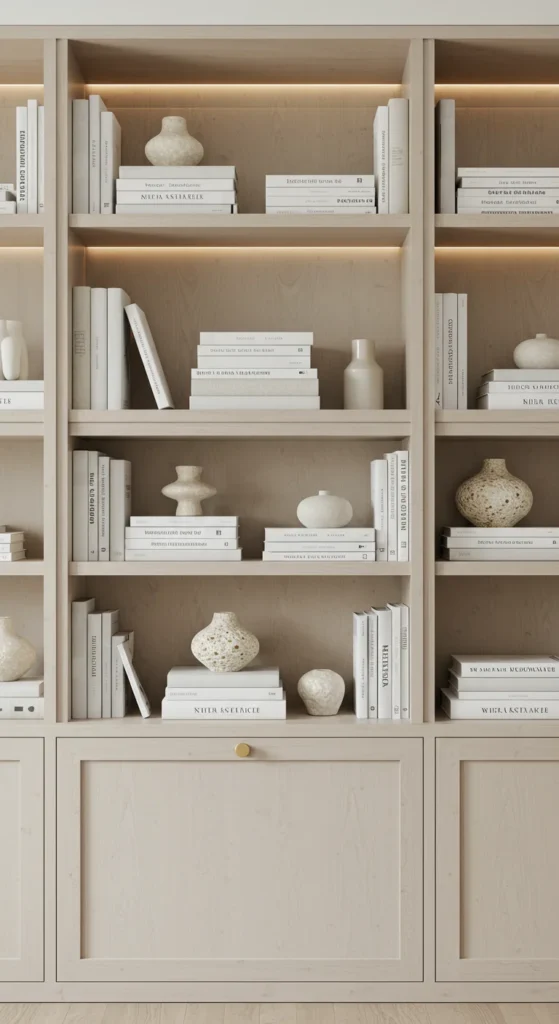
Books can double as décor in muted hues.
- Organize cream or tan-colored book spines together for a unified look.
- Mix in ceramics or candles to create interest.
- Keep shelves airy by leaving some empty spaces.
This technique transforms practical storage into a chic display.
18. Choose Matte Finishes
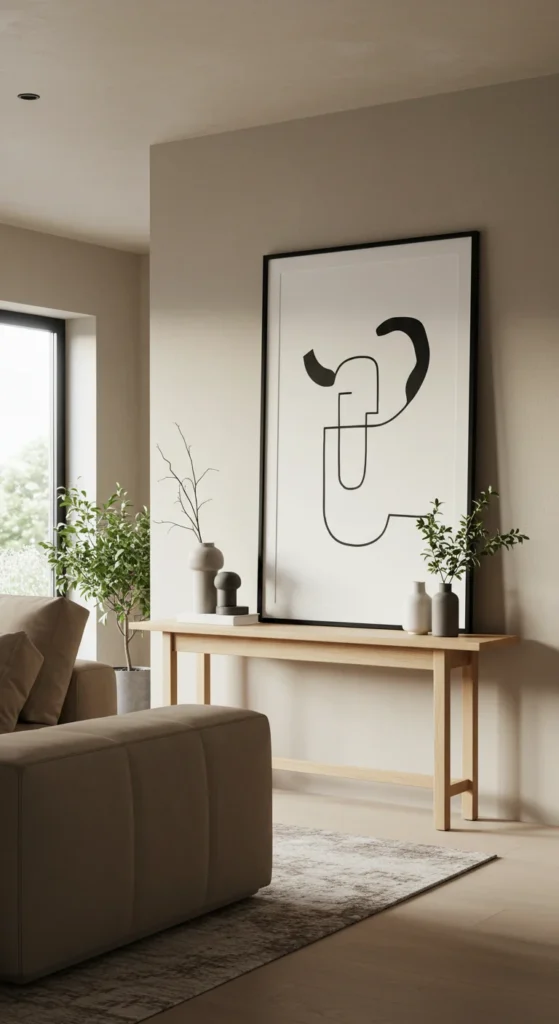
Matte textures enhance the softness of neutral tones.
- Use matte wall paints or ceramic finishes to prevent glare.
- Choose non-shiny furniture for a more relaxed aesthetic.
- Mix with glossy accents sparingly for balance.
Matte finishes give a calm, understated elegance to rooms.
19. Bring in Textured Wall Panels
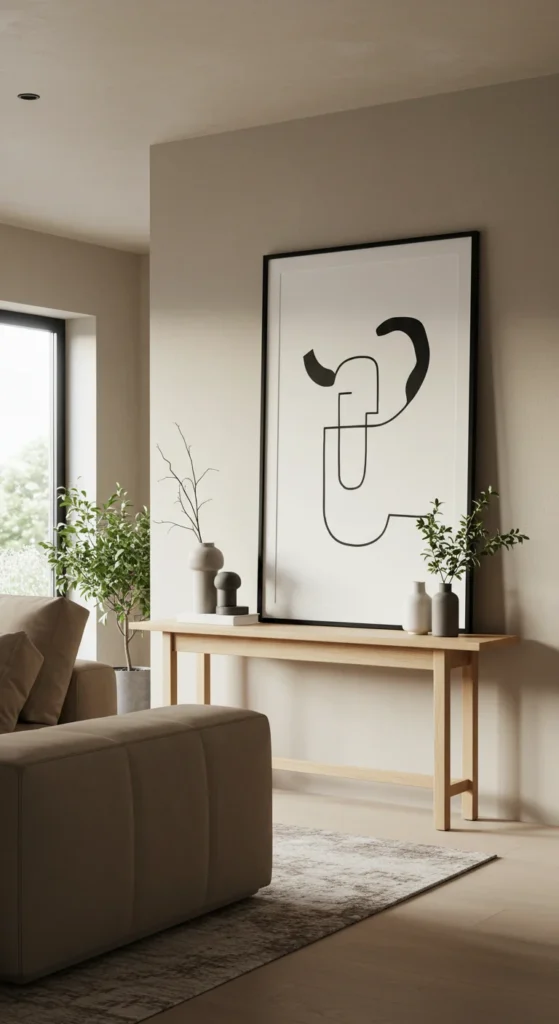
Wall treatments create a subtle focal point.
- Install wood slats, beadboard, or fluted panels in light wood or painted beige.
- Limit to one accent wall to keep the look understated.
- Complement with simple bedding or furniture.
This trick adds architectural interest without introducing bold colors.
20. Use Neutral Candles
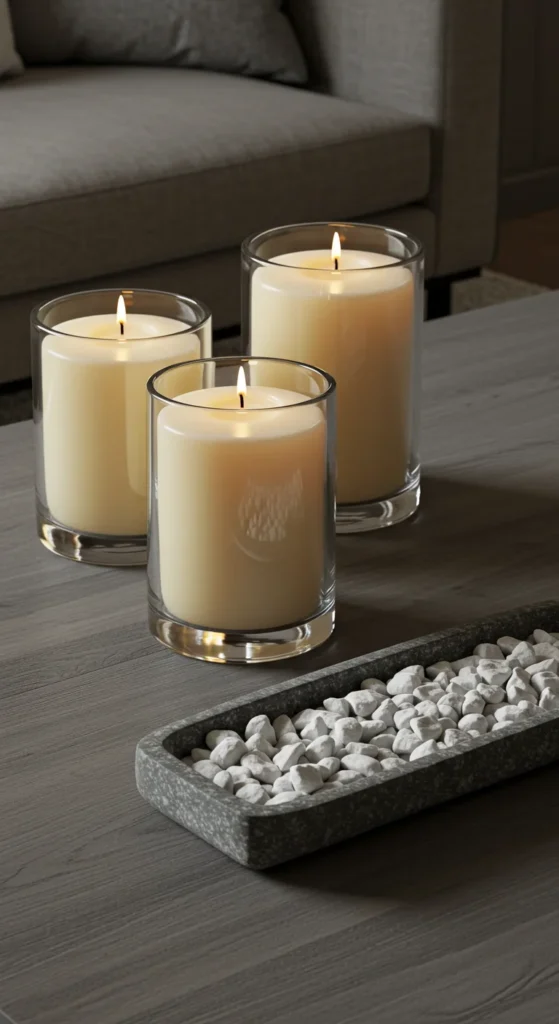
Candles add warmth and ambiance to neutral spaces.
- Group ivory or sand-toned pillar candles in glass or ceramic holders.
- Place on coffee tables, mantels, or dining tables.
- Combine with small natural elements like pebbles or branches.
They enhance the room’s atmosphere and tie in effortlessly with the palette.
21. Mix Smooth and Rough Textures
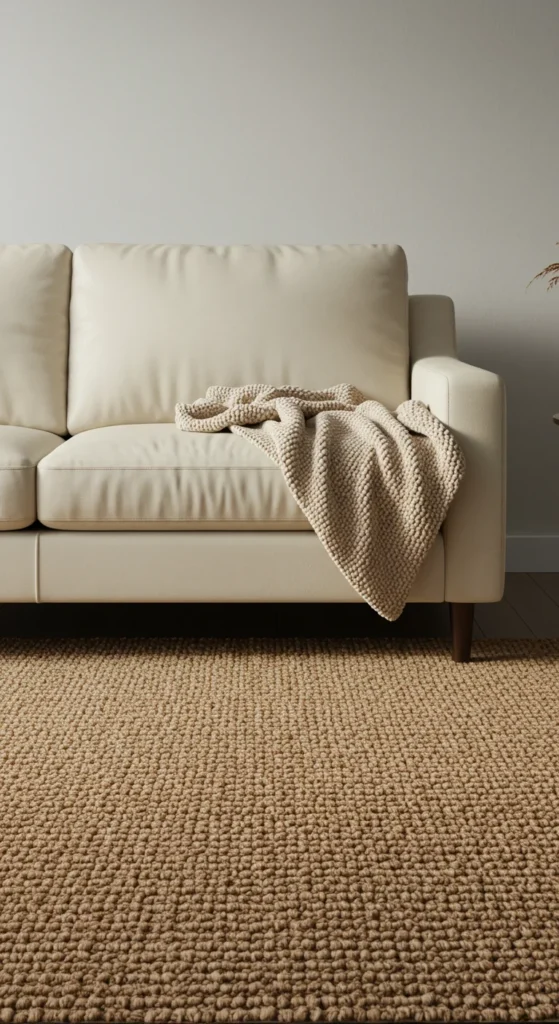
Texture variety keeps spaces dynamic.
- Combine rough rugs with smooth leather or glossy ceramics.
- Use velvet pillows for added softness.
- Balance each texture to create harmony.
The interplay of tactile elements adds richness to minimalistic designs.
22. Add Woven Pendant Lights
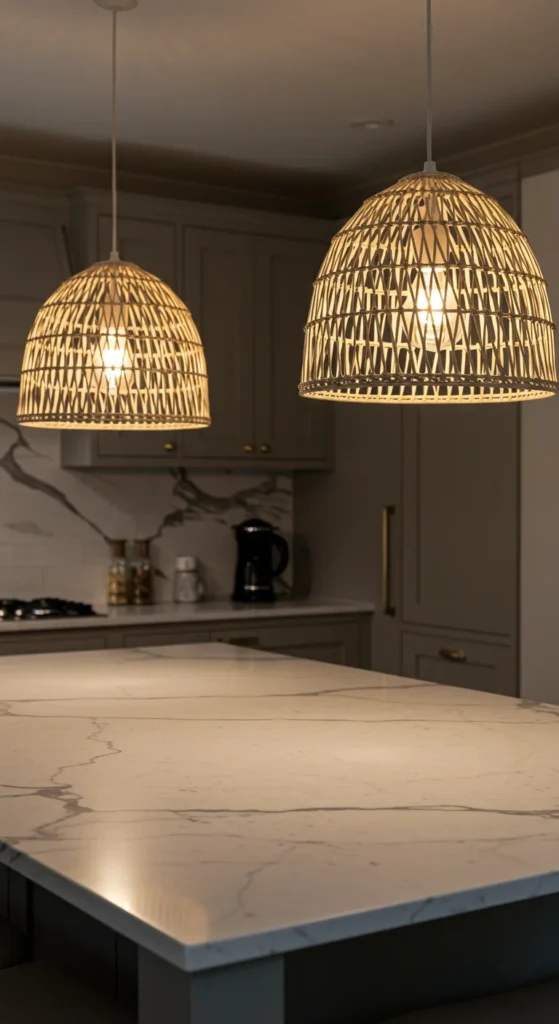
Pendant lighting can be both decorative and functional.
- Choose woven pendants in light tan or cream.
- Hang them above dining tables or kitchen islands.
- Pair with wooden stools or chairs for a cohesive natural look.
They complement neutral palettes while adding gentle curves and texture.
23. Decorate with Dried Botanicals
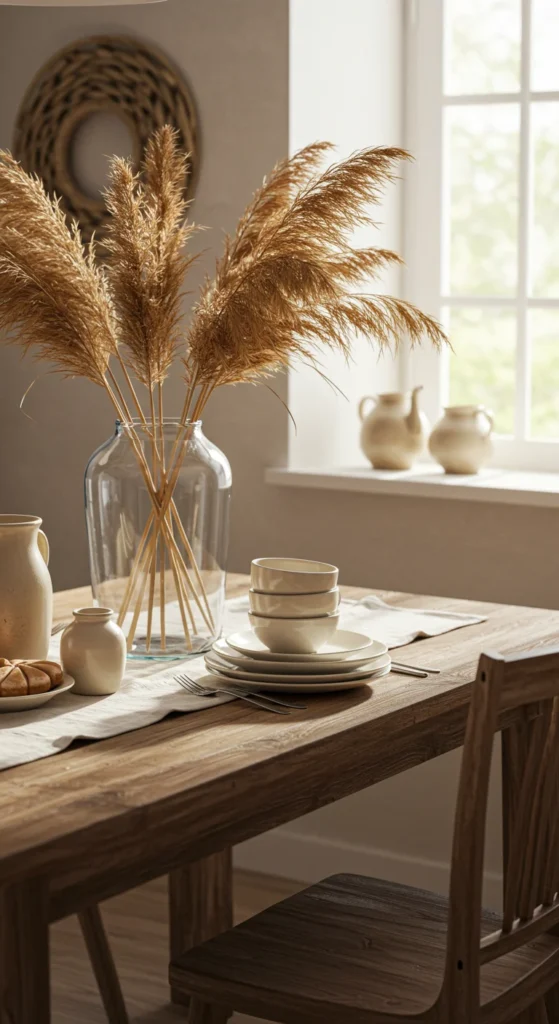
Dried flowers keep the neutral theme consistent year-round.
- Arrange pampas grass, eucalyptus, or wheat stalks in simple vases.
- Place them on consoles, dining tables, or bedside tables.
- Rotate arrangements seasonally for variety.
They bring natural softness without adding bright colors.
24. Opt for Sheer Neutral Drapes
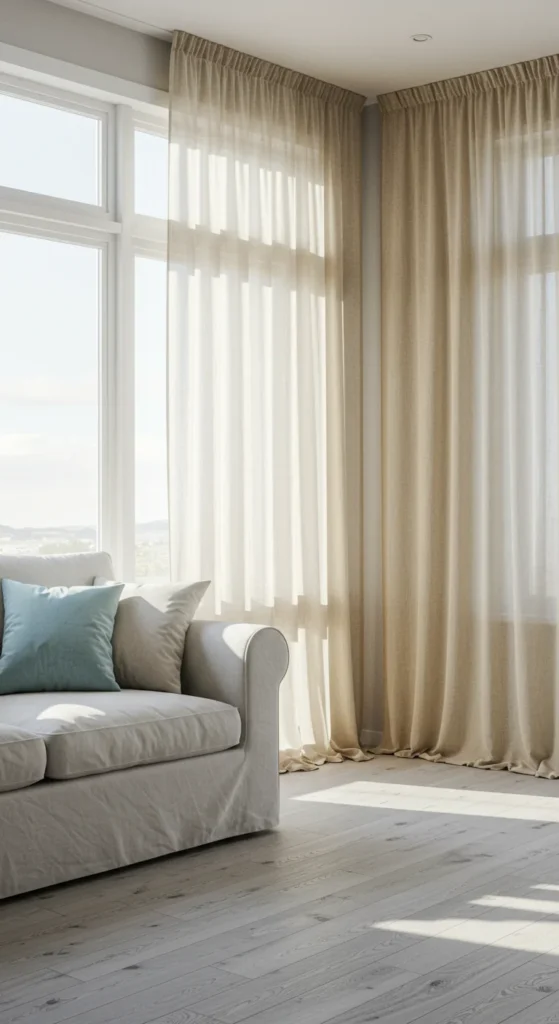
Sheer fabrics soften sunlight and maintain openness.
- Install sheer curtains in beige or champagne hues.
- Pair with roller blinds if you need extra privacy.
- Let them fall loosely to keep the effect casual and airy.
Sheers help rooms feel light and breezy while matching the palette.
25. Showcase Minimal Centerpieces
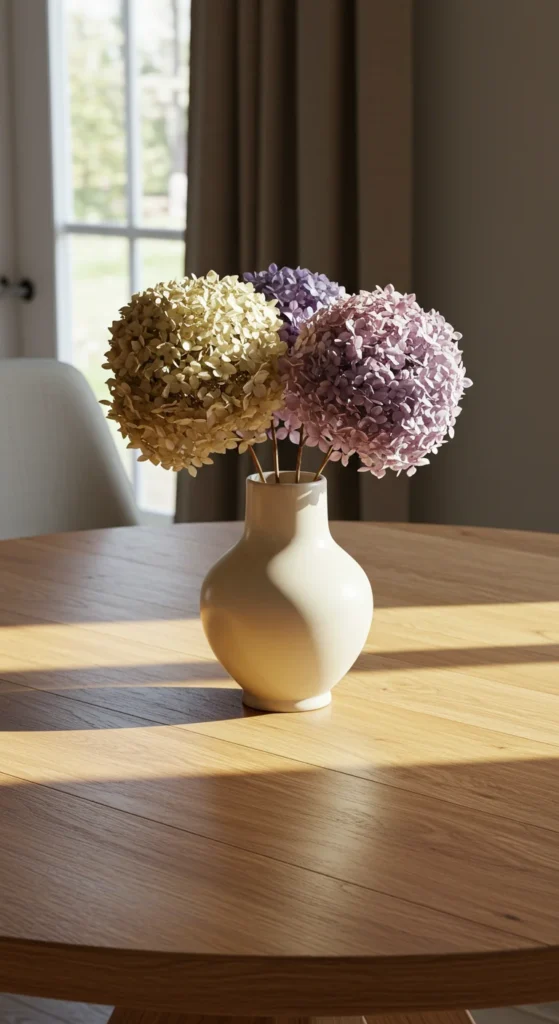
Keep table styling simple but stylish.
- Use one or two understated pieces like ceramic vases or small stone trays.
- Avoid cluttering with too many items to maintain an elegant look.
- Change flowers or seasonal branches to refresh easily.
A minimal centerpiece highlights neutral colors without overwhelming the design.
Conclusion
Neutral decor offers a timeless, calming atmosphere that works in every room. By layering textures, mixing warm and cool undertones, and incorporating natural materials, you can design spaces that feel both modern and enduring. Start with easy changes like adding jute rugs, linen curtains, or ceramic vases, and watch your home transform into a chic retreat you’ll enjoy for years to come.
Leave a Reply