

Open-concept living is beautiful — it makes your home feel airy, connected, and full of light. But there’s a fine line between “open and inviting” and “cluttered and chaotic.” When walls come down, your furniture, decor, and layout choices matter more than ever. The secret lies in creating visual flow while keeping functionality intact.
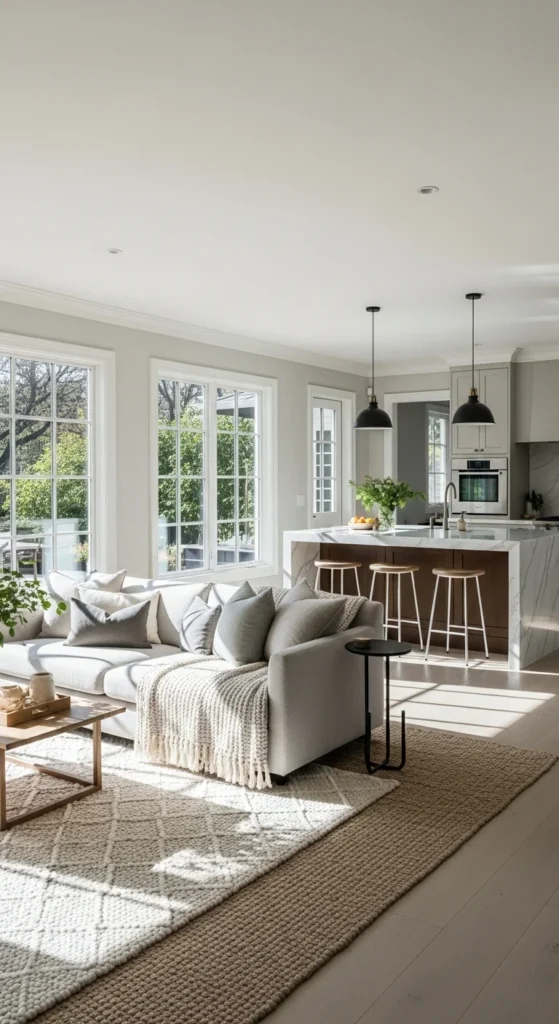
Define Zones Without Walls
Even in an open plan, your living room, dining area, and kitchen should still feel distinct. Instead of using walls, use clever design tricks to define each zone.
- Area rugs: Choose a large rug that anchors each space — a soft texture for the living area, a woven mat under the dining table.
- Lighting: Use pendant lights above the dining area and floor lamps in the lounge to subtly divide functions.
- Furniture placement: A sofa back can act as a “divider” between living and dining areas.
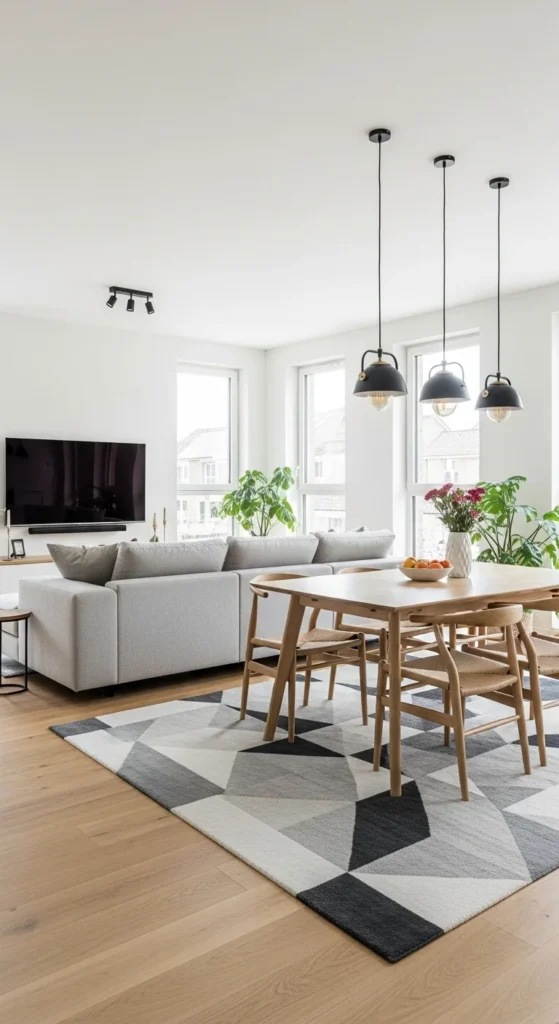
This approach lets you enjoy the flow of an open space without it feeling like one big room.
Keep the Color Palette Cohesive
A consistent color story helps open spaces feel unified and calm. If every area has a different scheme, your home can quickly look busy.
- Pick a base color (like warm white, beige, or soft gray).
- Add two or three complementary shades that repeat across the space.
- Use textures and finishes (like matte, gloss, or woven) for depth instead of introducing too many colors.
For example, a soft gray wall with beige upholstery, wood tones, and black metal accents keeps everything in harmony.
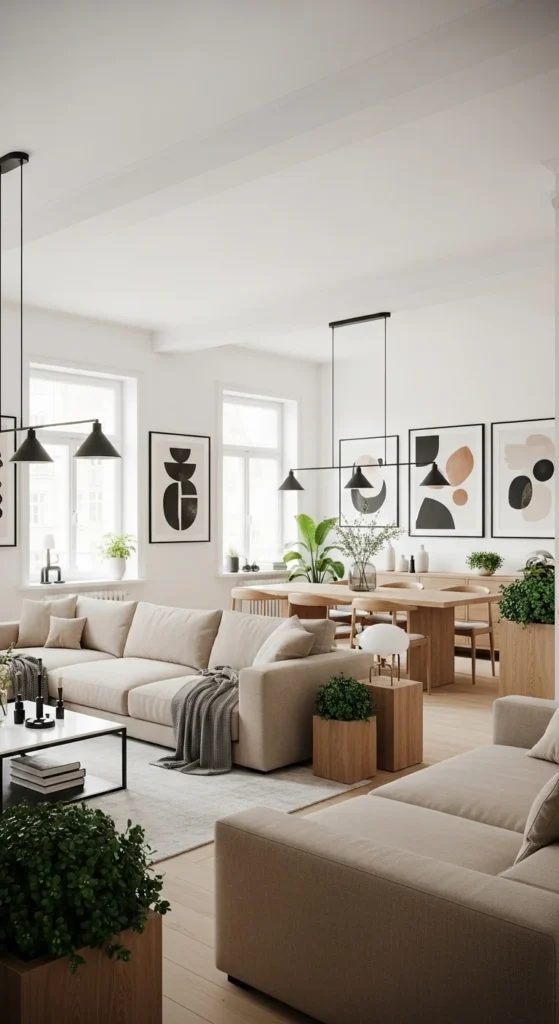
Choose Multi-Functional Furniture
In open layouts, less is more — every piece should earn its place. Opt for furniture that serves multiple purposes:
- Storage ottomans that double as coffee tables
- Expandable dining tables for guests
- Console tables that define space while offering storage
- Floating shelves that display decor without taking up floor space
Avoid oversized pieces or too many small items — both can overwhelm the eye.
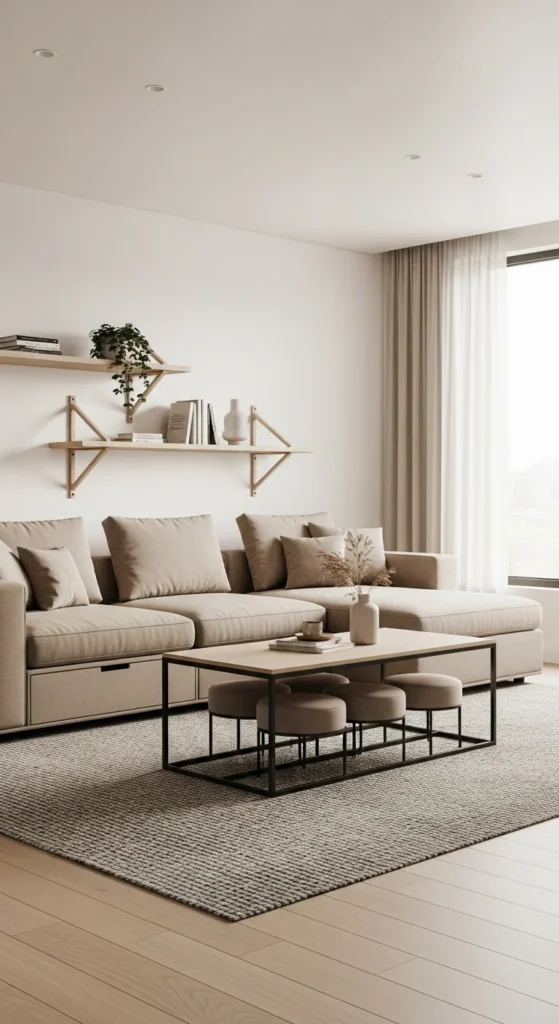
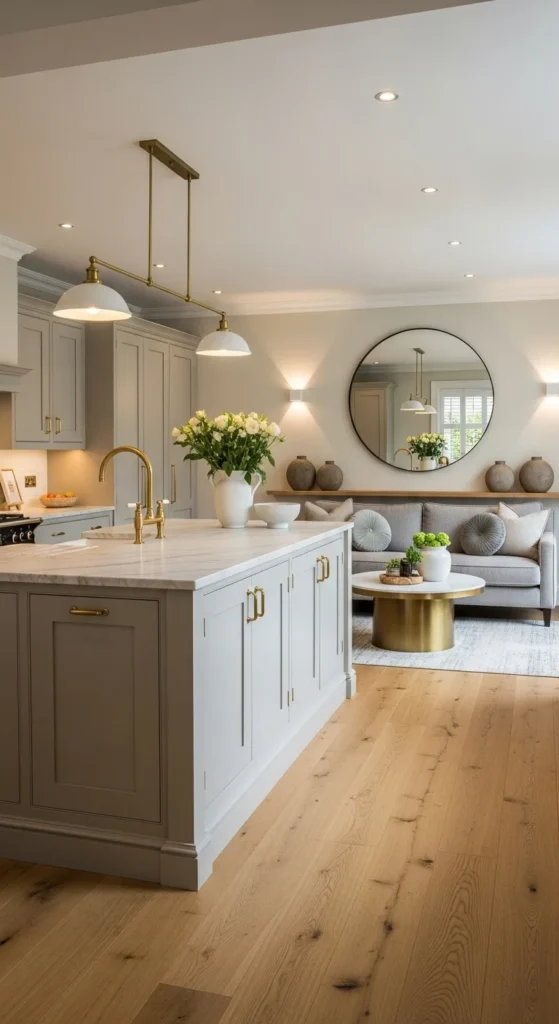
Create Visual Flow with Repetition
Repetition is a designer’s trick to bring balance to open layouts. When certain colors, materials, or shapes repeat, the eye moves naturally from one zone to another.
Try repeating:
- The same wood tone across furniture and flooring
- A recurring metal finish (like brushed brass or matte black)
- Consistent shapes, such as round mirrors and circular dining tables
This harmony prevents the space from feeling like a collage of mismatched pieces.
Leave Breathing Room
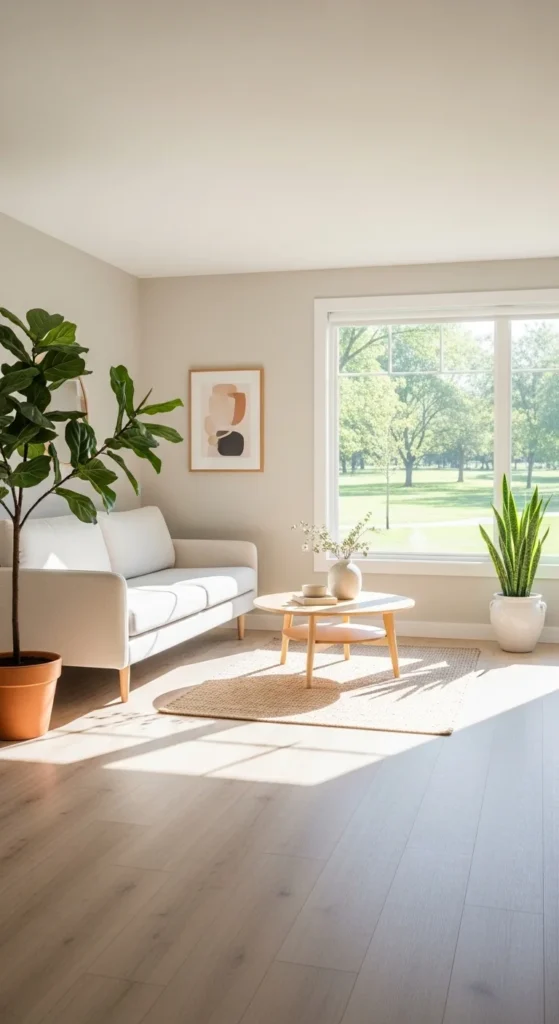
It’s tempting to fill every corner, but open-concept designs need negative space to feel balanced. Empty zones give your eyes a place to rest and make the overall area appear larger.
- Keep at least 2–3 feet of walking space between furniture pieces.
- Let windows remain partially clear to maximize light.
- Avoid over-decorating open surfaces — style a few meaningful objects instead.
Think of it like interior editing: if something doesn’t add comfort or cohesion, take it out.
Use Vertical Design Elements
When floor space is shared, use walls and vertical lines to add depth and distinction.
- Tall plants or bookshelves can subtly separate areas.
- Artwork clusters at varying heights draw attention upward.
- Curtain panels or wood slats can define spaces without closing them off.
These details add character while keeping your open plan practical and beautiful.
Final Takeaway
An open-concept layout should feel like a peaceful flow, not a jumble of furniture. By balancing clear zones, cohesive color, and purposeful pieces, you can keep your space light, connected, and clutter-free.
Before buying or arranging anything, take a step back and imagine the whole picture. Open living is about breathing room — not just square footage.
Leave a Reply