

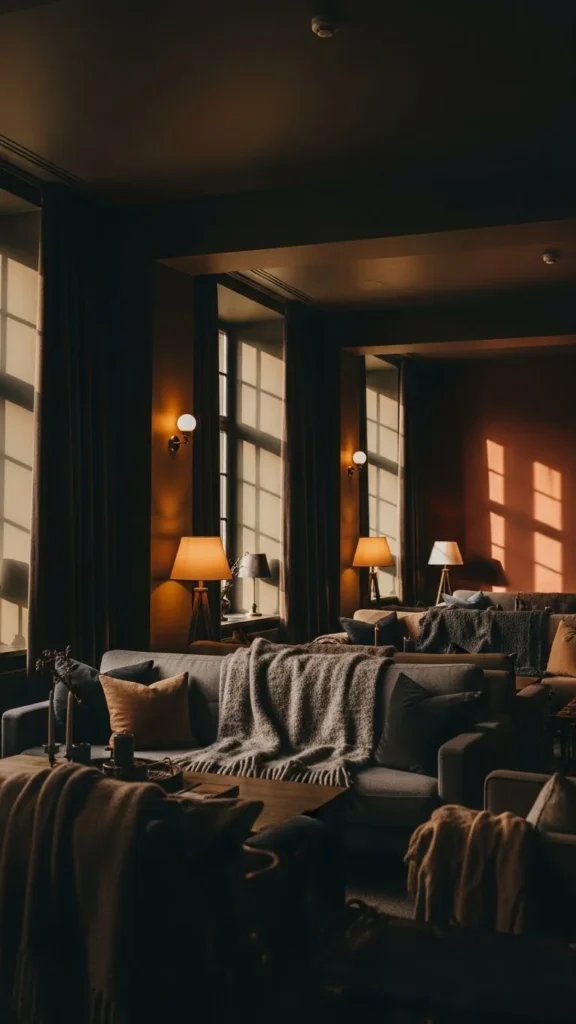
Winter light sits lower and softer, which makes ceilings more noticeable than at any other time of year. Painting the ceiling in a deeper, mood-driven shade can change how a room feels without touching furniture or layout. Dark and dramatic ceilings pull the eye upward, frame winter lighting, and create intimacy when rooms might otherwise feel flat or washed out. This list explores winter ceiling paint ideas that add character while staying practical. Each approach focuses on simple application, realistic budgets, and rooms people actually live in.
1. Charcoal Gray Ceiling in a Cozy Living Room
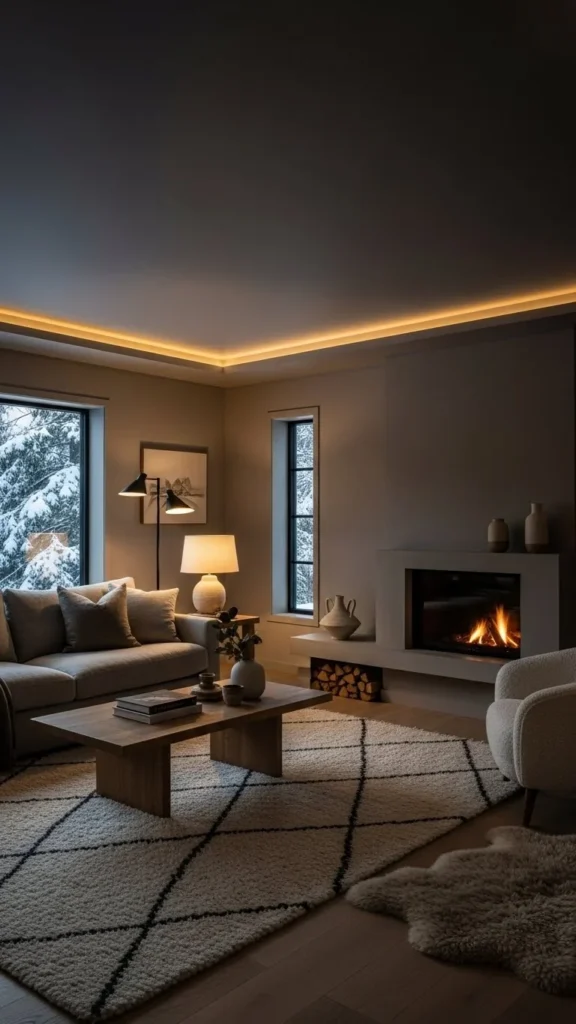
A charcoal ceiling works well in living rooms that already rely on lamps during winter. The darker tone absorbs excess glare and makes light feel warmer. Pair it with pale walls so the room does not feel boxed in. This contrast keeps the space balanced.
For a low-cost approach, paint only the ceiling and leave trim untouched. Matte finishes hide roller marks and imperfections. If the room feels heavy, swap bright bulbs for warmer ones to soften the effect.
Charcoal suits spaces with low winter sun. It creates a grounded feeling during evenings and helps the ceiling feel intentional rather than forgotten.
2. Deep Navy Ceiling for Winter Evenings
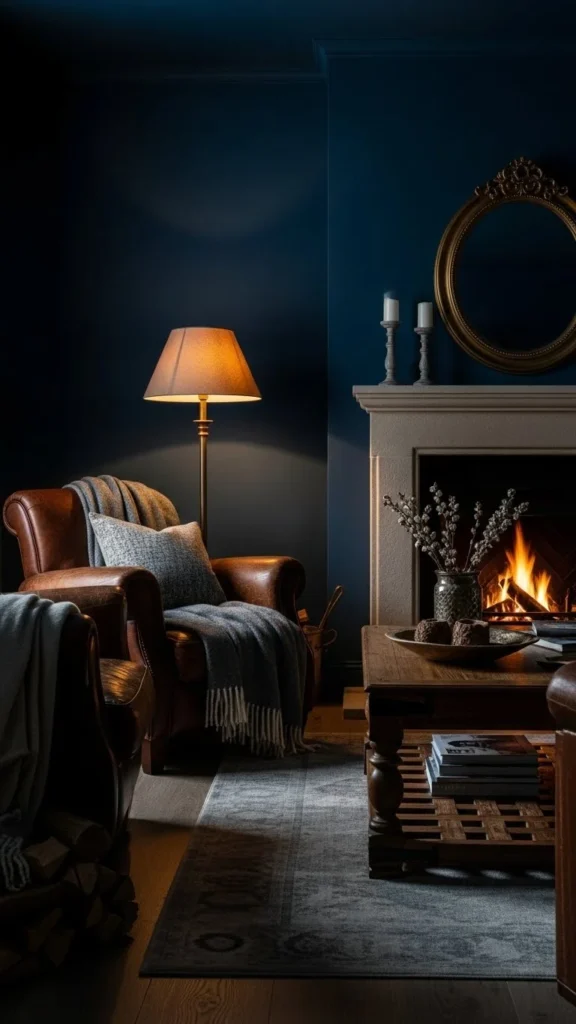
Navy ceilings bring calm during long winter nights. They pair well with wood furniture and warm metals. Use white or cream walls to keep contrast clear.
Test paint with a sample board taped overhead. Light changes how navy reads. For savings, reuse leftover wall paint if the finish matches.
This color works well in dining rooms and studies where evening light dominates.
3. Forest Green Ceiling in a Reading Room
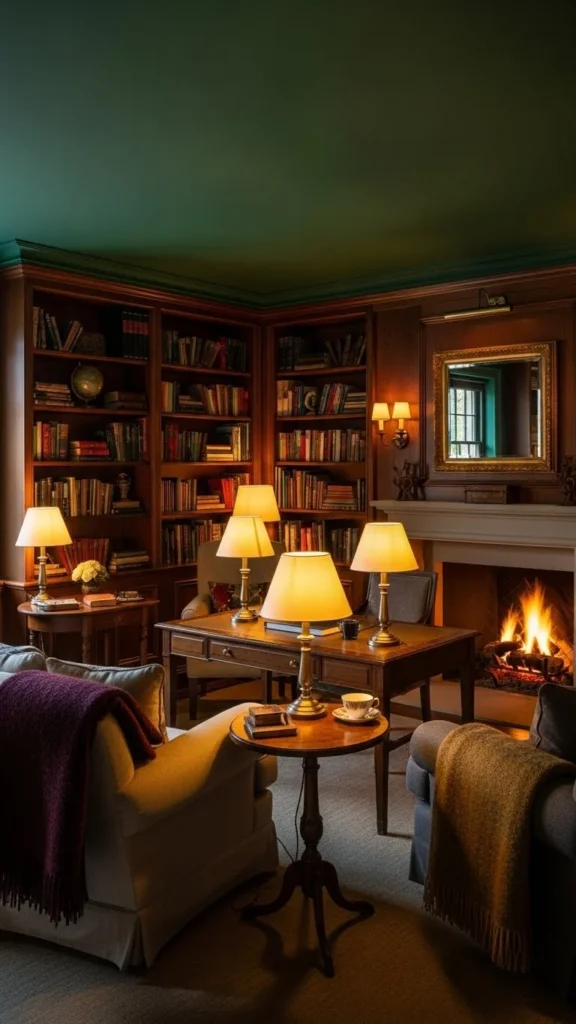
Forest green feels grounded and natural during winter. It suits rooms filled with books, plants, or wood tones. The ceiling becomes a visual canopy.
Use a flat finish to reduce glare. Keep walls neutral so the ceiling remains the focal point. This approach avoids repainting the entire room.
A single gallon often covers most ceilings, which keeps costs manageable.
4. Warm Black Ceiling for Maximum Contrast
Warm black ceilings add depth without harshness. Choose blacks with brown or gray undertones. Pure black can feel too stark in winter.
Pair with warm bulbs and layered lighting. This avoids shadows feeling sharp. Use painter’s tape carefully to keep edges clean.
This works best in rooms with standard or tall ceilings.
5. Smoky Blue Ceiling in a Bedroom
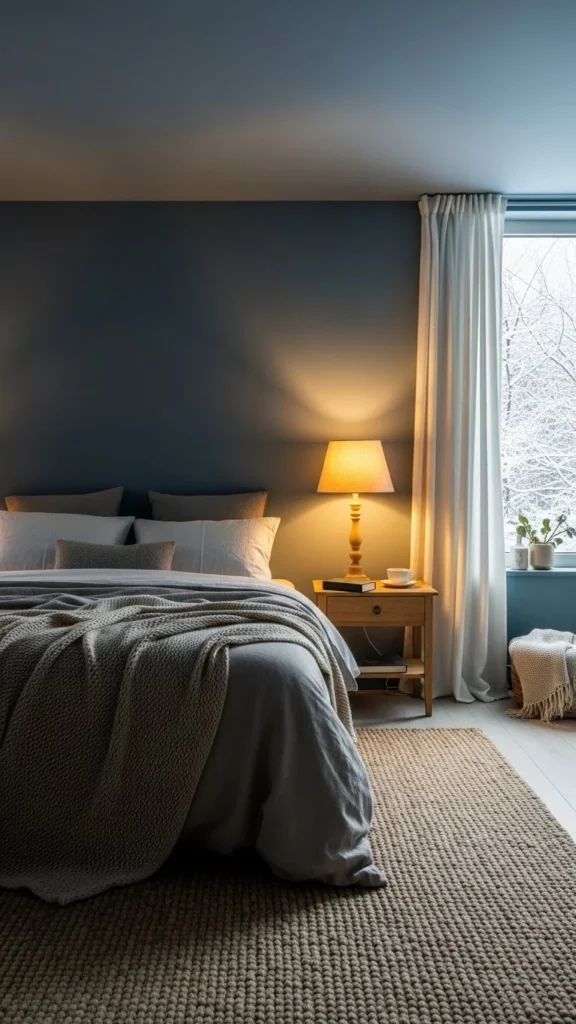
Smoky blue softens winter bedrooms. It feels restful without looking pale. Use it with light bedding and simple furniture.
Paint ceilings first to avoid splatter stress. A single accent ceiling saves time and money.
This color supports quiet routines and low evening light.
6. Chocolate Brown Ceiling for Intimate Spaces
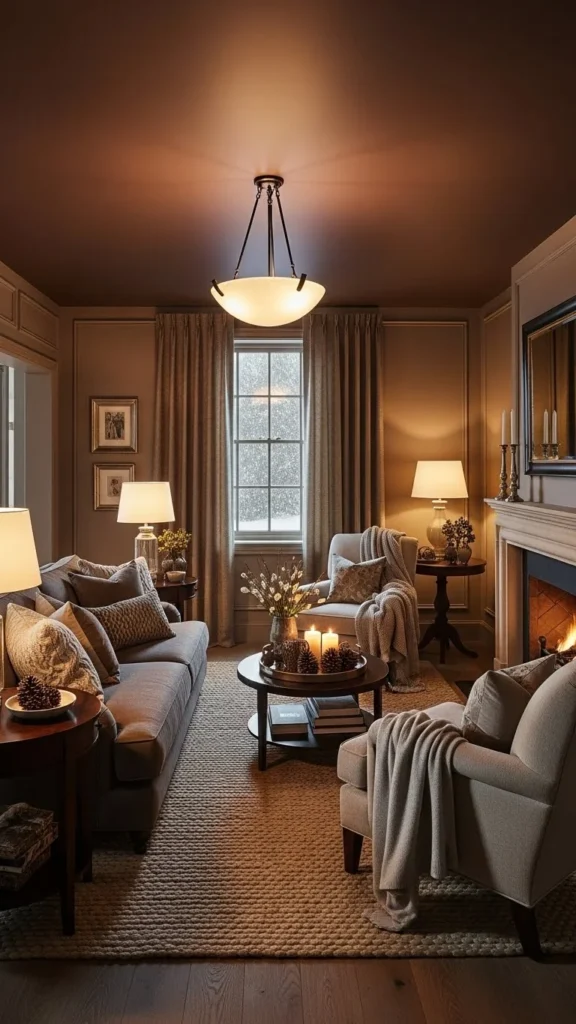
Brown ceilings bring warmth during cold months. They work best in small rooms meant for conversation or rest.
Pair with lighter walls and minimal decor. Too many dark elements can feel heavy.
Use existing brown accents to tie the look together.
7. Slate Ceiling in a Modern Apartment
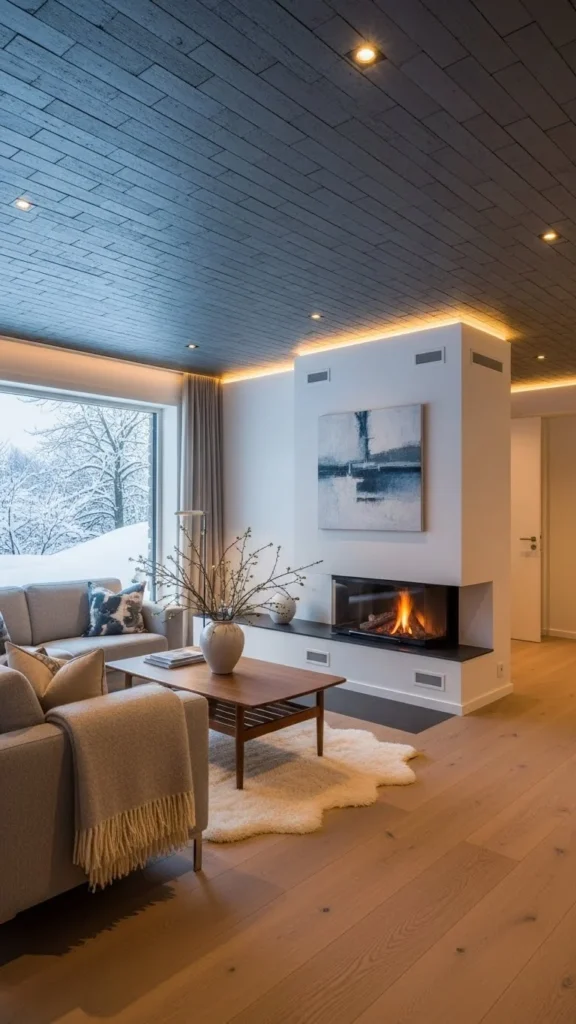
Slate sits between gray and blue. It suits modern homes with clean lines. The ceiling feels calm rather than bold.
This color hides imperfections well. A roller extension speeds up work and saves effort.
Slate pairs well with winter daylight and concrete or wood floors.
8. Aubergine Ceiling in a Dining Room
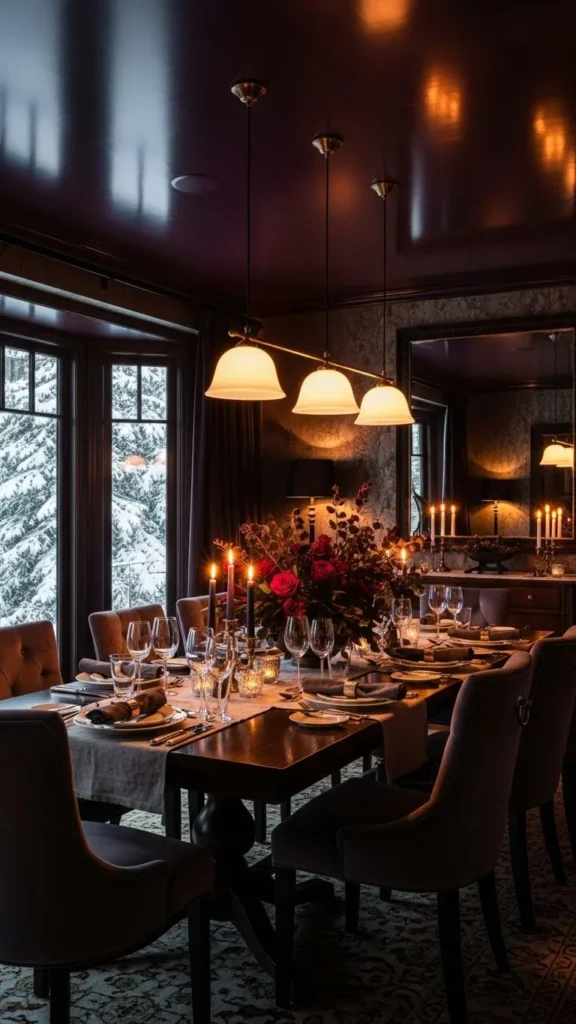
Aubergine ceilings feel rich under warm light. They suit dining spaces used mainly at night.
Keep walls light to avoid a closed-in feel. Use fabric chairs or curtains for softness.
This color adds character without extra decor.
9. Ink Blue Ceiling for Hallways
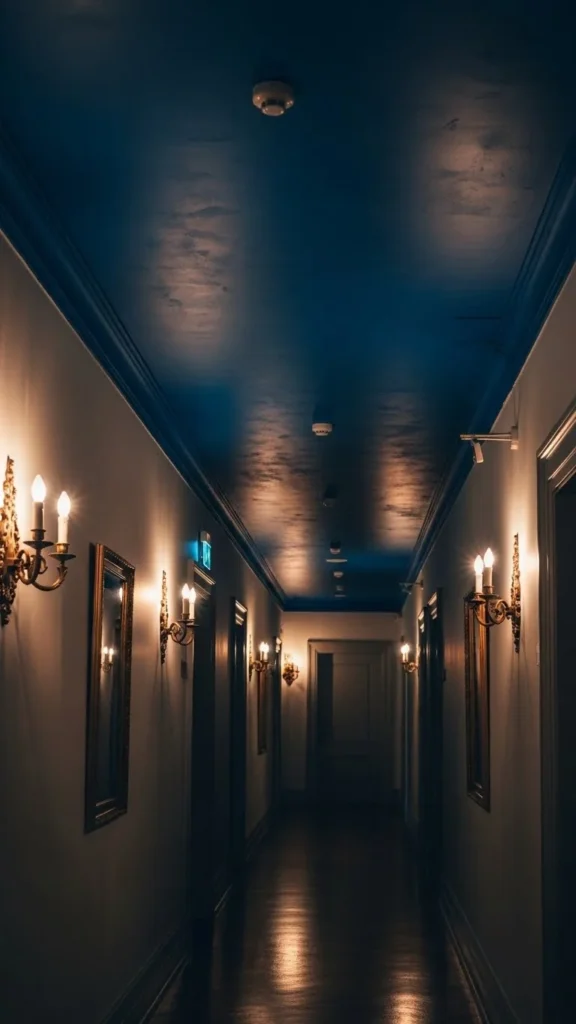
Hallways often lack daylight. A dark ceiling adds purpose. Ink blue works well with wall lights.
Paint trim the same wall color to keep focus overhead. This saves time.
This idea suits narrow or overlooked spaces.
10. Soft Black Ceiling with White Walls
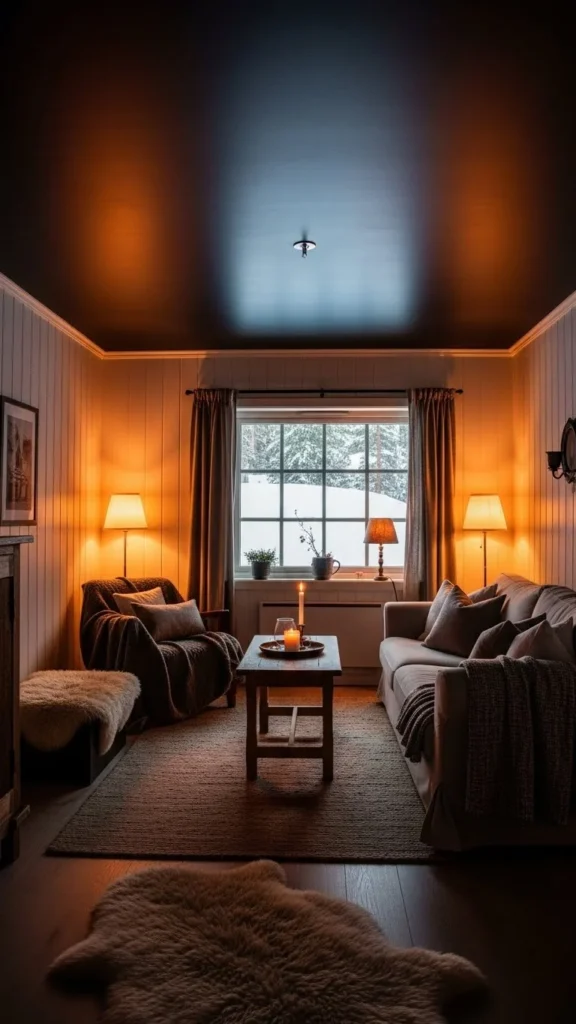
Soft black defines a room without harsh edges. White walls reflect light back into the space.
Use warm bulbs and fabric shades to soften contrast.
This setup feels balanced during winter evenings.
11. Deep Teal Ceiling in a Guest Room
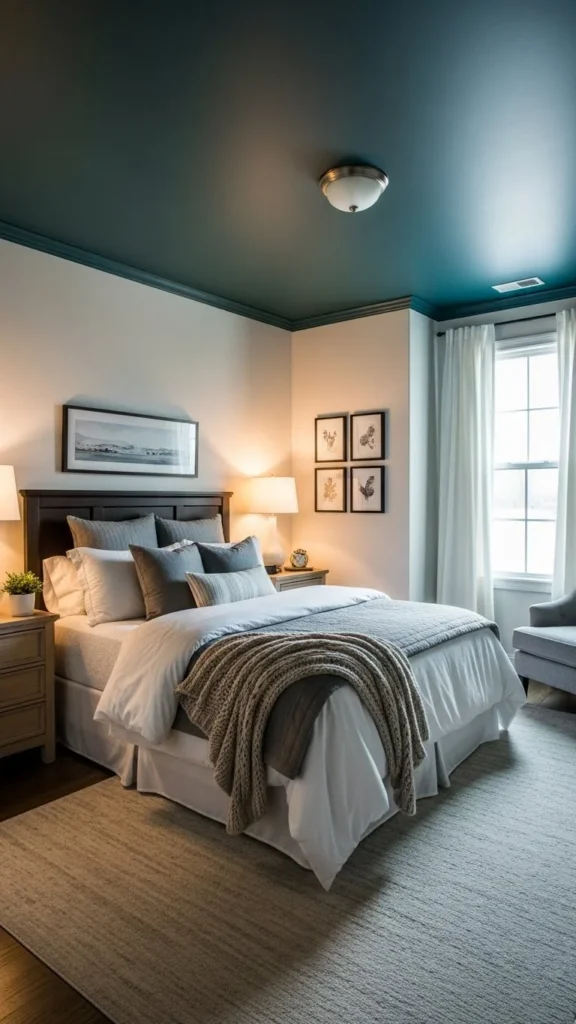
Teal adds color without brightness. It feels welcoming for guests during colder months.
Limit decor so the ceiling stands out. One accent color in pillows ties it together.
12. Iron Gray Ceiling for Home Offices
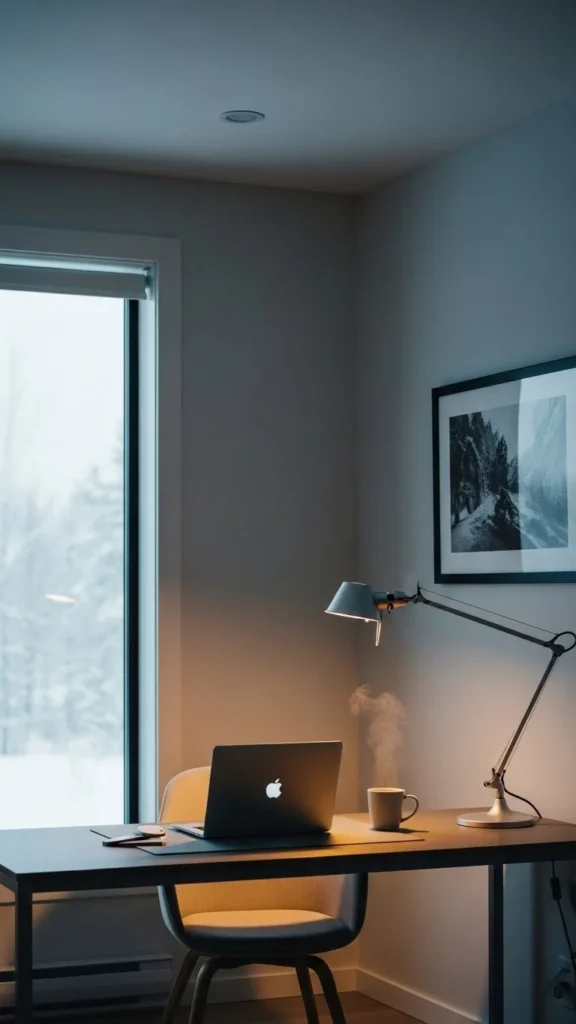
Iron gray reduces glare from screens. It supports focus during short winter days.
Keep walls light to prevent dullness. This saves repainting costs.
13. Midnight Blue Ceiling in a Lounge
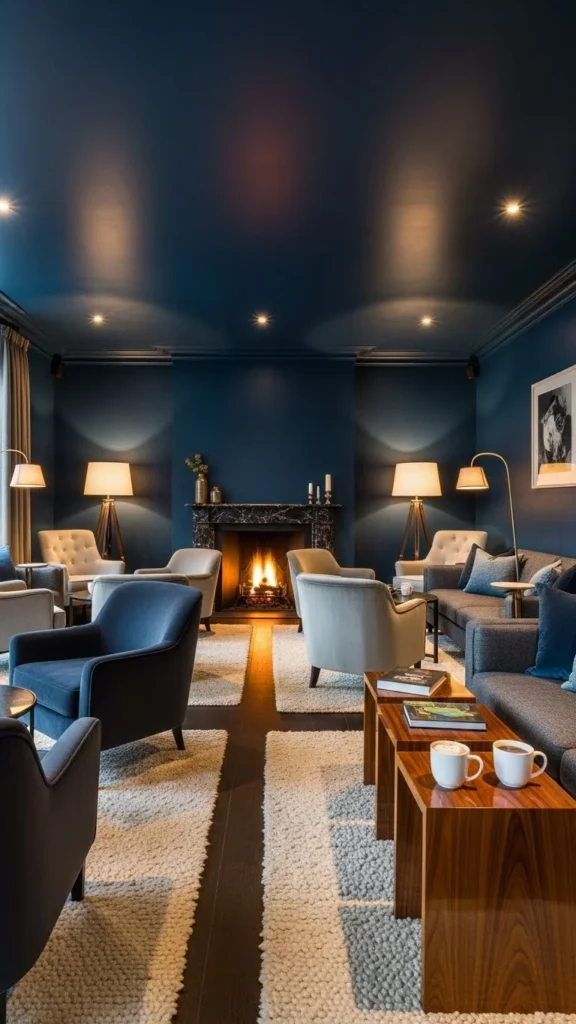
Midnight blue adds drama without harshness. It suits lounges used at night.
Use layered lighting rather than one overhead source.
14. Warm Taupe Ceiling in a Family Room
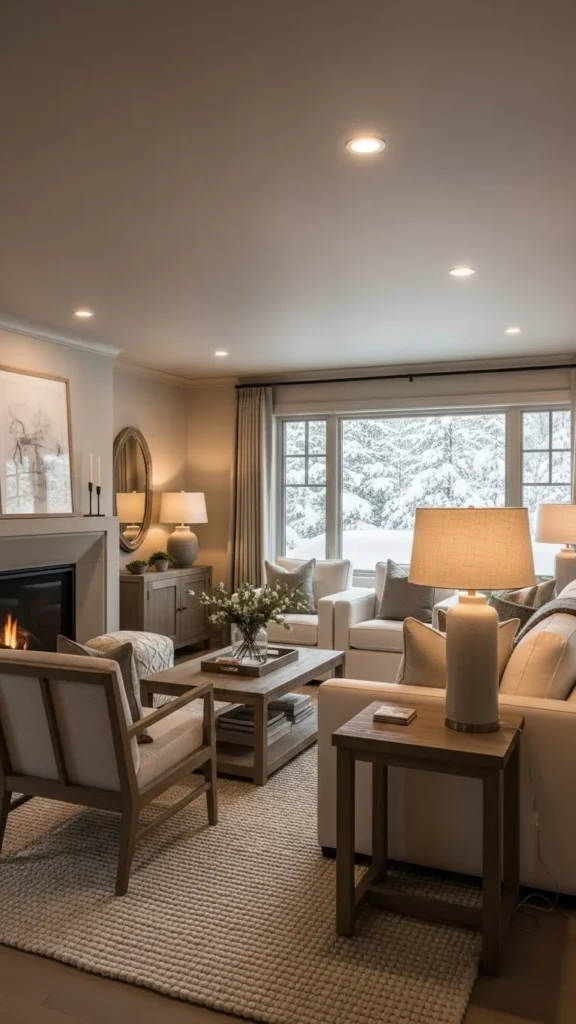
Taupe ceilings add depth without dark weight. They suit busy family rooms.
This color hides wear and works with many palettes.
15. Espresso Ceiling with Wood Accents
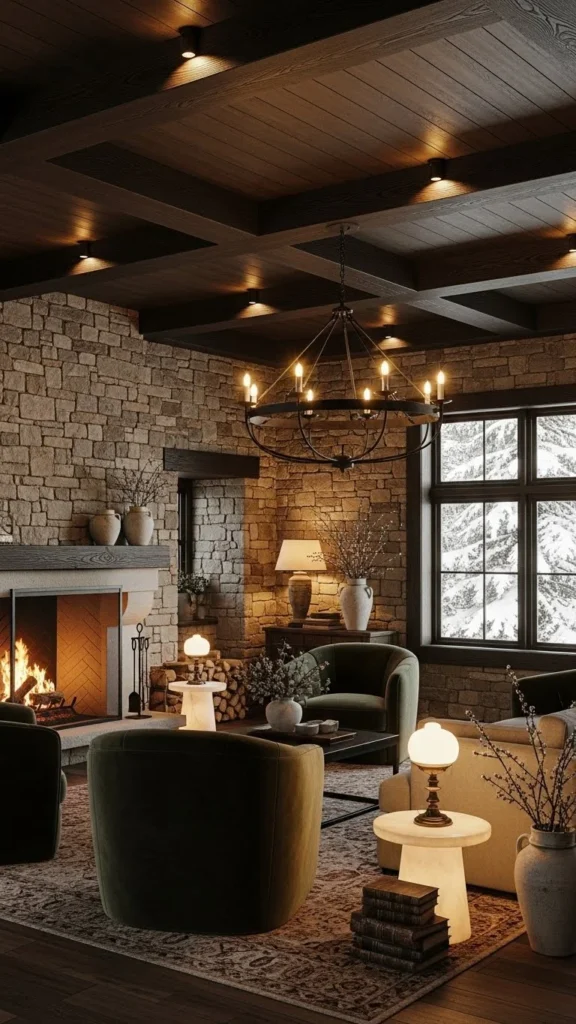
Espresso ceilings pair well with wood features. They add warmth during cold months.
Use a satin finish for gentle light reflection.
16. Steel Blue Ceiling in a Bathroom
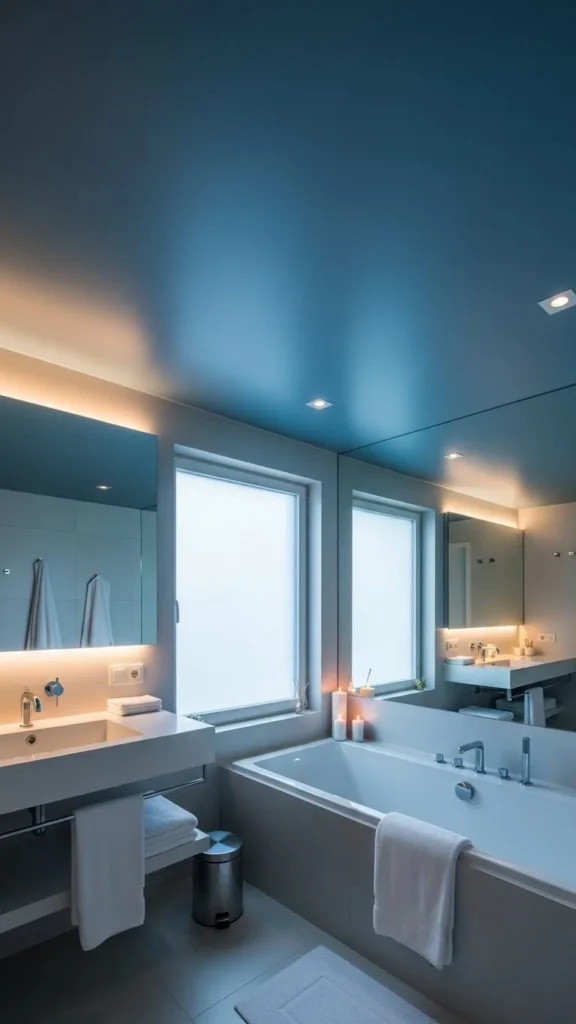
Steel blue works well in bathrooms with limited daylight. It feels calm and clean.
Use moisture-safe paint. This avoids repainting later.
17. Dark Olive Ceiling for Earthy Homes
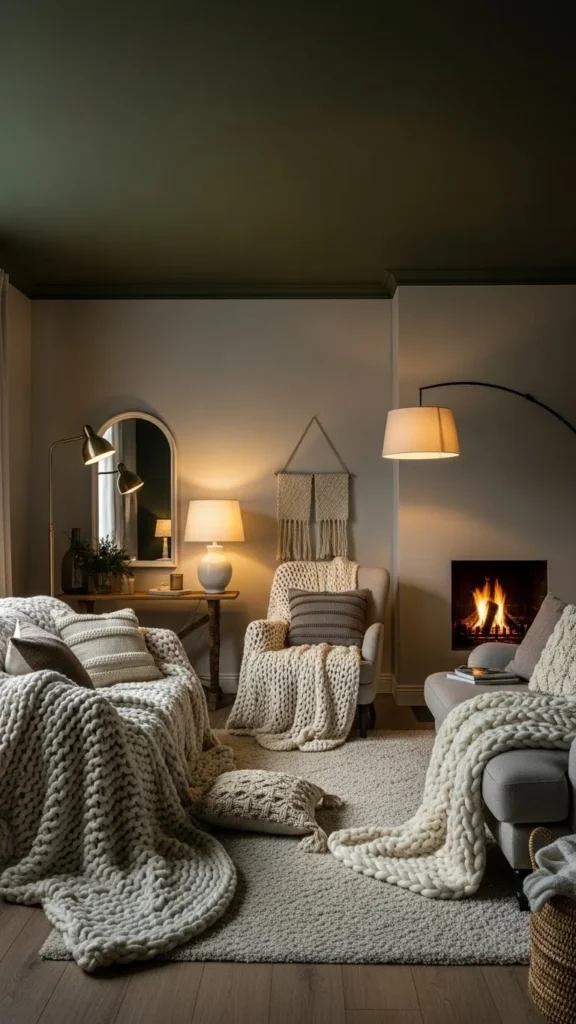
Olive tones feel natural and quiet. They work well with winter textures.
Keep decor simple for balance.
18. Graphite Ceiling in Open-Plan Rooms
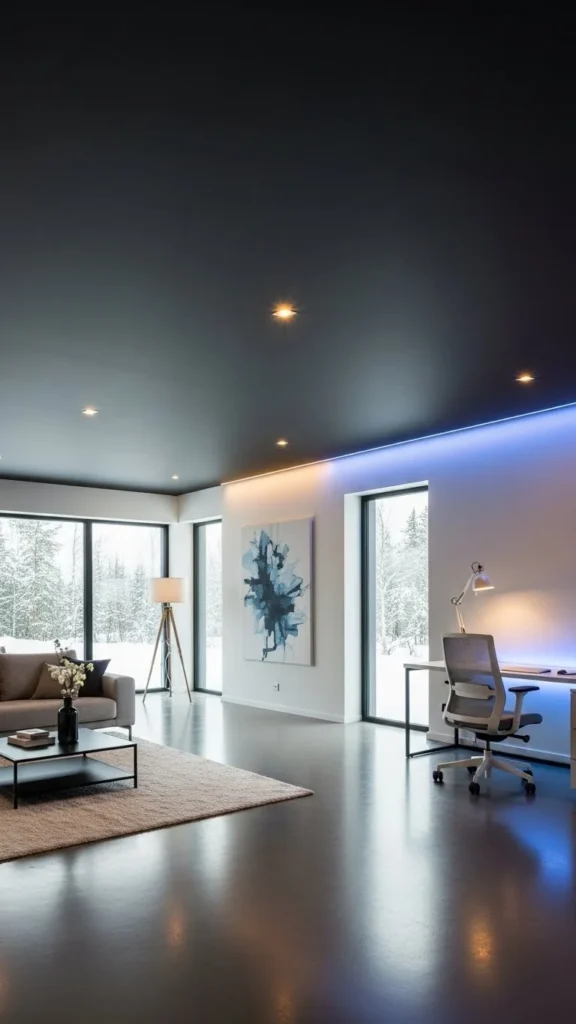
Graphite helps define large spaces. It draws the ceiling closer visually.
Paint just the main area to save paint.
19. Plum Ceiling for Creative Rooms
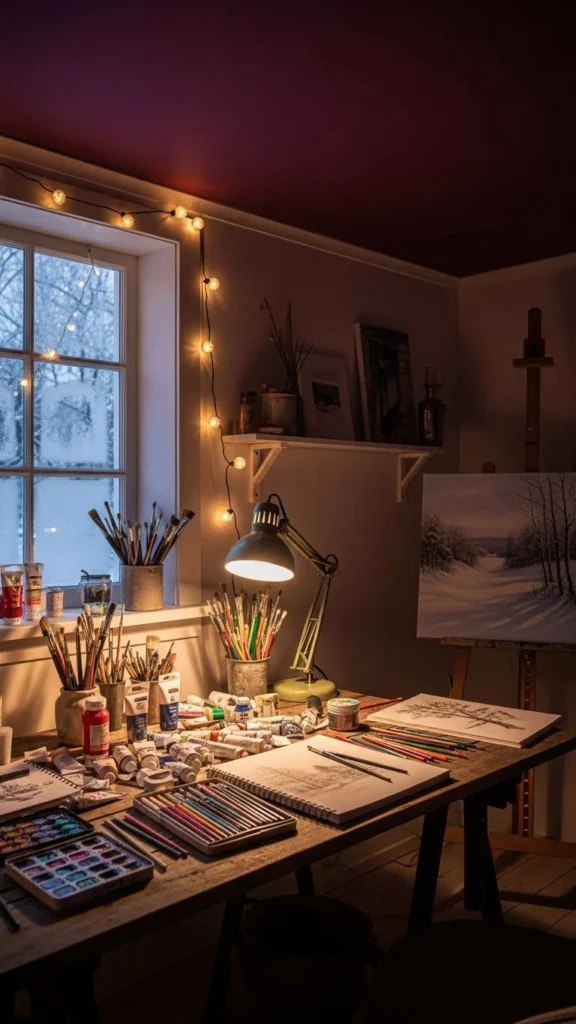
Plum supports creativity and warmth. It suits studios or craft rooms.
Keep walls pale to avoid heaviness.
20. Dark Stone Ceiling in Minimal Homes
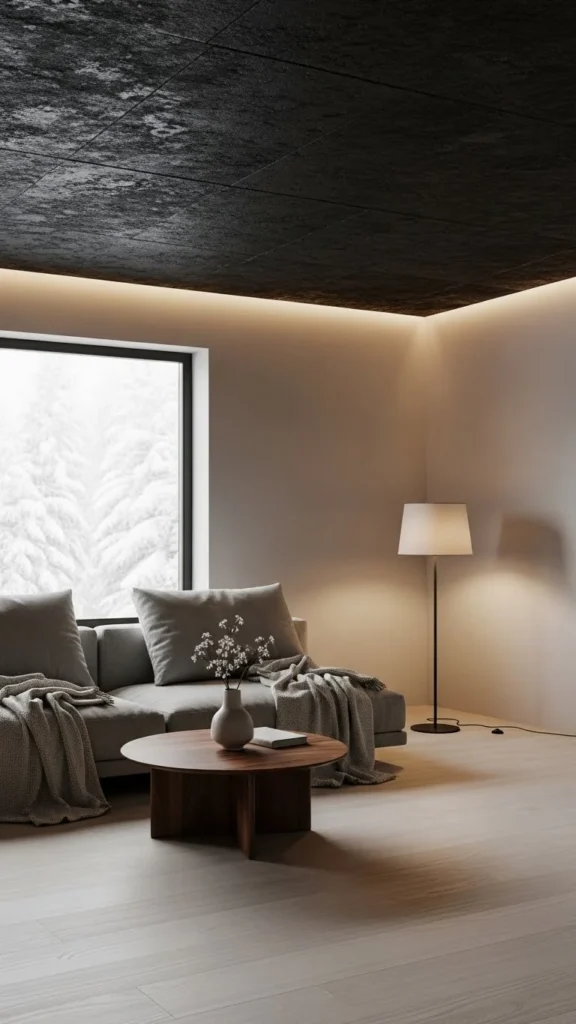
Stone shades feel calm and solid. They suit minimalist layouts.
This choice reduces the need for decor.
21. Cocoa Ceiling in a Nursery or Quiet Room
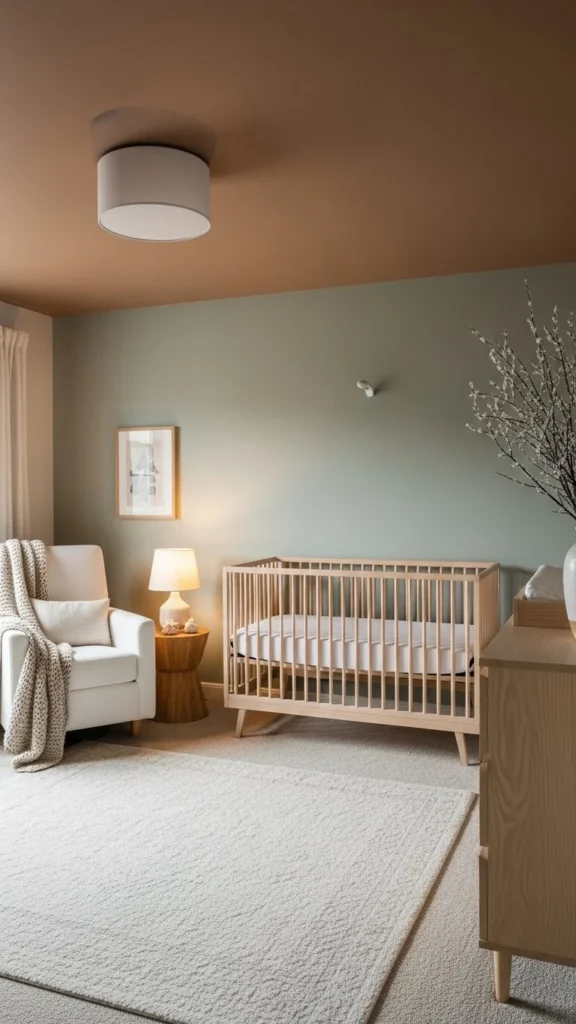
Cocoa tones feel gentle and warm. They suit calm spaces used during evenings.
Pair with soft textiles and low light.
22. Blue-Gray Ceiling in a Kitchen
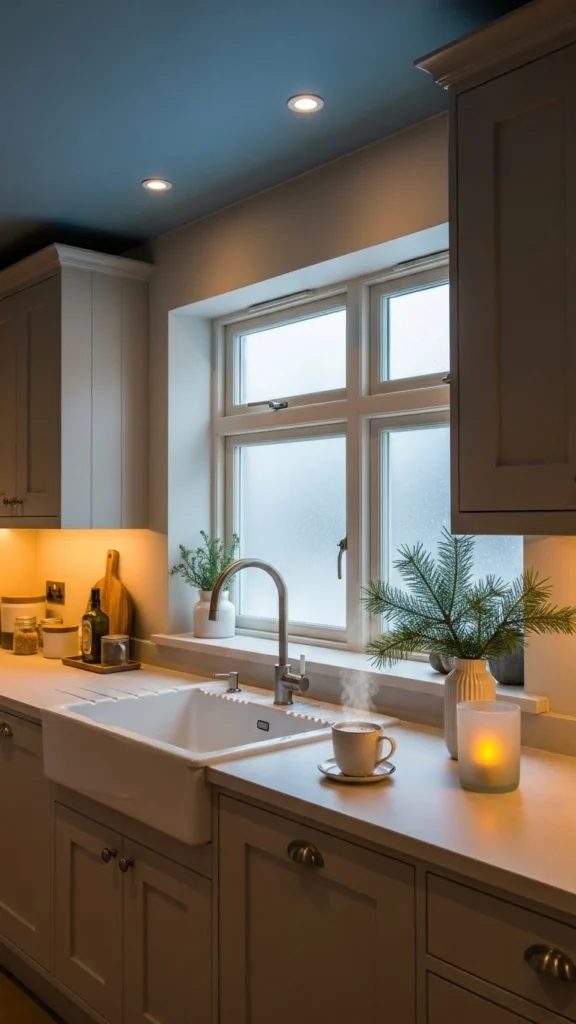
Blue-gray ceilings soften kitchen light during winter. They reduce glare from fixtures.
This approach refreshes the room without cabinet changes.
23. Stormy Gray Ceiling with Crown Molding
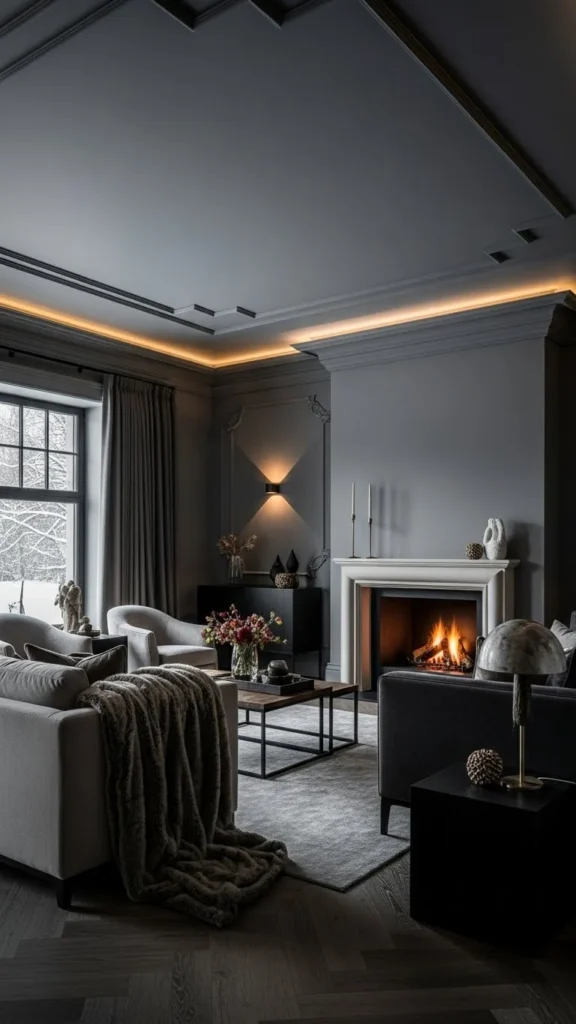
Stormy gray highlights molding details. It adds depth without extra decor.
Paint molding the wall color to frame the ceiling.
24. Near-Black Ceiling for Evening Rooms
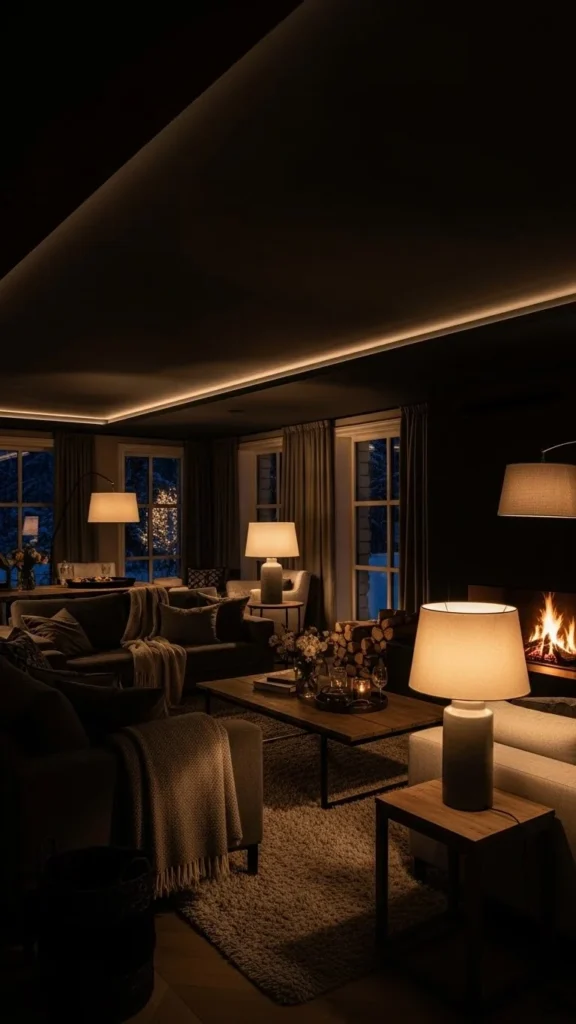
Near-black ceilings shine at night. They make lamps feel warmer and more focused.
Use sample patches first. Lighting changes perception.
This works best where evenings matter more than daytime.
Conclusion
Moody ceiling paint changes how winter rooms feel without major renovation. Darker tones shape light, add intimacy, and bring purpose to spaces often ignored. By choosing one room and one shade, you can test the effect with minimal cost and effort. Winter light does the rest, turning the ceiling into part of the room rather than an afterthought.

Leave a Reply